“Before the mountains were brought forth, or ever thou hadst formed the earth and the world, even from everlasting to everlasting, thou art God.” Psalm 90:2
We were greeted by a golden statue in the harbor of Messina after passing through the Messina Straits, blue skies and warming weather. This statue is the patron saint of Messina, the Virgin Mary. Her right arm is up because she is supposedly blessing everyone who passes through the Messina Straits.
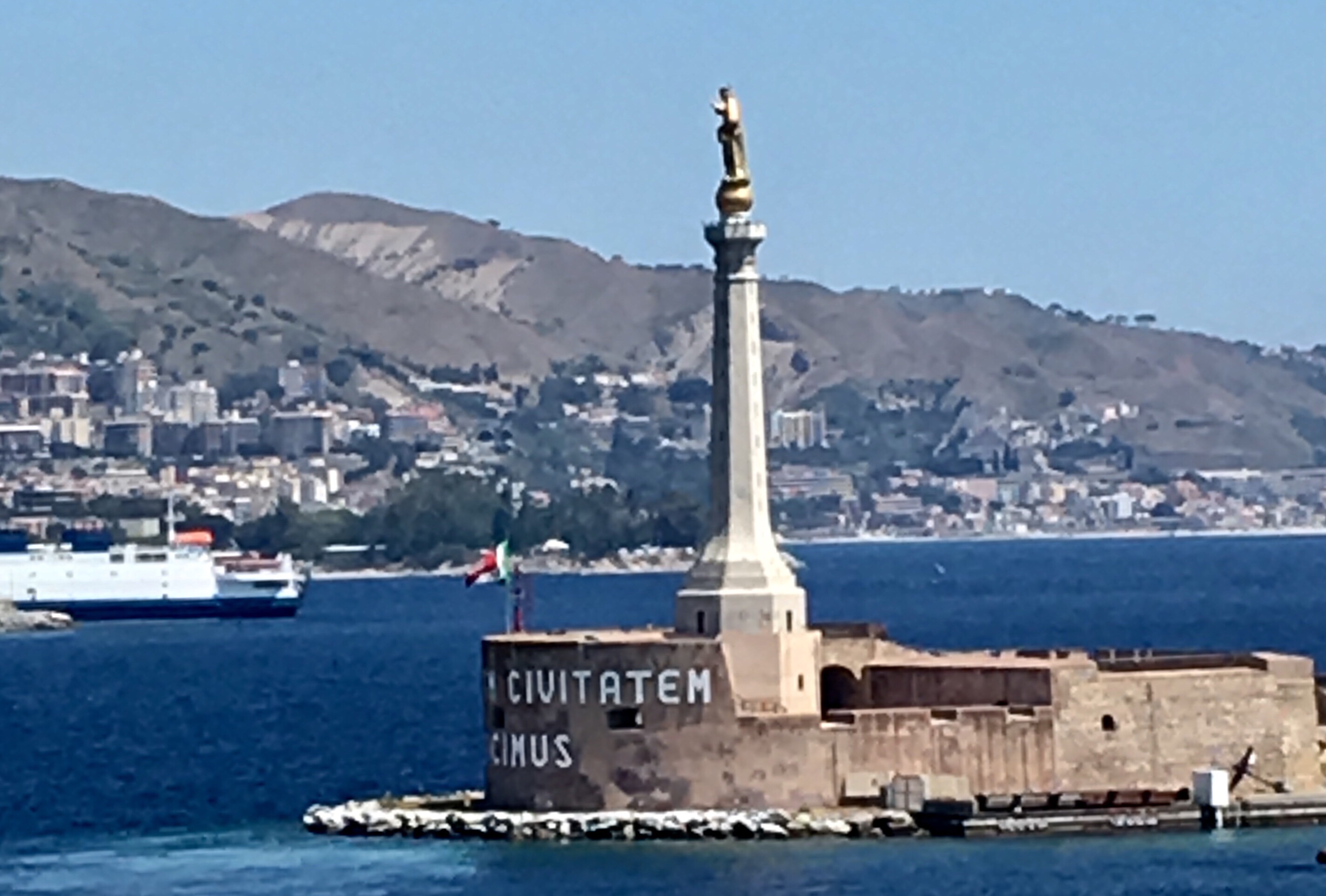
Messina is the closest point (3 km) on Sicily to mainland Italy. It is 2,700 years old and was founded by the Greeks. In 1908, it was destroyed by a 30-second earthquake followed by a huge tsunami. 2/3 of the population died. The city was rebuilt and now it is sometimes referred to as “modern Messina” with buildings made of cement in hopes of withstanding future earthquakes.
The shorelines of Sicily are mountainous, but the inner part of the island is flat. In the interior of the island wheat is raised for bread, pasta, etc. Prickly pear cactus is also grown for jams, natural medicines, and cosmetics. Other products grown are olives, grapes, and citrus fruits.
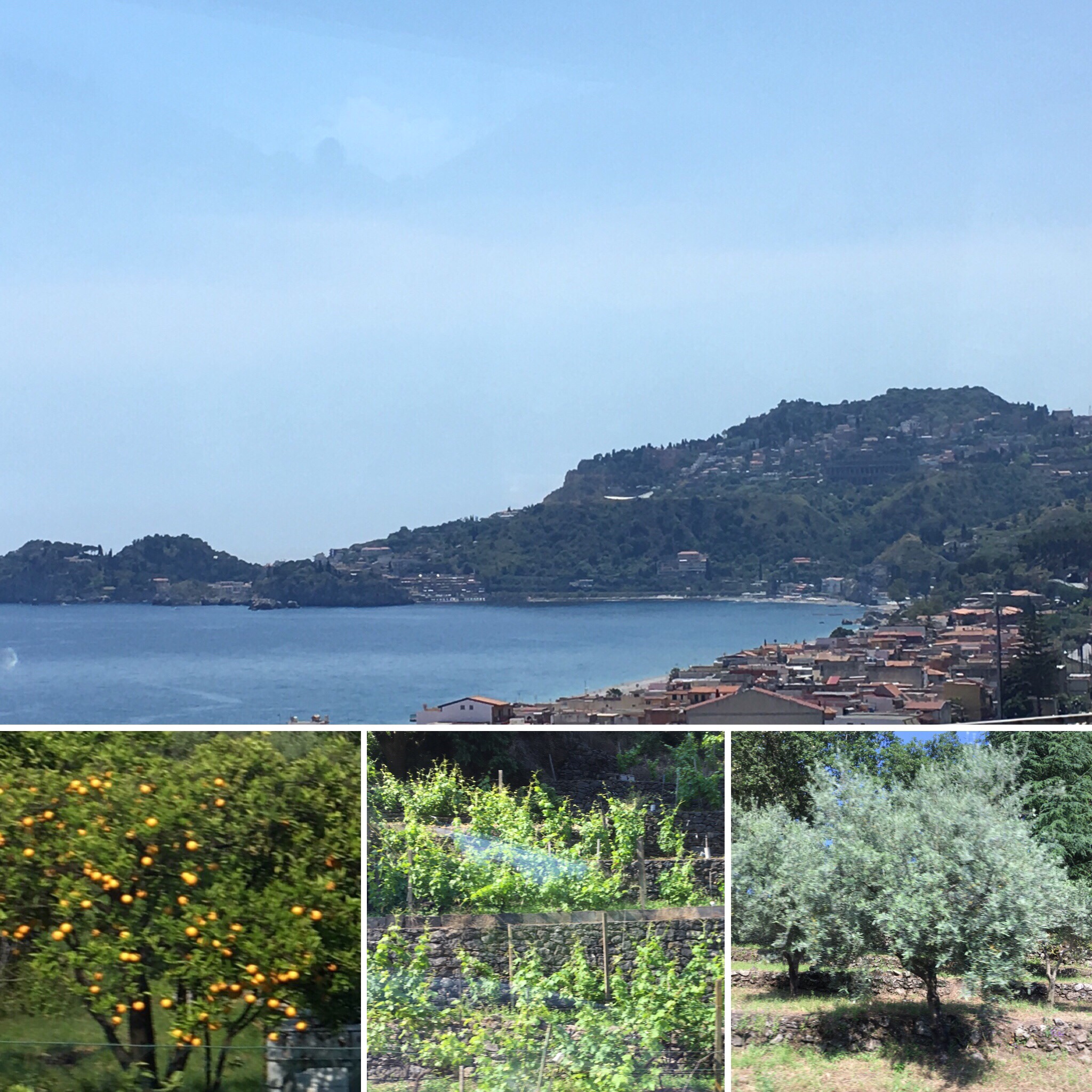
Top: Sicilian shoreline
Bottom (l-r): lemon, grape, olive
Mt. Etna
Mt. Etna is the largest active volcano in Europe. It stands 3,340 meters (11,000 ft).
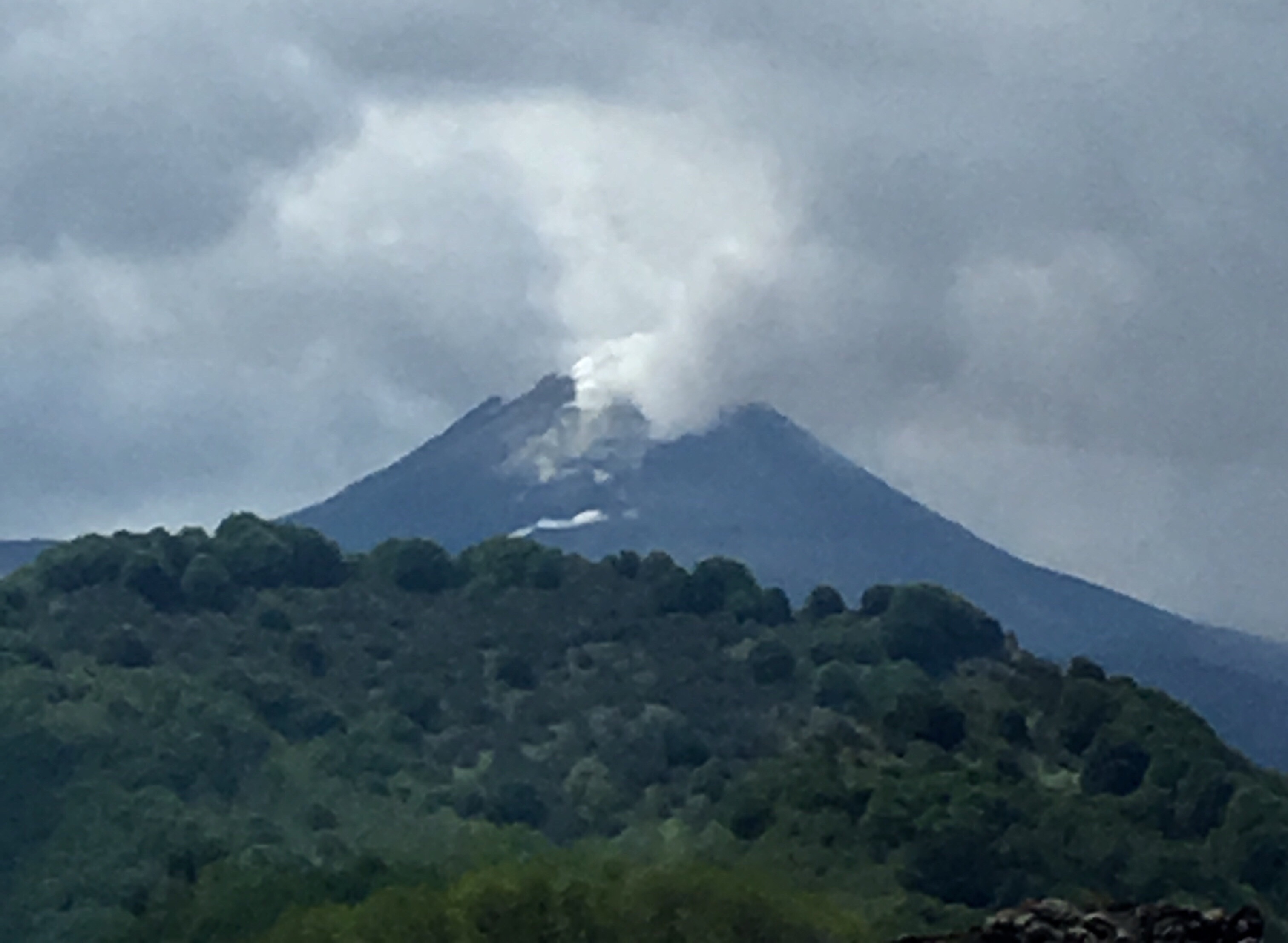
There are three systems of craters at its summit. They are always active. These craters are independent of one another. Currently, an eruption is happening today. It started five days ago. Mt. Etna is a composite volcano with two types of eruptions: explosive volcanic debris or lava flows. There are over 300 craters on its flanks. Volcanologists say the current eruptive cloud is 80% vapor and 20% gas since the smoke is white. If it becomes gray, it will then have volcanic ash in it.
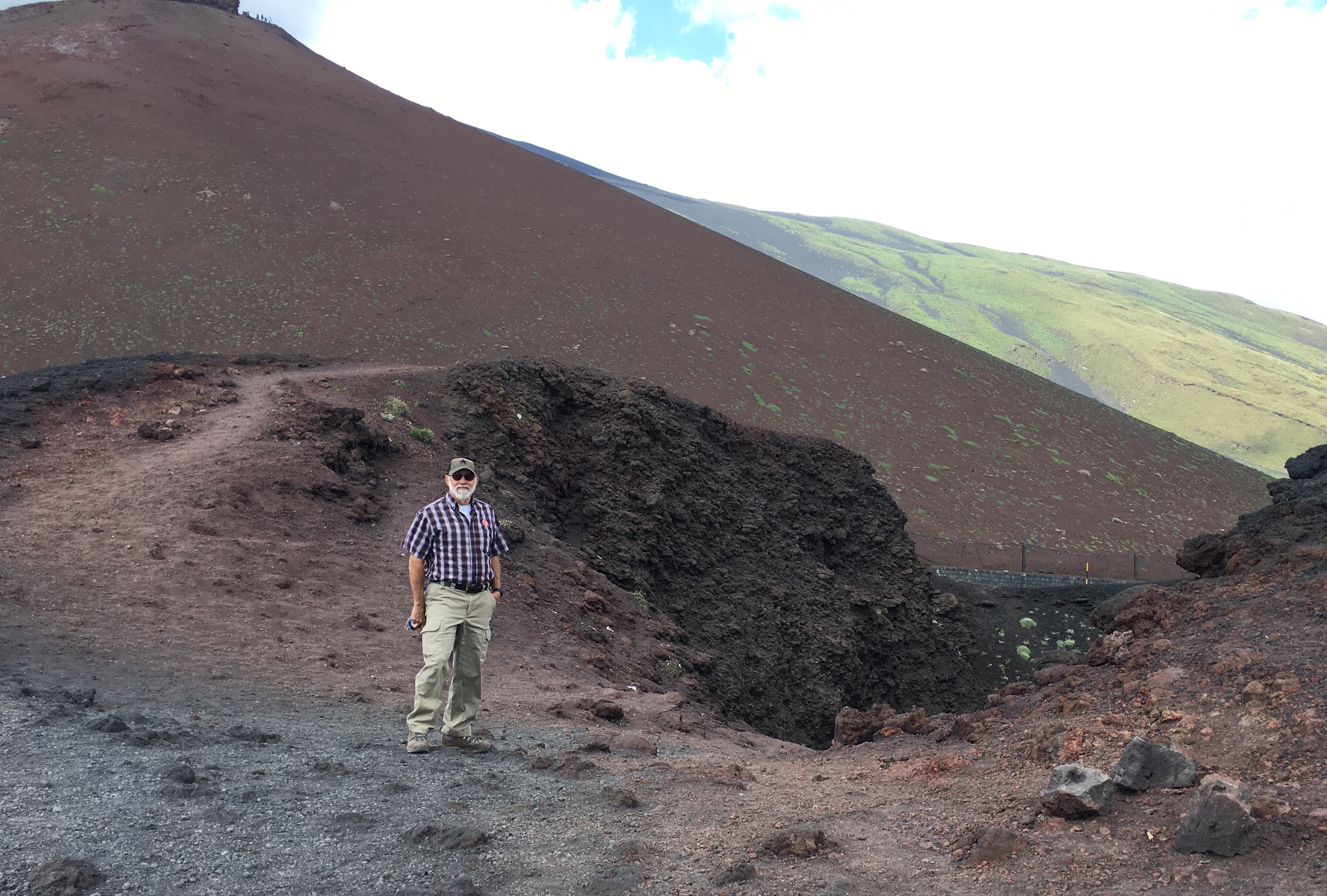
Before we headed off to explore the volcano, I had the opportunity to sample my first cannolis. It is like a tiny crispy pancake rolled and stuffed with sweetened ricotta and dusted with crushed pistachios. Delicious!
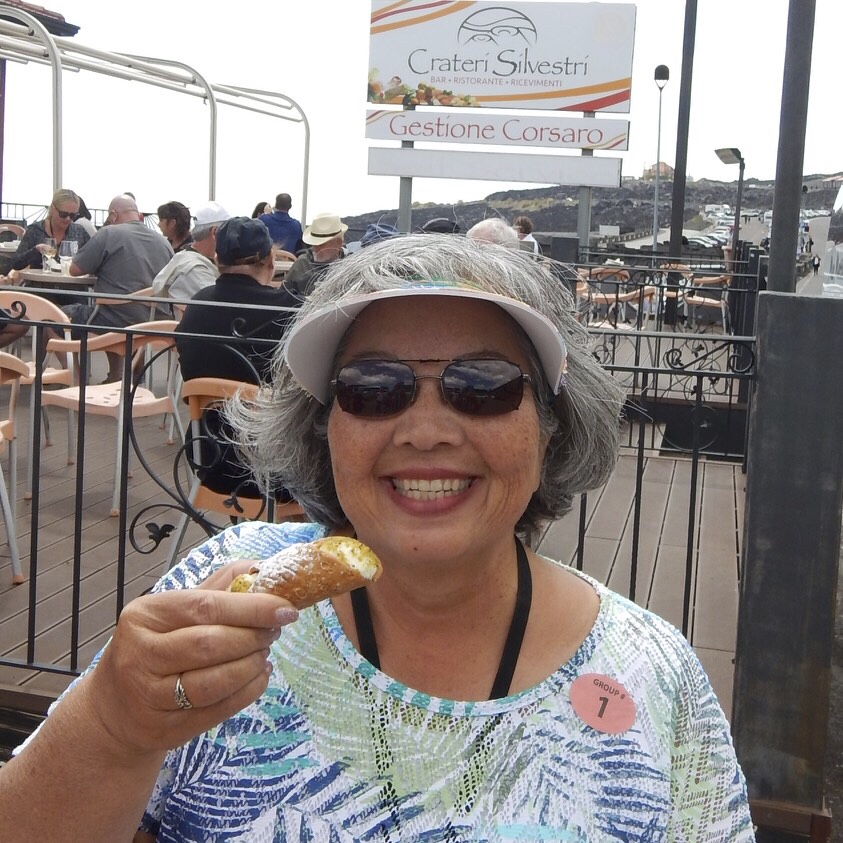
After that, John and I hiked down into this crater on the side of Mt. Etna. This is Silvestri Crater, and it was last active in 1892.
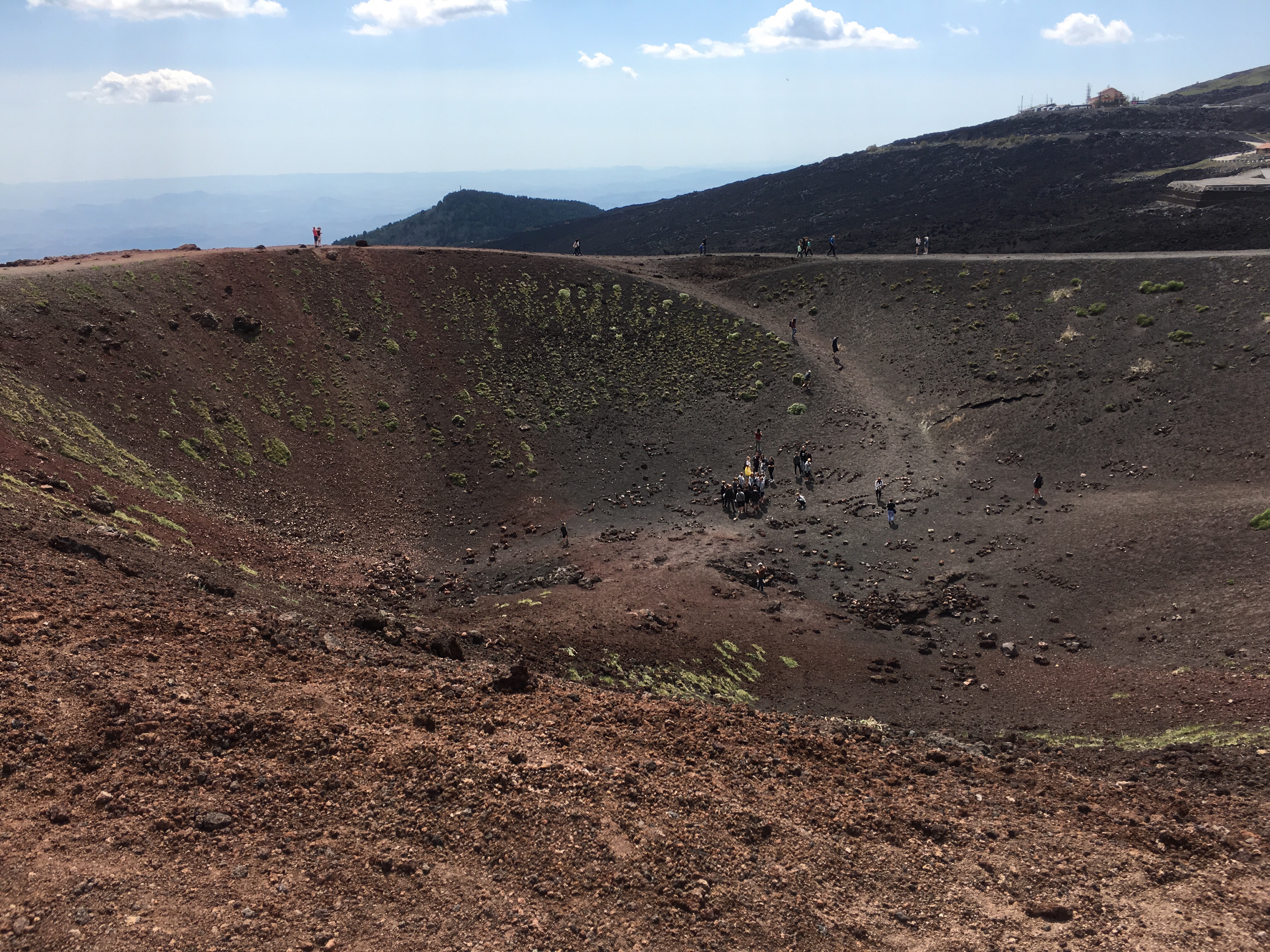
Silvestri Crater (southeastern slope)
Alcantara Gorge
The gorge was formed by lava flows hitting the cold waters of the Alcantara River, earthquakes, and erosive properties. As we strolled through the ecological park, there were several overlooks into the gorge.
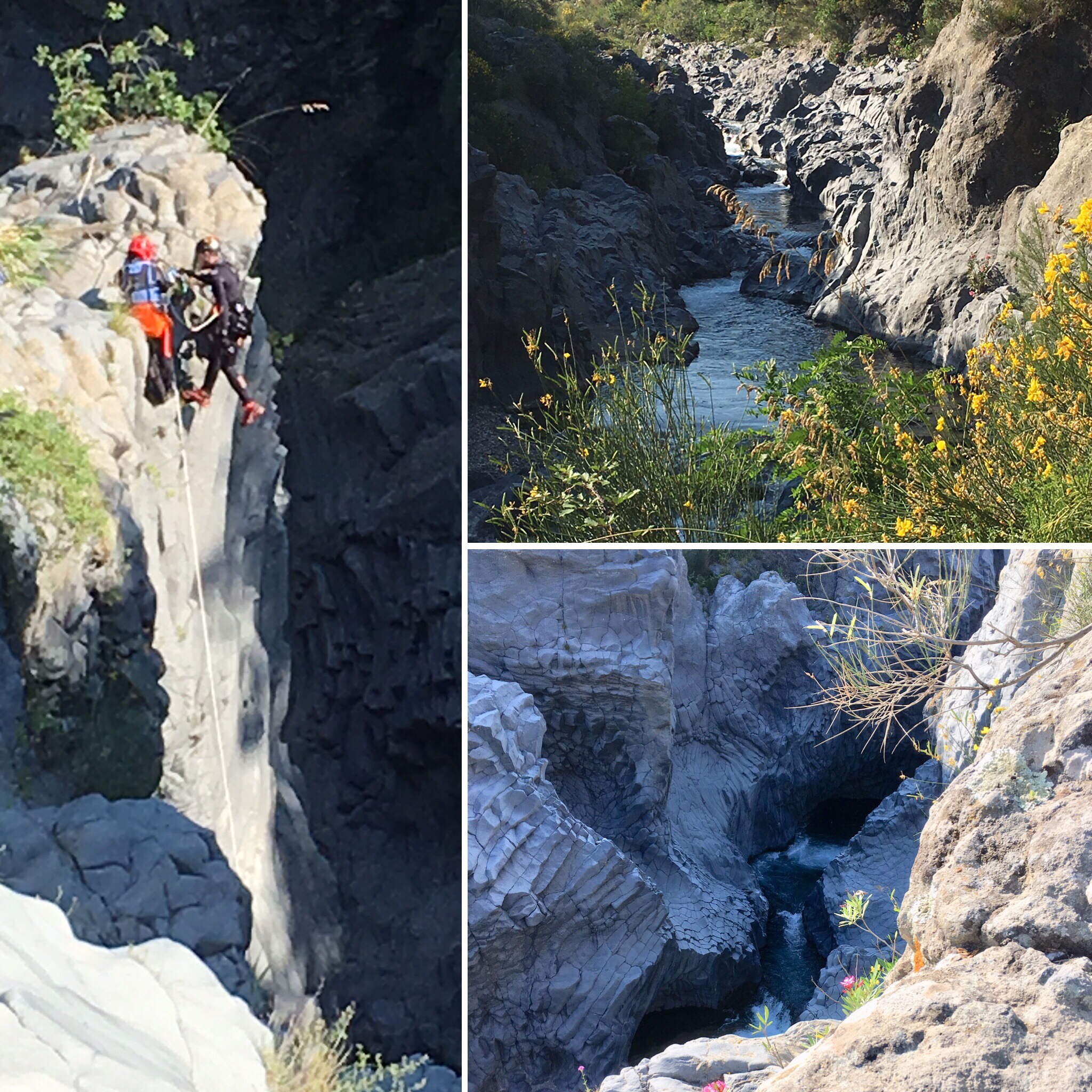
John and I decided to do a bit of rock climbing in the gorge! (Haha! In case you really think that’s us… it’s not!
Next stop: The Almari Coast in Italy