Genoa, Italy

“And he saith unto them, Follow me, and I will make you fishers of men.” Matthew 4:19

Genoa is Italy’s 6th largest city, and it is surrounded by mountains and sea. Christopher Columbus was born here, and the international airport is named for him. In the past, there were 20 fortresses protecting the city in the mountains, and a Genoese sea army protected it from ocean attacks.

Today we traveled by boat to Portofino, Santa Margherita, and Camogli, three coastal villages. As we headed out of the port of Genoa, we saw several of the forts on the nearby mountains. As we sailed, we passed San Fruttuoso – an abbey nestled at the base of coastal mountains on the beach. It was originally built by monks, but it is no longer a monastery. Today, it is a museum and public beach.

We then sailed around the Portofino lighthouse and saw beautiful multicolored homes on the hillside. We also passed by the Nature Park of Portofino, a protected area since 1945.

Santa Margherita

Santa Margherita was our first coastal village. Right at the end of our pier, was a park with lots of statues including a green statue of the first king of Italy, Vitorrio Emanuele. We walked to the Center Square of Santa Margherita and saw its 1st church dedicated to St. Margaret. It is a 17th century church – Baroque style architecture. Frescos, floors and side chapels use colored marble, and there are also paintings that decorate the church.

Clockwise from top-left: Santa Margherita bay; Columbus statue; Santa Margherita church; Santa Margherita statue

After visiting the church, we strolled through the narrow streets and saw pasta making shops, cheese and salami shops, candy and pastry shops. And then we saw it! A gelateria! Time for our first gelato! John had dark chocolate, and I had pistachio. What a glorious treat!!

Clockwise from top-left: cookies and spreads; sampling our first gelatos; fresh produce; tourist shopper; making fresh ravioli

Portofino

Portofino is a fishing village on the western shore of Italy near Genoa. The houses here are different colors, so the fishermen at sea could easily identify which house was theirs. St. George is the patron saint of Portofino. St. George’s church was destroyed in WWII, then rebuilt. The view from the church was awesome.

We had independent time, so off we went. Guess what John found? Another gelateria! And he found his favorite flavor: stracciotella (chocolate chip)! He has found his souvenir, and I being a supportive wife had to have another one too! Delish!

Camogli

Our last village was Camogli. On our way, the boat cruised by the abbey again in the Nature Park of Portofino. Camogli is a small fishing village that is definitely not a tourist spot. We did find a place that sold focaccia, pizza, and brioche, so we bought a focaccia with tomato and olive oil. It was really delicious! This is a very hilly town, and John wanted to know what the upper street was like, so off he went! I documented his quest from down below! Finally, he came back, and we headed back to the waterfront. However, we had one more stop – a gelateria!

Left: stairs to adjacent street. Top-right: sampling focaccia. Bottom-right: chocolate gelato.

Next stop: Florence and Pisa!
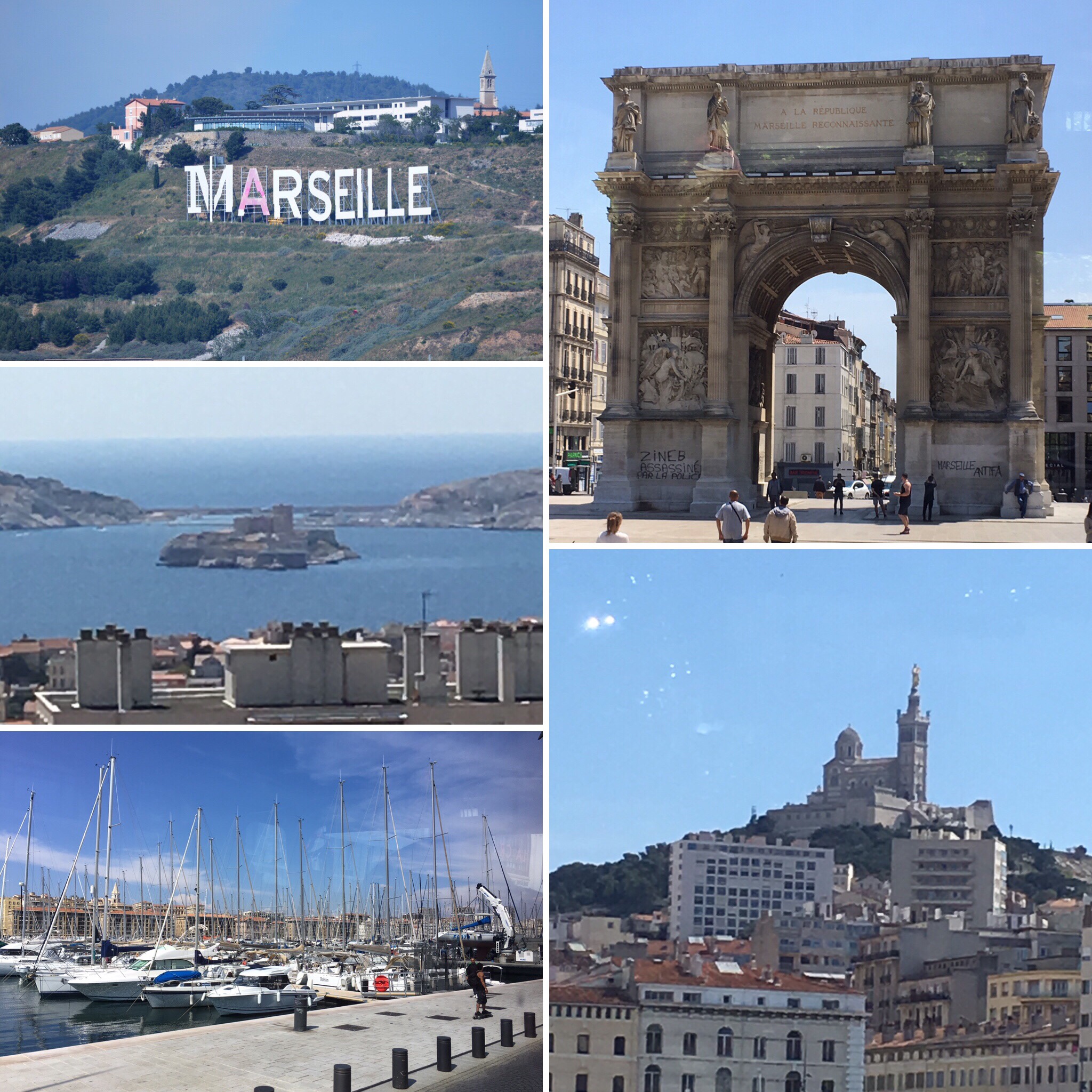
Marseille, France

“Make a joyful noise unto the LORD, all ye lands.” Psalm 109:1

Marseille is France’s first port, and it’s oldest French town. Today, it is the second largest in population with 875,000 people living here (Paris is first). Founded by Greek sailors, Marseille has a rocky coastline with fishing villages and summer resorts. Hills and mountains are all around the city, and lots of aromatic herbs grow here – thyme and rosemary are the most famous.

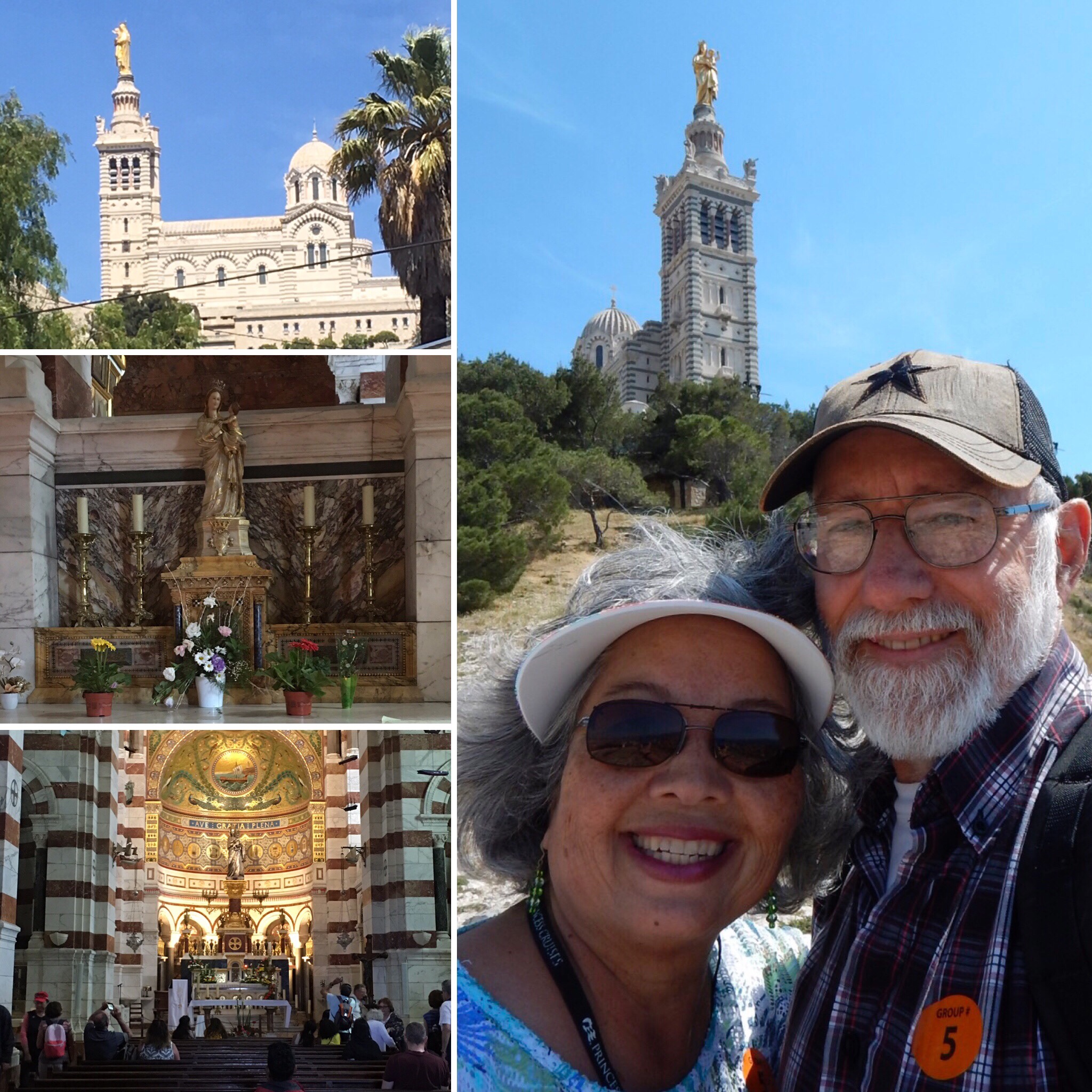
Clockwise from top-left: sign on the hill; Arc de Triomphe; Notre Dame de la Garde basilica; sailboat marina; prison island from the novel Count of Monte Cristo by Alexandre Dumas.

Basilica – Notre Dame de la Garde

This cathedral was built in a 46-year period (1853-1899). It sits atop a hill overlooking Marseille and the bay. There is a gold statue of smart on top of the bell tower.

Aix-en-Provence

Founded by Roman soldiers, Aix-en-Provence is the second town founded in southern France. Located about two hours from the French Alps, it was established about 122 years before Christ, and from 972 AD to 1481, it was an independent country. Aix-en-Provence is known for its warm water springs, which the Romans used to create their public baths. Because of the many springs, the city has lots of fountains. Today, nearly 90,000 people live here.

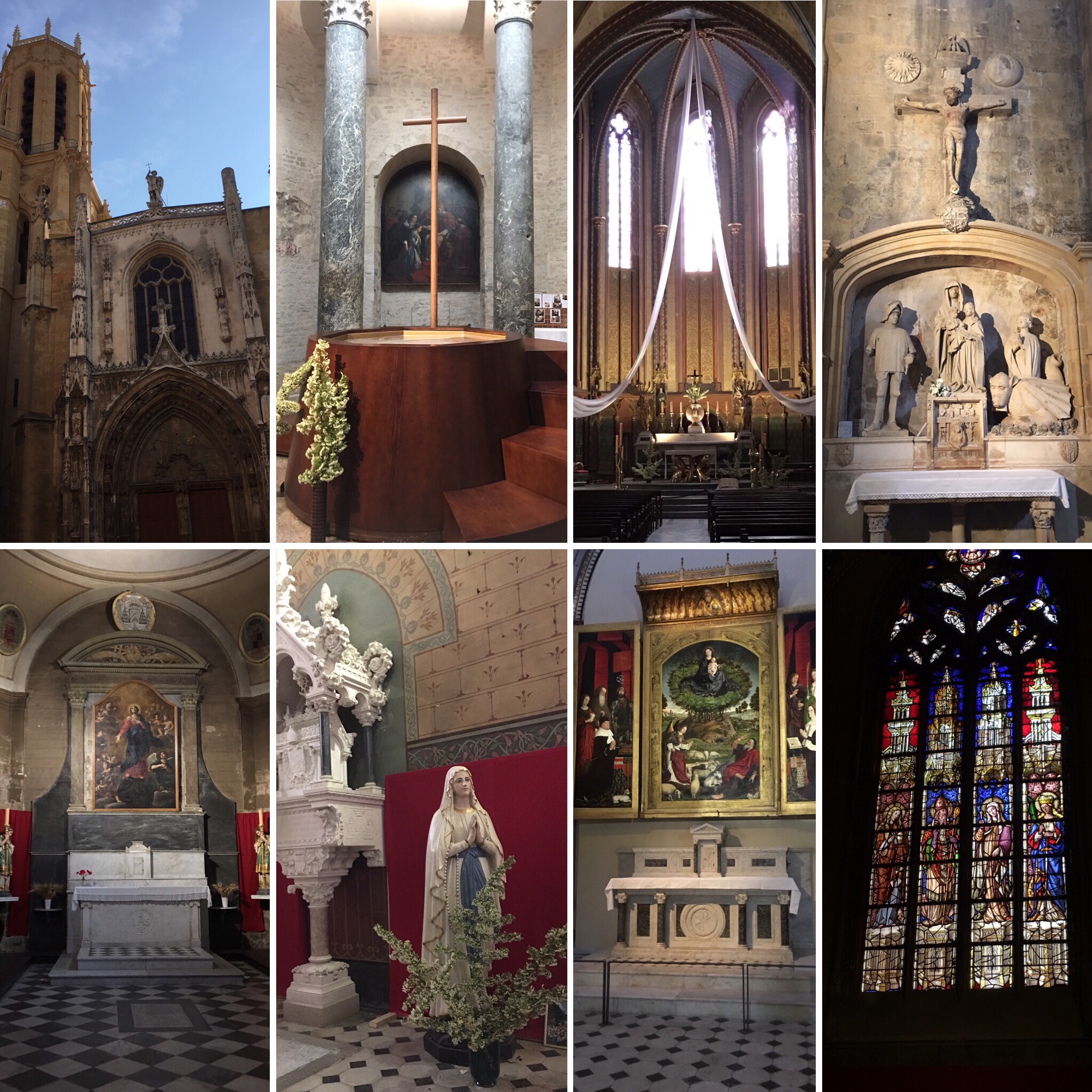
Cathédrale Saint-Sauveur

There are three knaves, or sections, in this church, and they were built at different times. The first knave was built by the Romans circa 300 AD. The baptismal area is from this time period. The second knave was built in the 13th century. The altar area shows the gothic architecture and there are many stained glass windows. The third knave is from the 17th century and is baroque architecture. There is a greater use of gold and marble as well as more statues in this section.

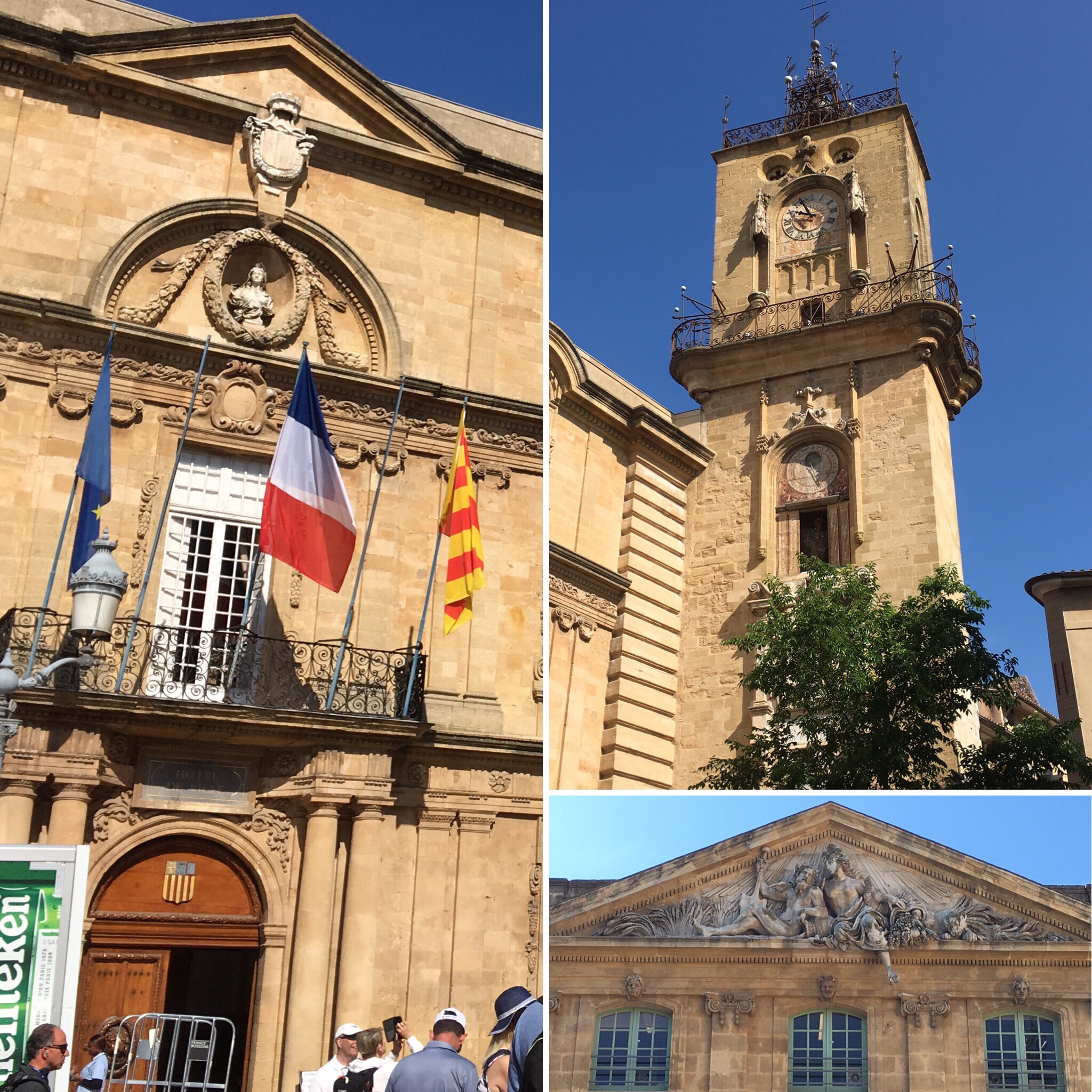
Placo de Hotel de Ville – Town Hall Square

This is where the government offices are in Aix-en-Provence. Over the doors of the Town Hall are three flags. They are the EU flag, the French flag, and the Catalán region flag. (The Count of Barcelona, in the region of Catalonia, was also the count of this region). Next to the Town Hall is the Post Office building, which has a facade with wheat on one side and grapes on the other which represent the region’s agricultural staples.

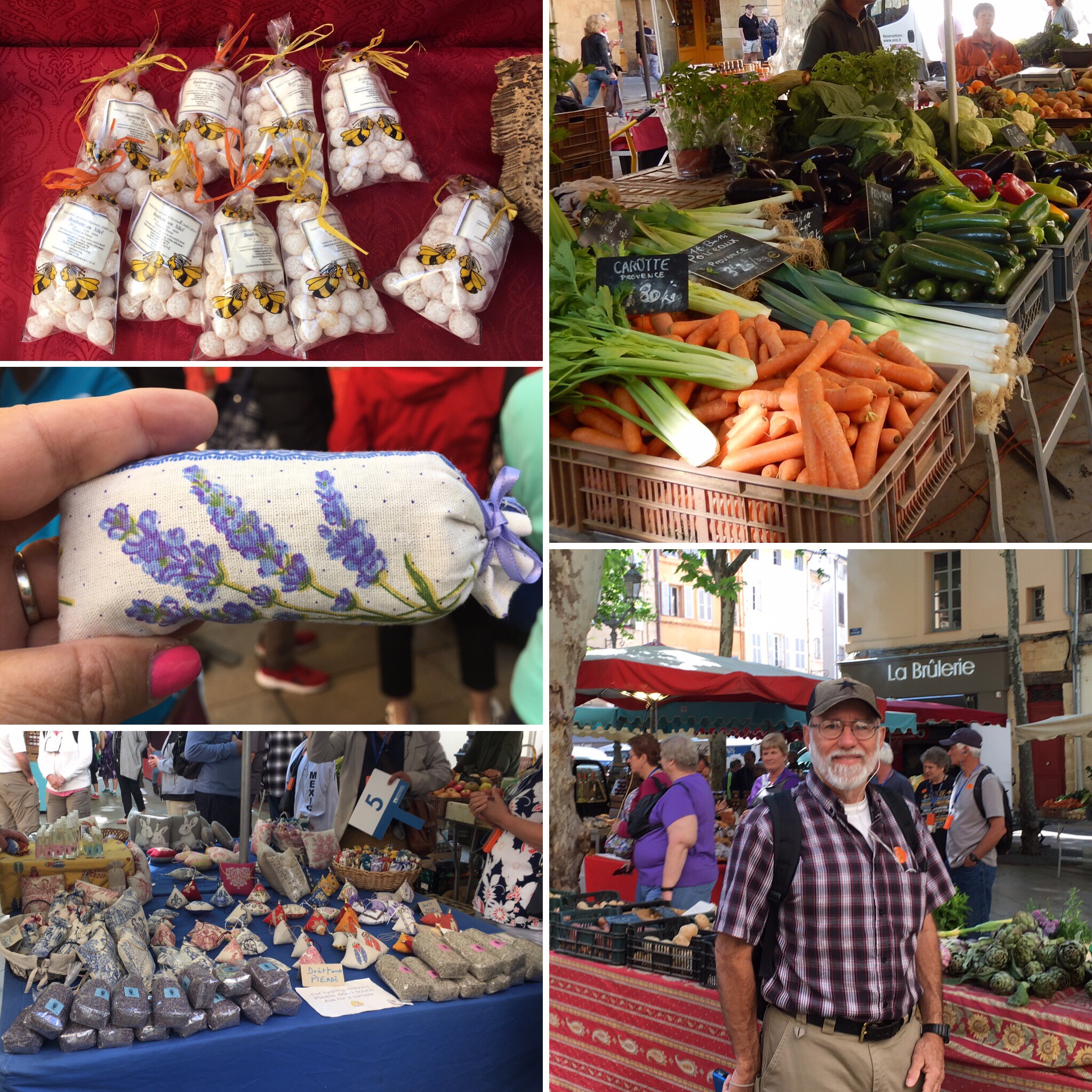
Farmers’ Market Square

Lots of produce is sold here including lavender (the region is known for this), honey, breads, and meats.

Fountains

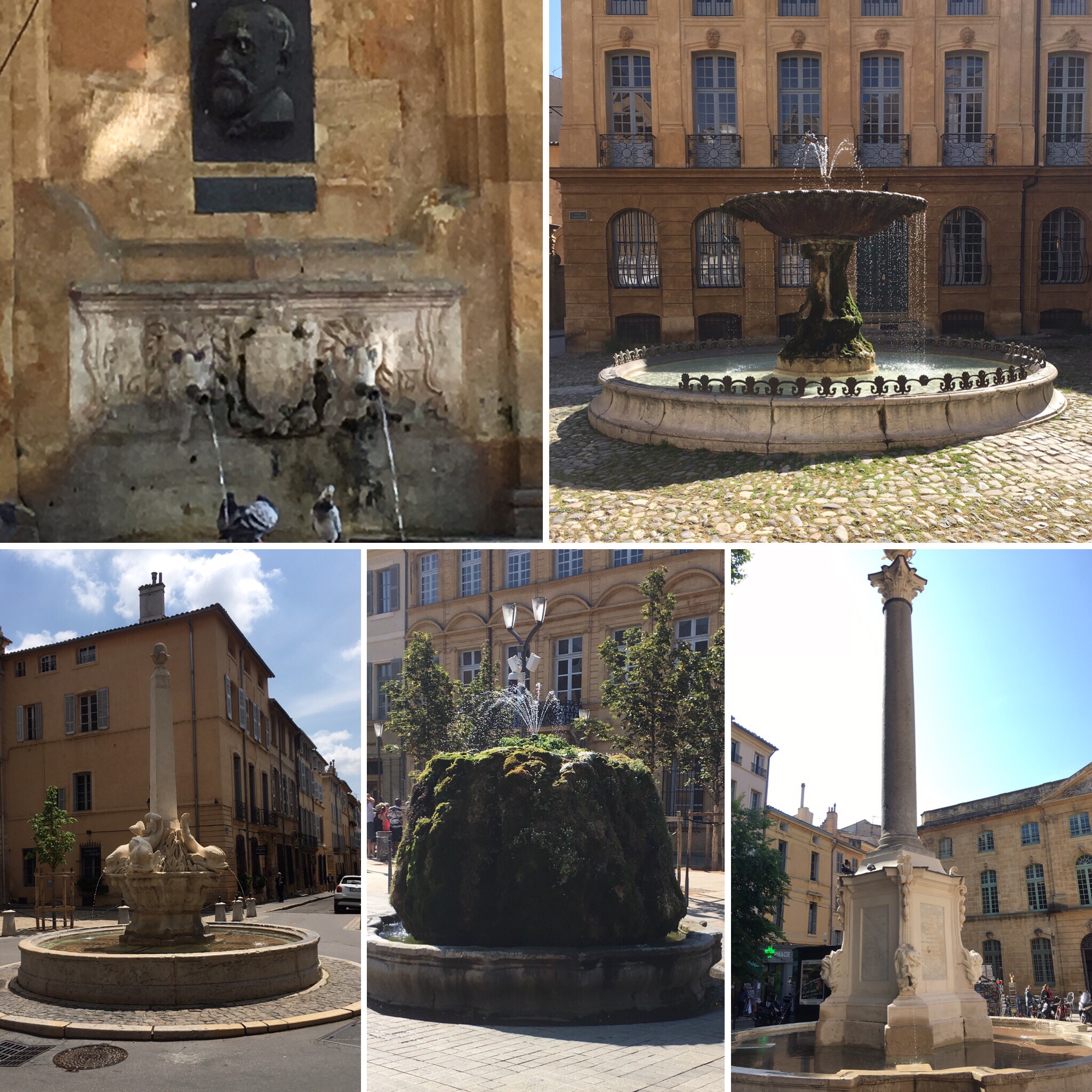
Fountains are all throughout Aix-en-Provence. The first fountain was built in 1618 in the square “Anciano Placo de L’Archevescat.” It was also in this square that the French Resistance first met to plan its war efforts against Germany in WWII.

Clockwise from top-left: 1st fountain in Anciano Placo de L’Archevescat, Placo de Alberta fountain, Town Hall fountain, Main Street fountain, Four Dolphins fountain

Bastide du Cours

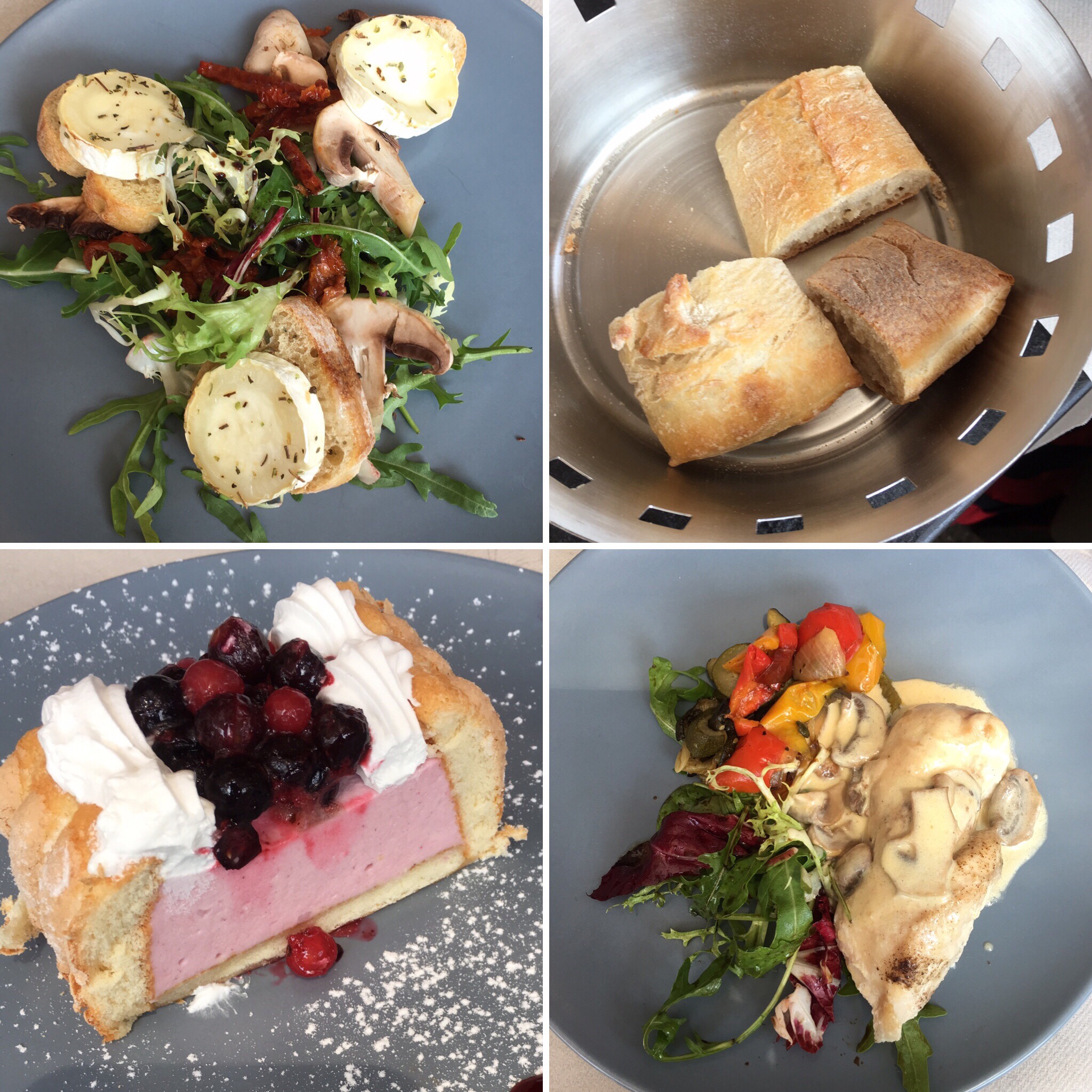
Lunch was at the Bastide du Cours restaurant in Aix-en-Provence. We had mixed greens with goat cheese and bread to start, then chicken with veggies as the entree. Dessert was a strawberry mousse cake with blueberries and cranberries.

Next stop: Genoa, Italy!

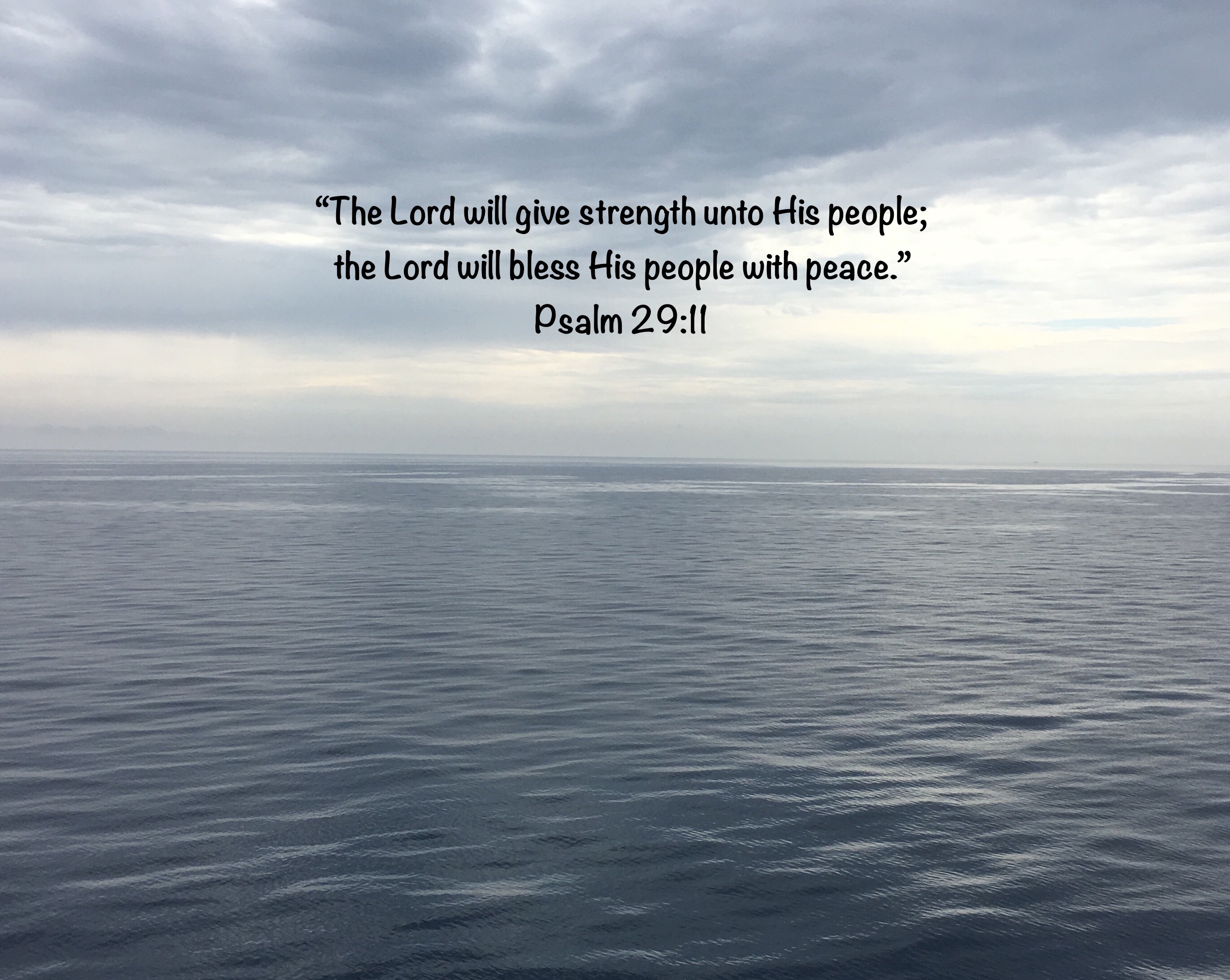
Calm Seas

Psalm 107:29 “He maketh the storm a calm, so that the waves thereof are still.”

Calm seas. I suppose that is every sailor’s dream. No one really wants to sail through a storm. This morning, as we sailed into the Mediterranean Sea, the seas were amazingly calm; it was like looking at a lake! Not a single whitecap could be seen in any direction. If there had been a dolphin or whale nearby, it would have easily been spotted! We have been blessed with incredible weather and seas on this trip. Even our Atlantic crossing was uneventful in terms of sea conditions. No storms, no huge waves. It has been a very peaceful journey.

Reminds me of life. We all relish days that are like calm seas. No worries or cares to invade our lives. No problems on the horizon. Smooth sailing ahead! But it’s not always like that. In fact, it is inevitable that storms will arise in our lives. We don’t know when they will come or how long they will last, but they will come. The good news is that no storm lasts forever. Tempests at sea eventually die down, and calm seas return. The task is to keep an even keel while navigating through the storms, employing the skills we have learned to safely sail through them until the skies become clear, and the seas settle down once more.

Just as a sailor keeps constant contact with his captain, we must maintain close communion with our Captain in order to maintain a godly heading in life. The Lord will never lead us astray. Reading His Word and praying to Him will help us safely sail through the troubled waters of life. It is an undeniable fact that storms will come. Some will be frightening; some will be painful; some will seem hopeless, but through each one, God has promised to be with us, guiding us, helping us, and delivering us safely through them.

It is true that even with the knowledge that God is in control, it is still difficult to undergo the trials and tribulations of life. We must strive to have the proper perspective. In our own frailties, the storms we face may seem insurmountable, but when we focus on God’s power as our source of strength, we can know that no matter what storms lie ahead, we have the assurance that we will weather each one successfully if we stay the course. God is manning the helm, and He is aware of all the unseen obstacles ahead. He knows exactly how to navigate through them. If we remain at His side and trust in Him, we will soon emerge from the raging tempest into blue skies and tranquil seas!

“And He arose, and rebuked the wind, and said to the sea, Peace, be still. And the wind ceased, and there was a great calm.” Mark 4:39

**********

Can you remember a time in your life when God calmed your storm? Praise Him for that today!

Gibraltar

“…Lead me to the rock that is higher than I.” Psalm 61:2b

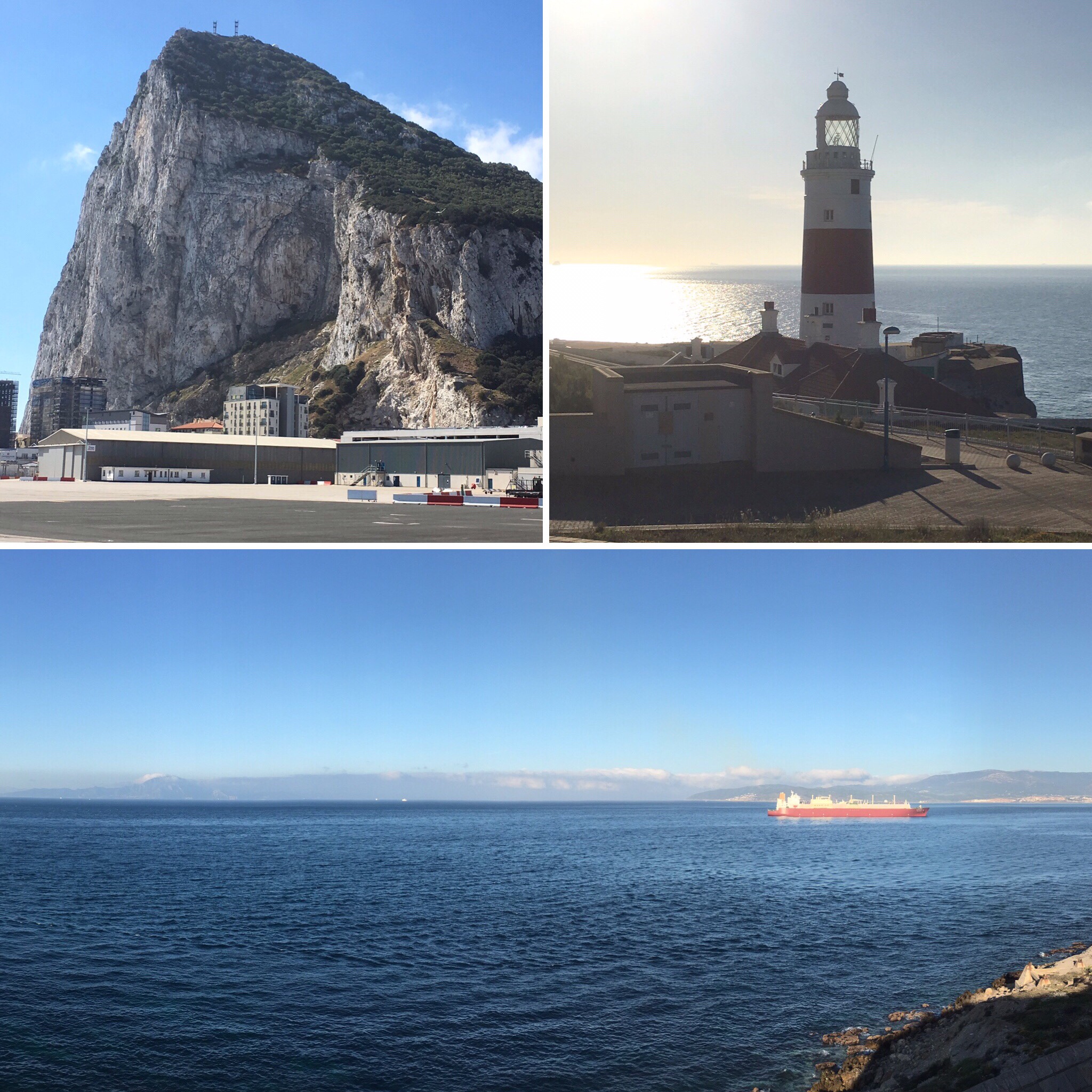
Gibraltar is an overseas territory of the United Kingdom and has been so since 1704 when the British defeated Spain in the War of Spanish Succession. Gibraltar is located on the southern tip of the Iberian Peninsula, and lies at the entrance to the Mediterranean Sea. It is a very small country (less than 3 square miles), but very diverse in its population of 30,000. The famous Rock of Gibraltar is the limestone sentinel that stands watch over the Straits of Gibraltar, the waterway link between the Atlantic Ocean and Mediterranean Sea. Located at the southernmost peak of Gibraltar, Europa Point is the “end of Europe.” From here you can see northern Africa and Spain. According to Greek legend, Hercules held on to Gibraltar, the “pillars of Hercules,” when he pulled Africa and Spain apart.

On the bottom photo, the mountains of Morocco are visible on the left, and on the right is Spain.

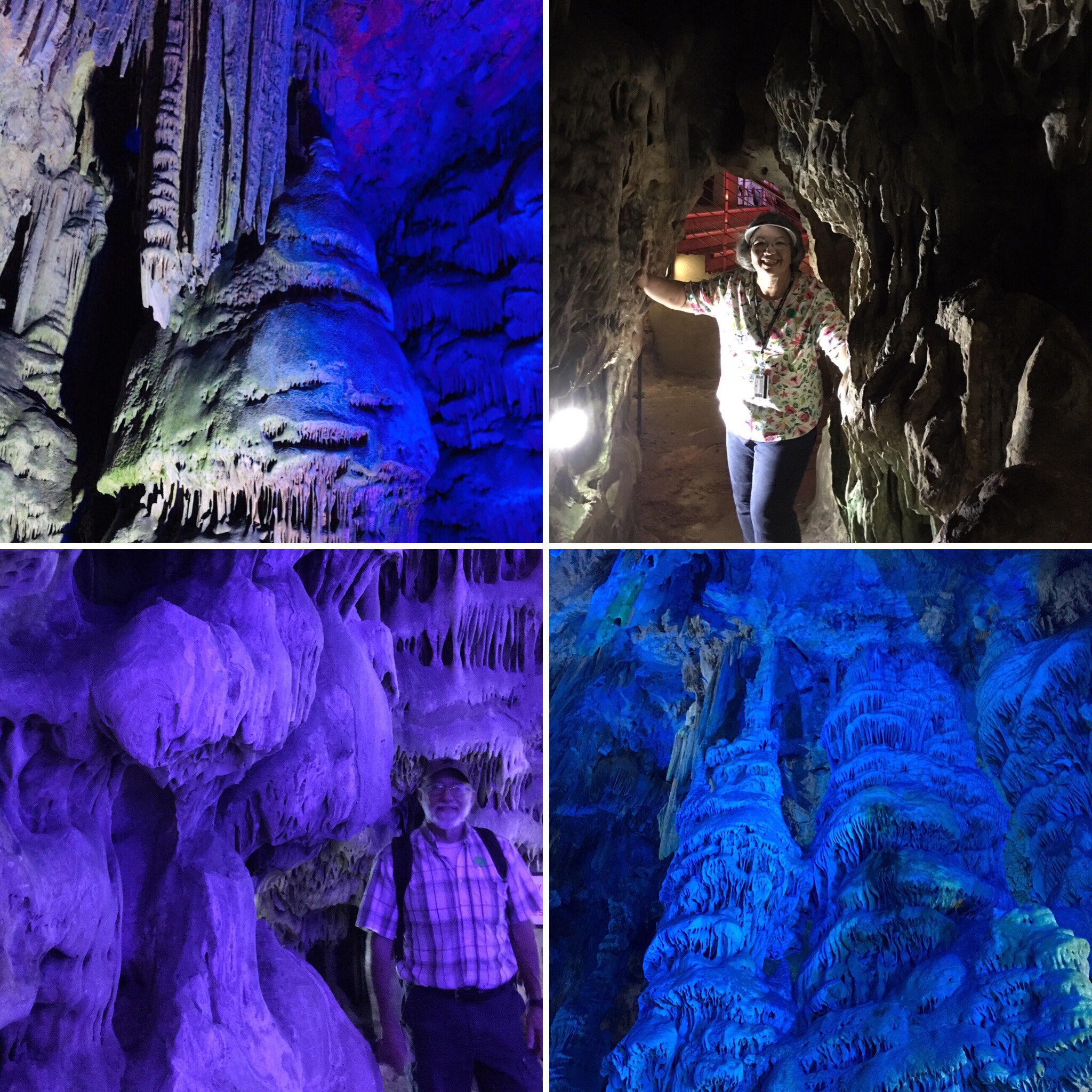
St. Michael’s Cave is a limestone formation with many huge stalagmites and stalactites throughout it. Illuminated by colored lights, it gives a surreal feeling to a “naturally formed” cave. The cave opens up into a huge amphitheater which is actually used for musical concerts!

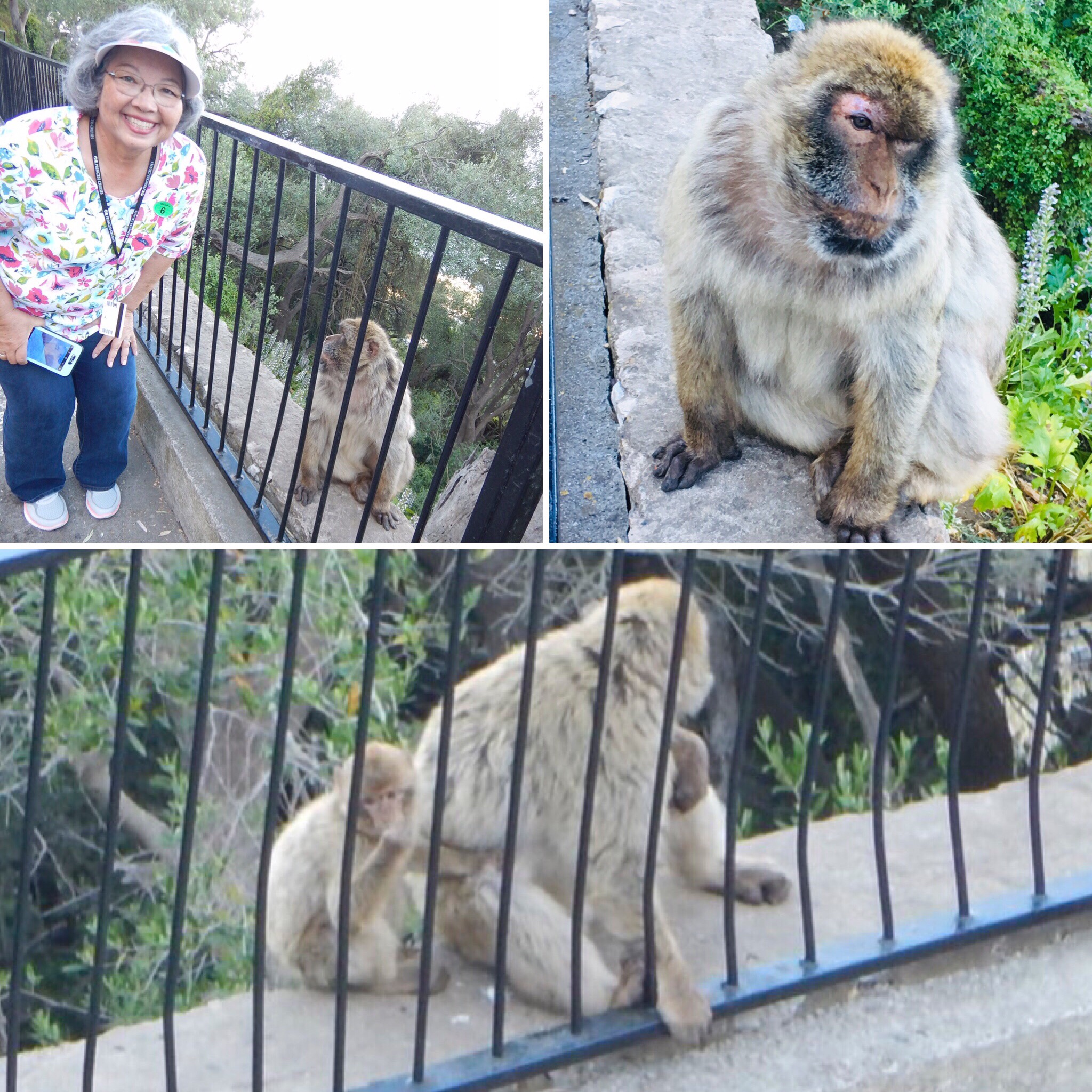
Perhaps one of the most well known attractions in Gibraltar are the Barbary Apes. They are not really apes at all, but instead they are tail-less monkeys! They are actually named the Barbary Macaques. No one really knows how they got here, but there are about 250 roaming freely in Gibraltar. One unusual fact about the Barbary apes is that the fathers help care for their young! Winston Churchill is known for saying that as long as there were the monkeys on Gibraltar, it would remain in the British empire.

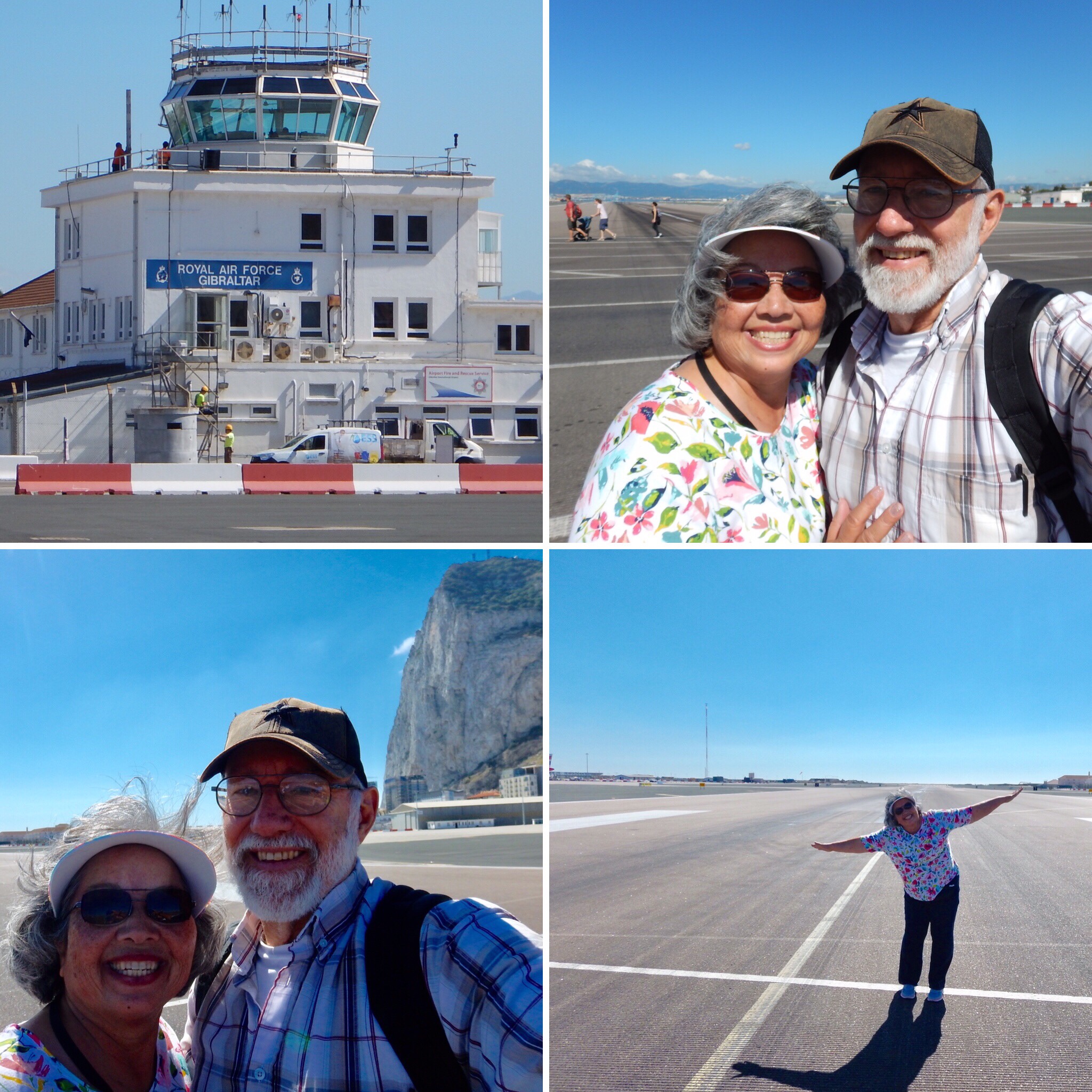
The Gibraltar airport has its main and only runway crossed by a city street and pedestrian walkway. The airport is considered the 4th most dangerous airport in the world because westerly winds create increased turbulence here. If after three attempts, a plane cannot land due to the turbulence, it is redirected to Malaga, Spain for landing, and the passengers are then shuttled back to Gibraltar.

Clockwise from top-left: airport control tower; standing on the runway; on runway with “The Rock” behind us; a “plane” landing

Next stop: Marseilles, France

Barcelona, Spain

“All the ends of the world shall remember and turn unto the LORD: and all the kindreds of the nations shall worship before thee.” Psalm 22:27

Barcelona is the beautiful capital city of Catalonia, a region of 1.7 million people. It was here that Columbus returned from the New World to meet with Queen Isabella. Barcelona is known for many things, such as the 1992 Olympics and the childhood home of Pablo Picasso.

Cathedral of Barcelona

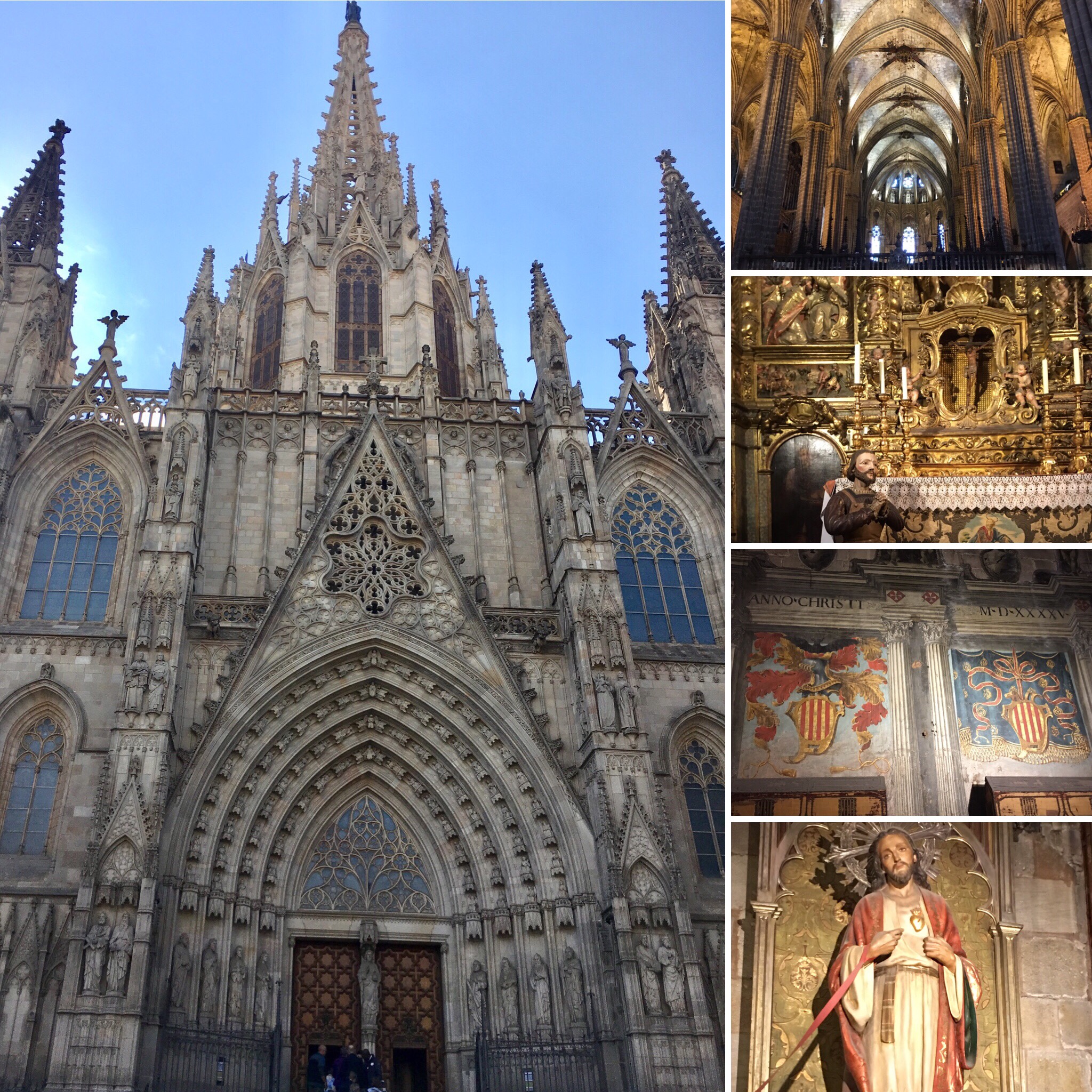
This cathedral was built on the style of gothic architecture as shown by the pointed arches.

La Sagrada Familia

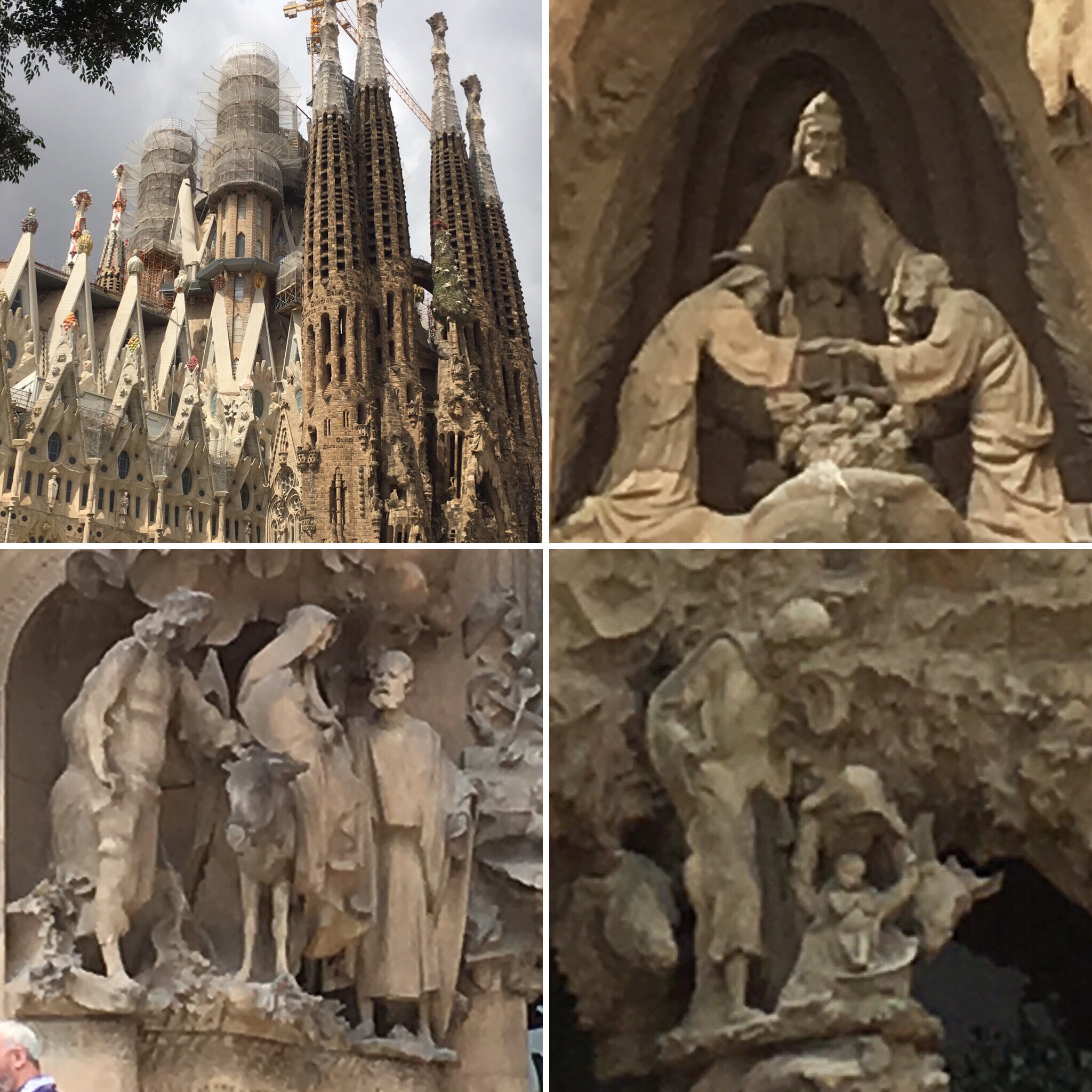
This church was designed by Gaudi, a famous Catalán architect. Construction began in 1882, and the current plan is for it to be completed in 2026. The central tower, which represents Jesus, will eventually be 110 meters tall. The nativity facade in the front of the church is the only one actually built by Gaudi

before he died. The life of Christ is depicted in the facades around the church. His birth and childhood is on the east side (where the sun rises), and His death and resurrection is on the west side of the church (where the sun sets).

Clockwise from top-left: cathedral; marriage of Joseph and Mary; nativity; fleeing to Egypt

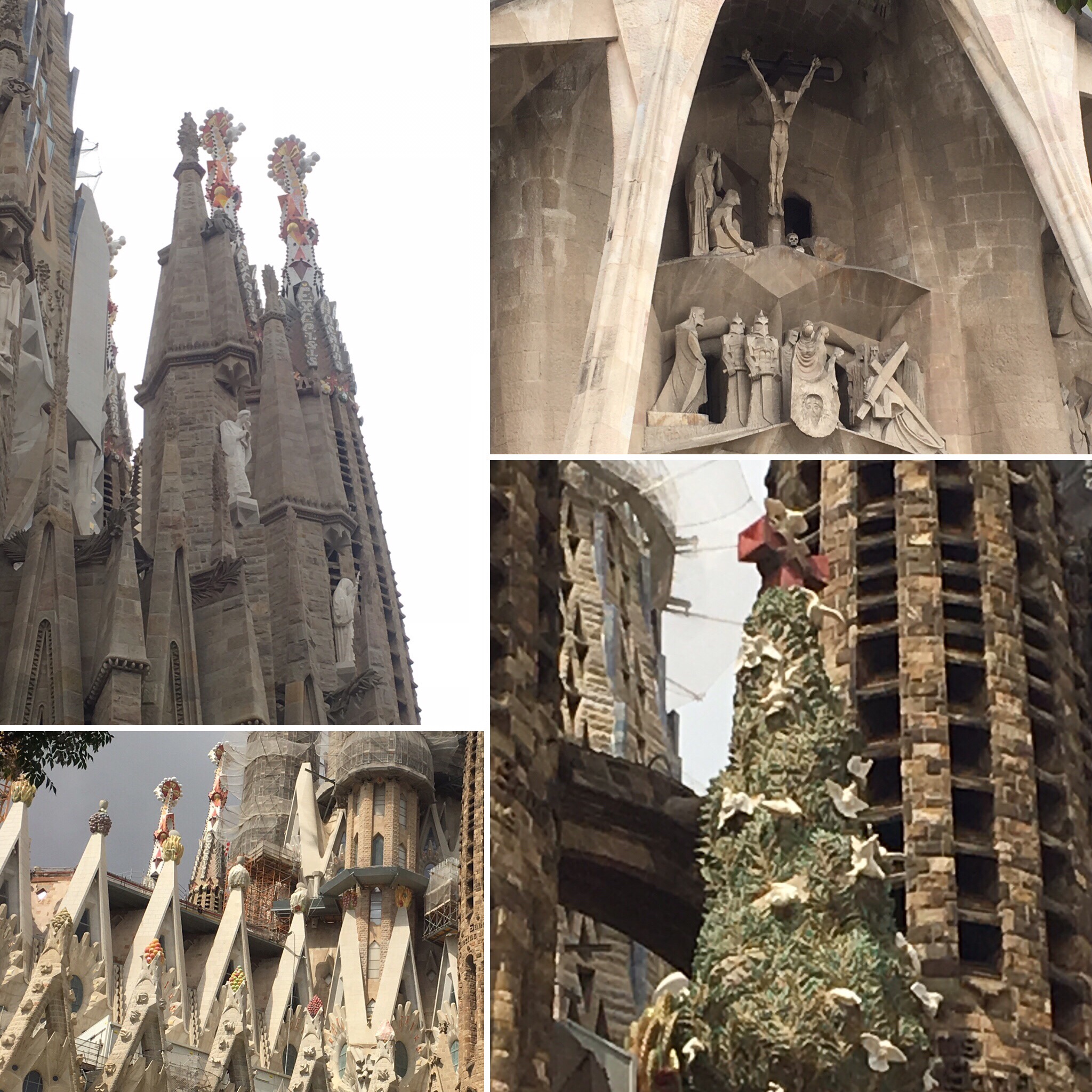
The cypress tree represents eternal life, and the different fruits represent the twelve months of the year.

Clockwise from top- left: cathedral spirals; crucifixion; cypress tree with fives; fruits on top of arches.

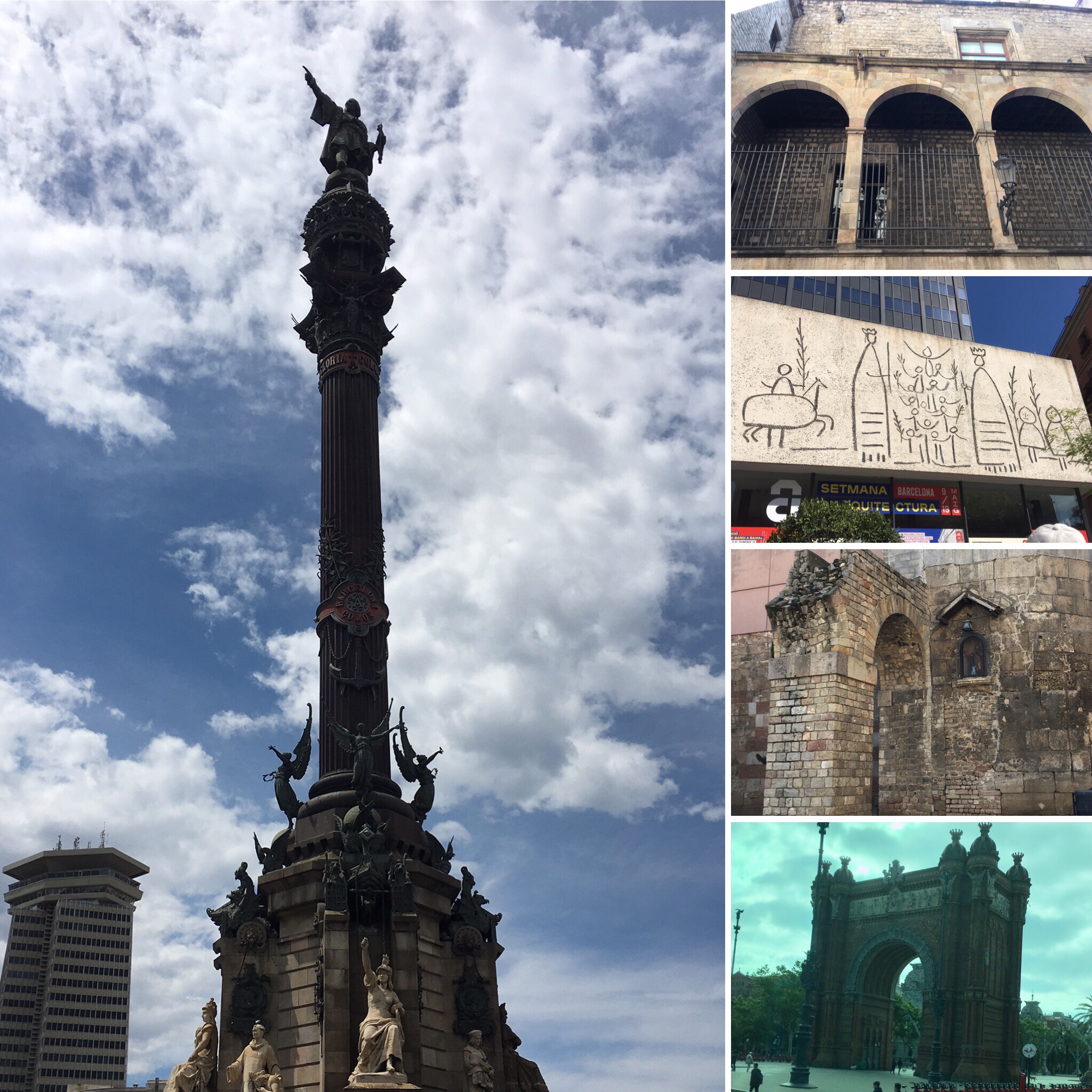
Other Barcelona highlights

Clockwise from left: statue of Columbus; site of the palace of the Spanish Inquisition; Picasso artwork; Roman arch and aqueduct; Arc del Triomf

Next stop: Gibraltar

Malaga, Spain

“Kings of the earth, and all people; princes, and all judges of the earth: both young men, and maidens; old men, and children: let them praise the name of the LORD: for his name alone is excellent; his glory is above the earth and heaven.” Psalm 148:11-13

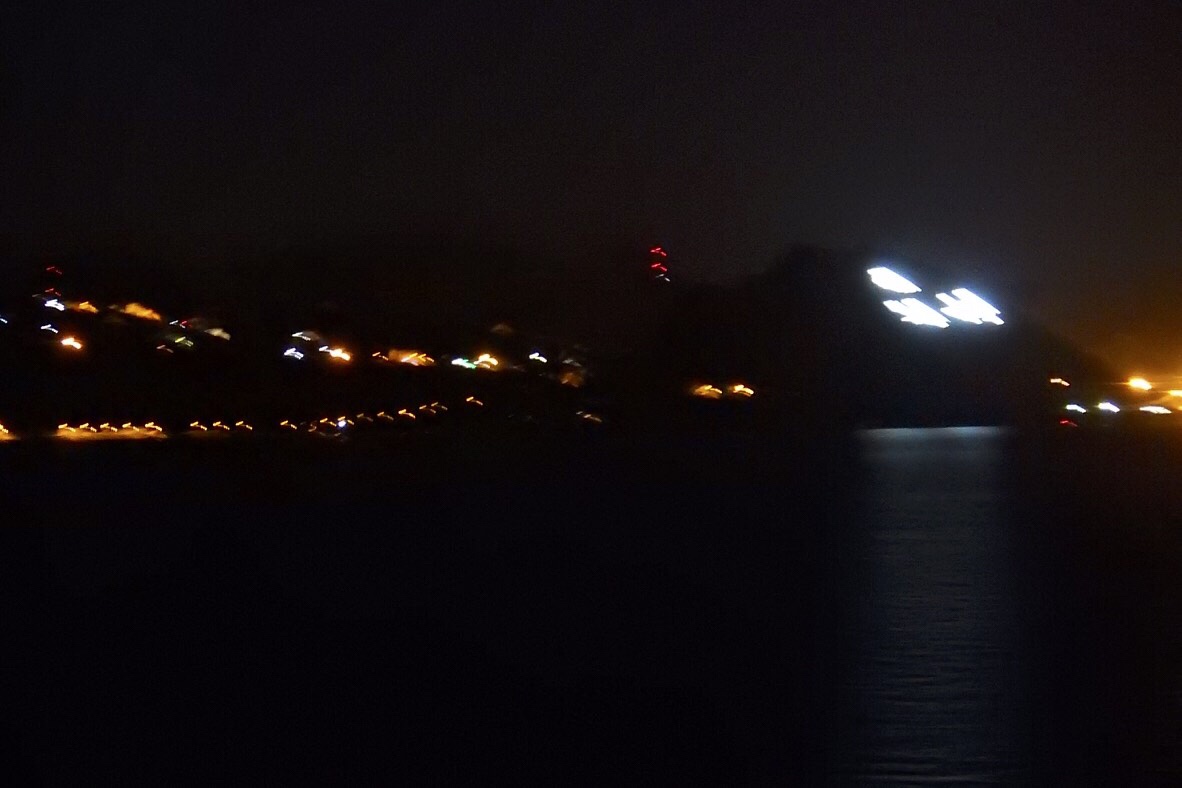
To reach Malaga from Cadiz, we had to sail through the Straits of Gibraltar, leaving the Atlantic Ocean and entering into the Mediterranean Sea. As we passed through the Straits, just after midnight, there was a lighted sign on a hillside that said “Gibraltar Cliffs.” The photo is not clear, but the large white blur on the right is the sign.

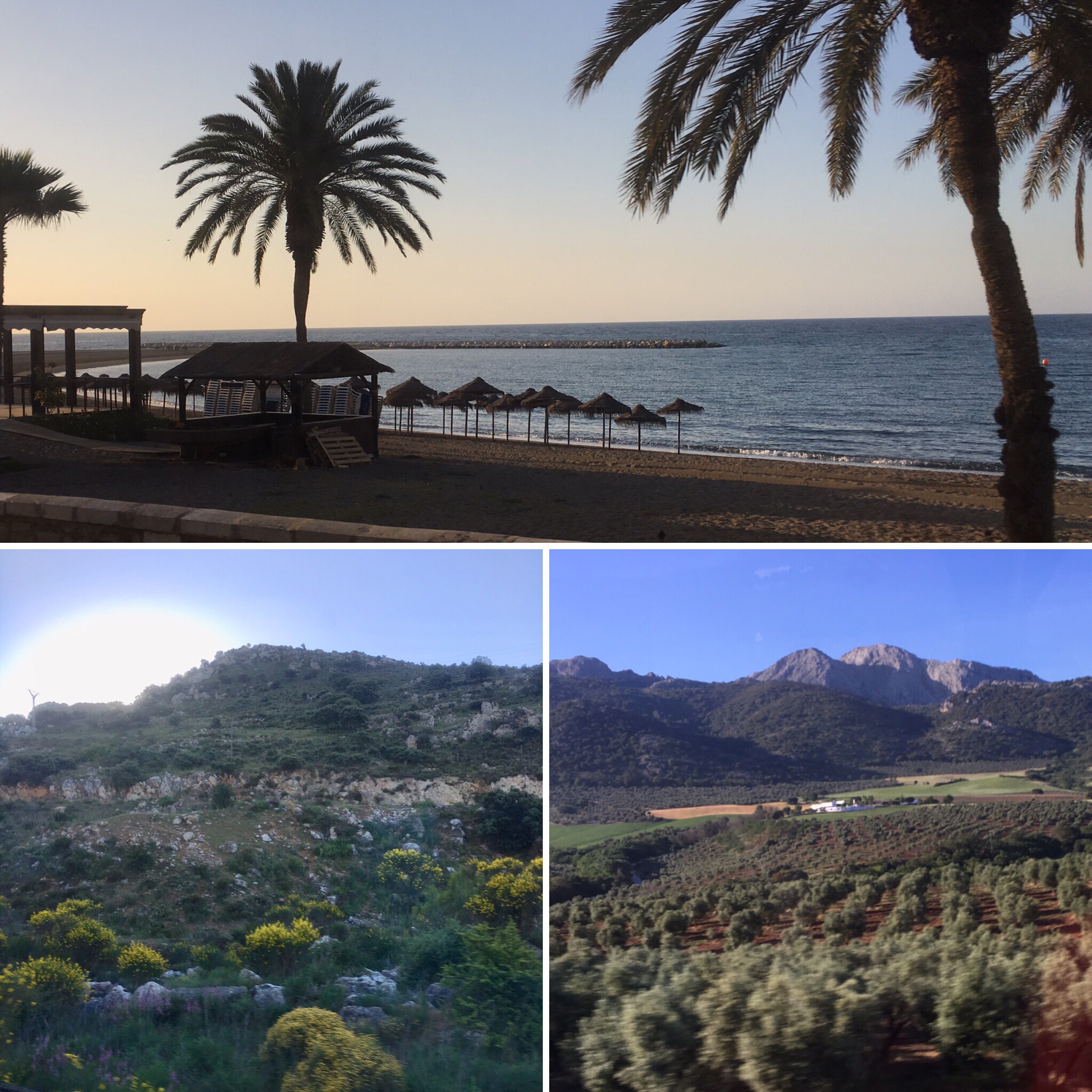
We arrived in the early morning at the Port of Malaga. The skies were clear and blue, and it promised to be a beautiful day for us. We had a 1.5 hour drive to our destination, the city of Granada, so we were among the first to disembark for our tour. We began with a beautiful drive along the shoreline in Malaga. As we left the city and entered the countryside, I couldn’t help but notice that the terrain was very similar to that of southern California. It was dry with small shrubs, a few oaks. As we got farther from Malaga, we entered the agricultural area with orchards of olive and citrus trees, the same kind of scenery I remember seeing on highway 126 through Santa Paula, California. The hills outside of Malaga are covered with olive trees because apparently they grow very well in hilly regions, and Spanish olive oil is highly valued.

Malaga beach (top), countryside (bottom left), olive trees (bottom right)
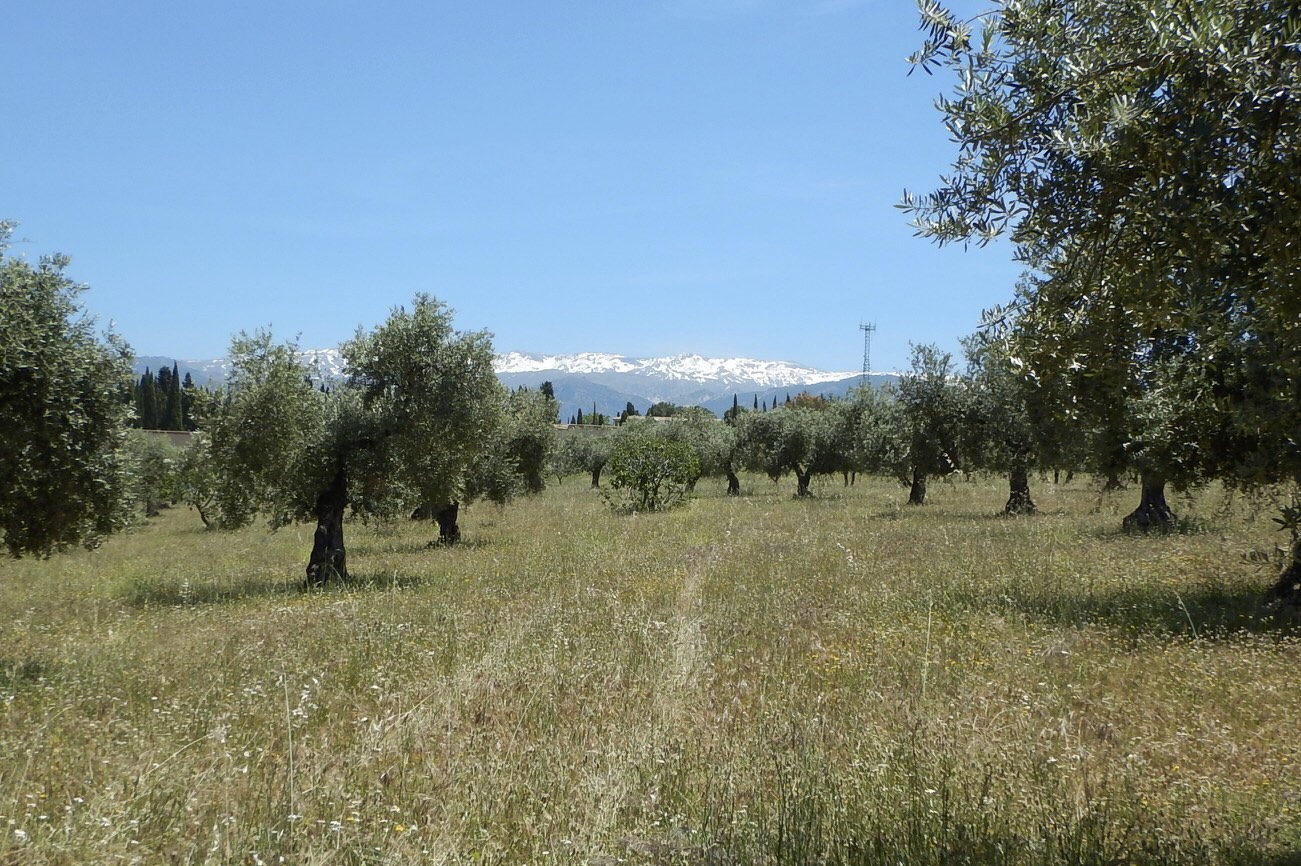
Granada

Historically, Granada was the last independent kingdom before Spain became a unified country under King Ferdinand and Queen Isabella. Symbolized by the pomegranate, it is bordered by the Sierra Nevada Mountains, making Granada is a popular tourist attraction that nomads once referred to as paradise. Nearly 280,000 people now call Granada home.

The Sierra Nevada mountains can be seen beyond a grove of olive trees.
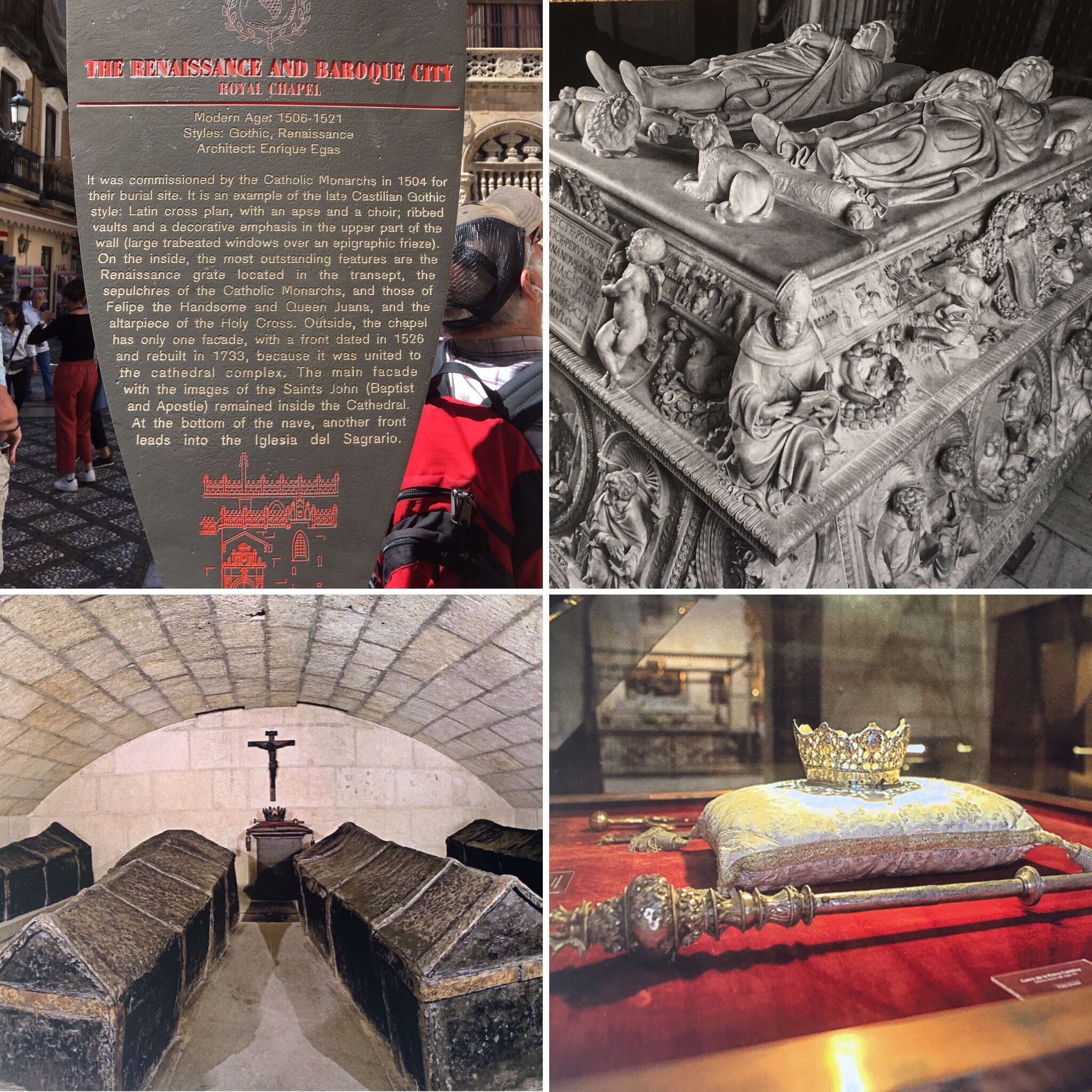
*Royal Chapel

This is the burial place of King Ferdinand and Queen Isabella. They wanted Granada to be their final resting place because it was their dream that Spain be unified, and Granada was the last independent kingdom.

From top-left, clockwise: Royal Chapel sign, Top of mausoleums, actual remains inside the tomb, Isabella’s crown and scepter
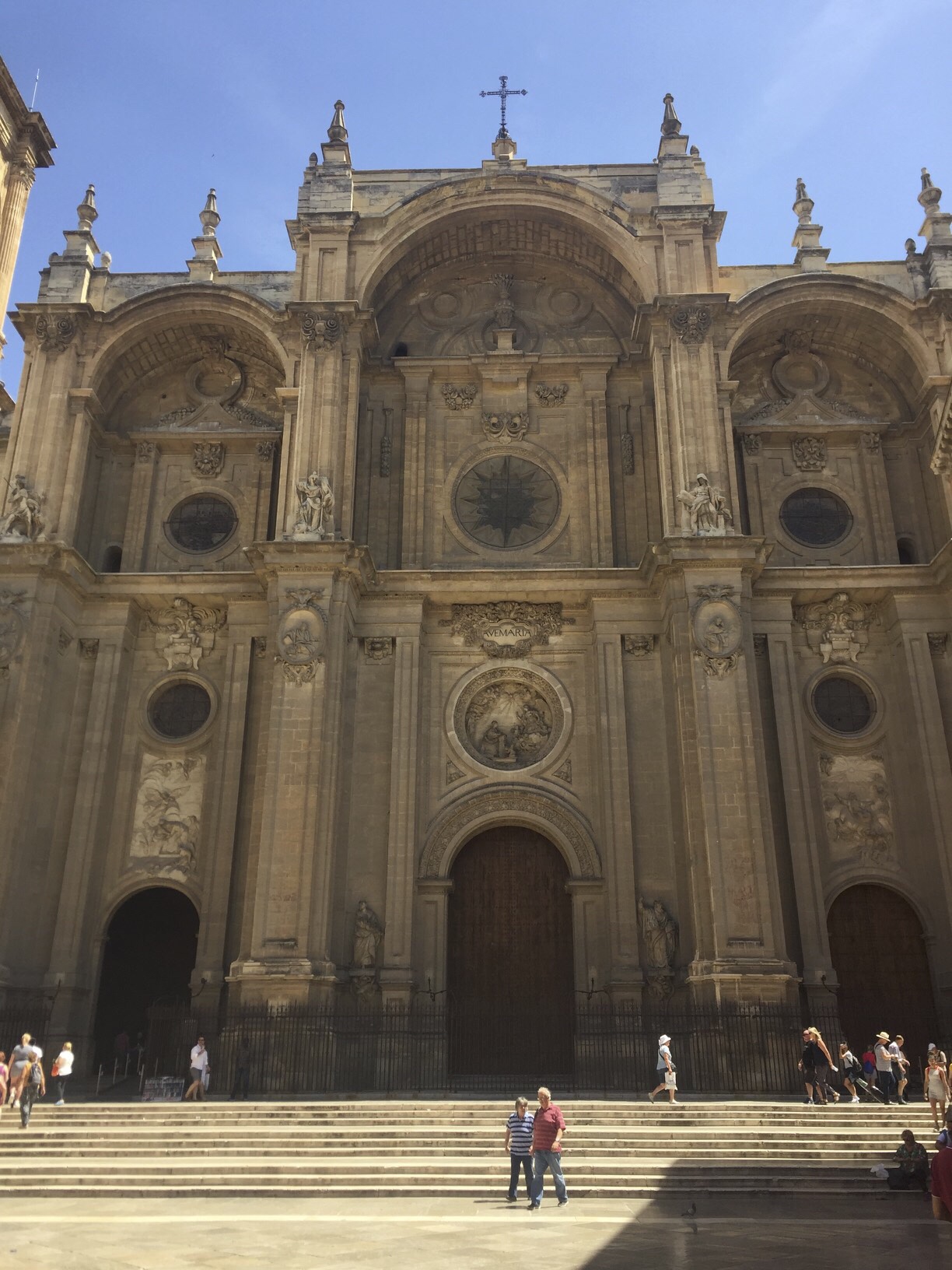
*Cathedral of Granada

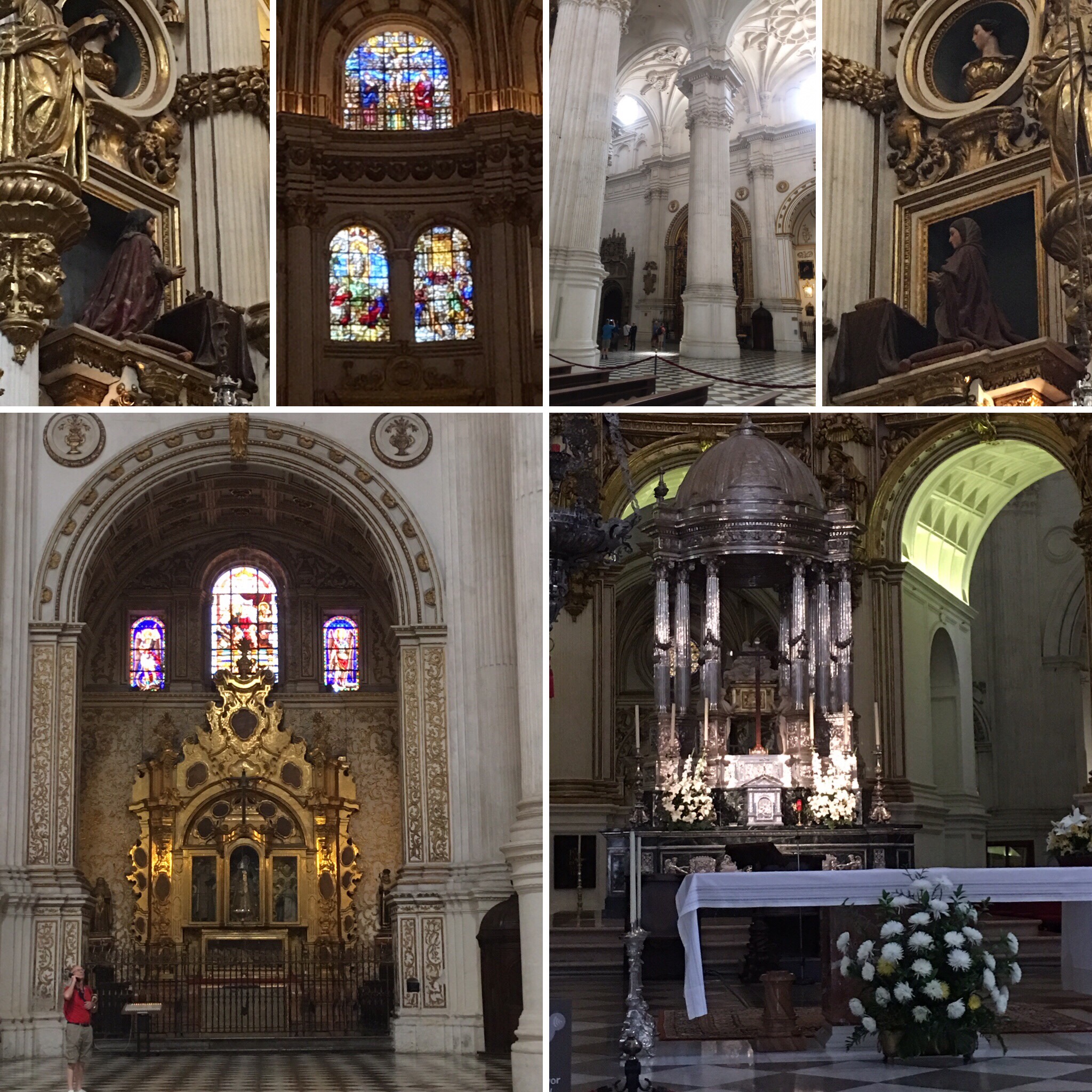
It took 200 hundred years to build this cathedral, and as such it has two basic architectural styles: gothic and baroque. Its construction was commissioned by Philip, the grandson of Ferdinand and Isabella, and its interior looks more like a palace than a traditional cathedral.

Cathedral exterior

Clockwise from top-left: King Ferdinand (father of Spain) praying below Adam (father of mankind); stained glass; marble pillars; Queen Isabella (mother of Spain) praying below Eve (mother of mankind); altar area; alcove
*Alhambra

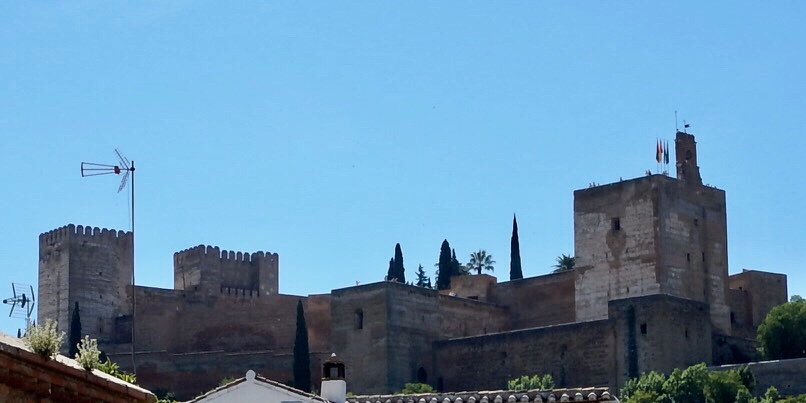
This was a fort built by the Moors around the 9th and 10th centuries to protect their communities. It is on a hill that overlooks the city of Granada in the Muslim quarter of the city.

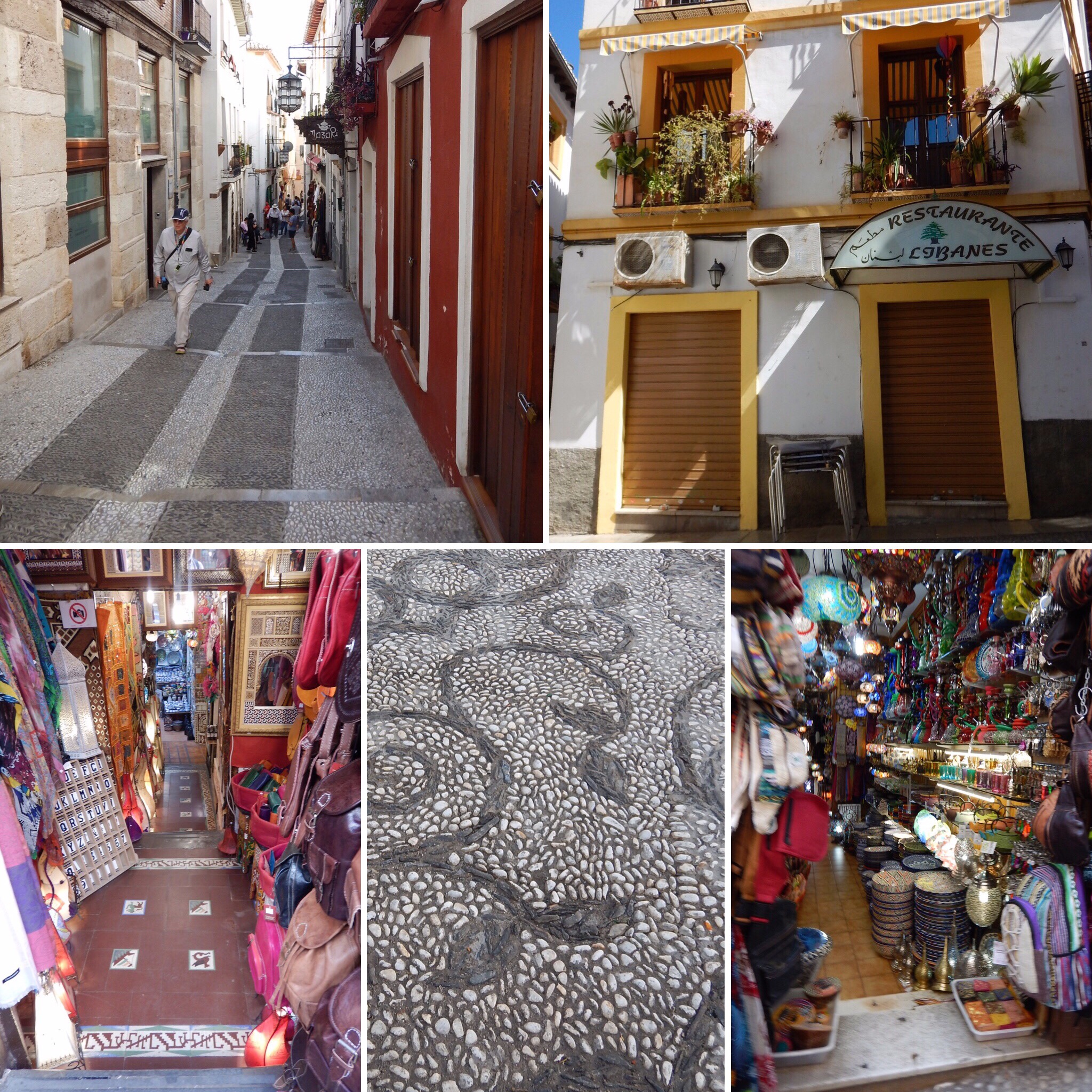
The steep, cobblestoned road we climbed to get a view of the fortress led us by a variety of shops and sights. Arabic influence was evident throughout this section of the city in the streets, shops, and architecture.

Clockwise from top-left: steep, cobbled road up to viewpoint; restaurant; shot; detail of cobblestoned road; another shop
Next stop: Barcelona, Spain

Cadiz, Spain

For the preaching of the cross is to them that perish foolishness; but unto us which are saved it is the power of God.” 1 Corinthians 1:18

Cadiz was founded 100-150 years before Christ by Phoenicians. Today, there are about 200,000 people. It is located on a peninsula where two bridges link city to mainland. We crossed the 3 km long Constitution Bridge as we left the peninsula and headed toward Seville. Spain is a land heavily influenced by the Muslims, who had been on the Iberian peninsula for 800 years until Christians conquered the land.

Seville, Spain

Today the area around Seville is known for its sherry wine. It’s quality doesn’t depend on the year, but rather upon the taste of the “mother of the wine.” The oldest wine in the wine cellar is the “mother” and is mixed with the younger wines when they are being made. The darker the wine, the sweeter it is.

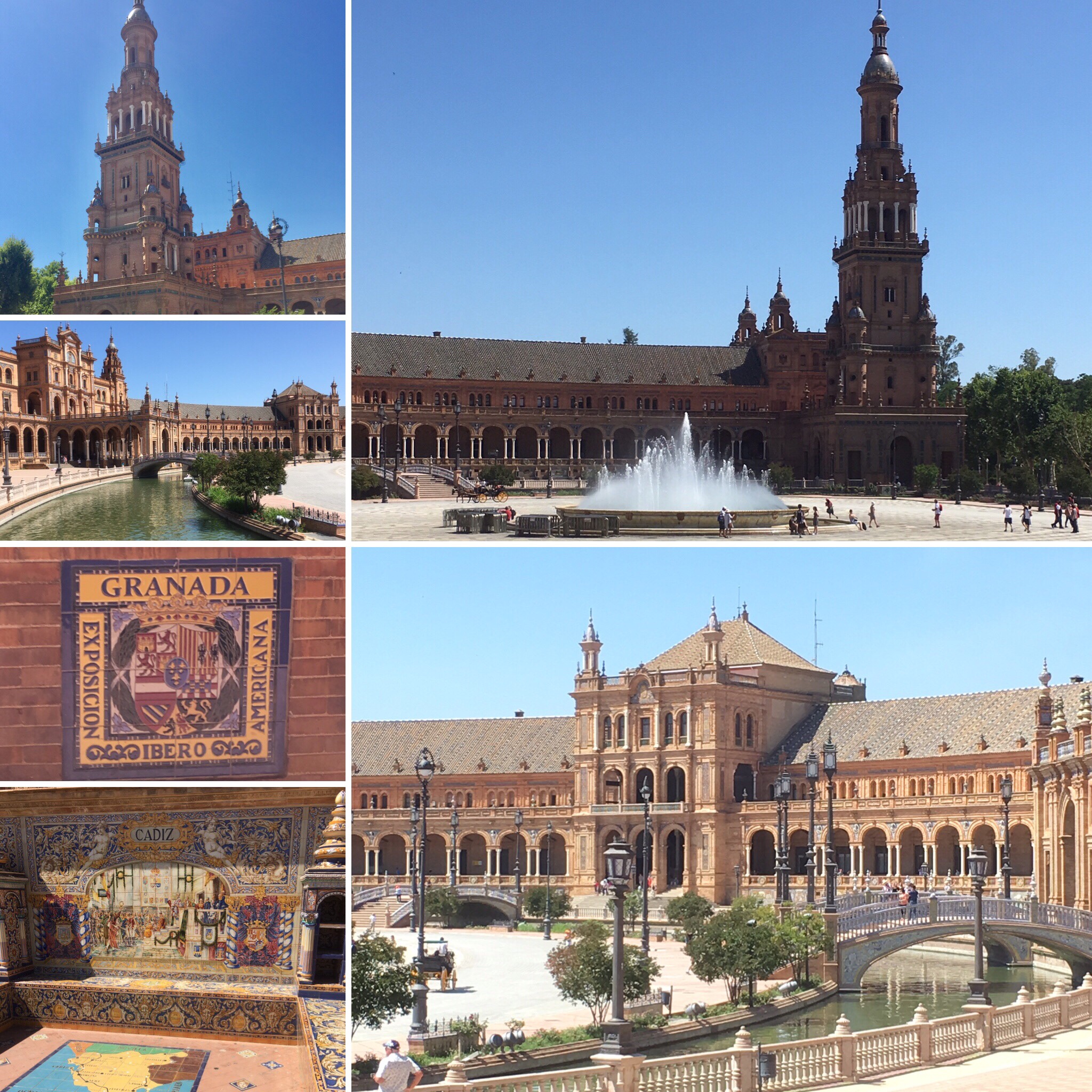
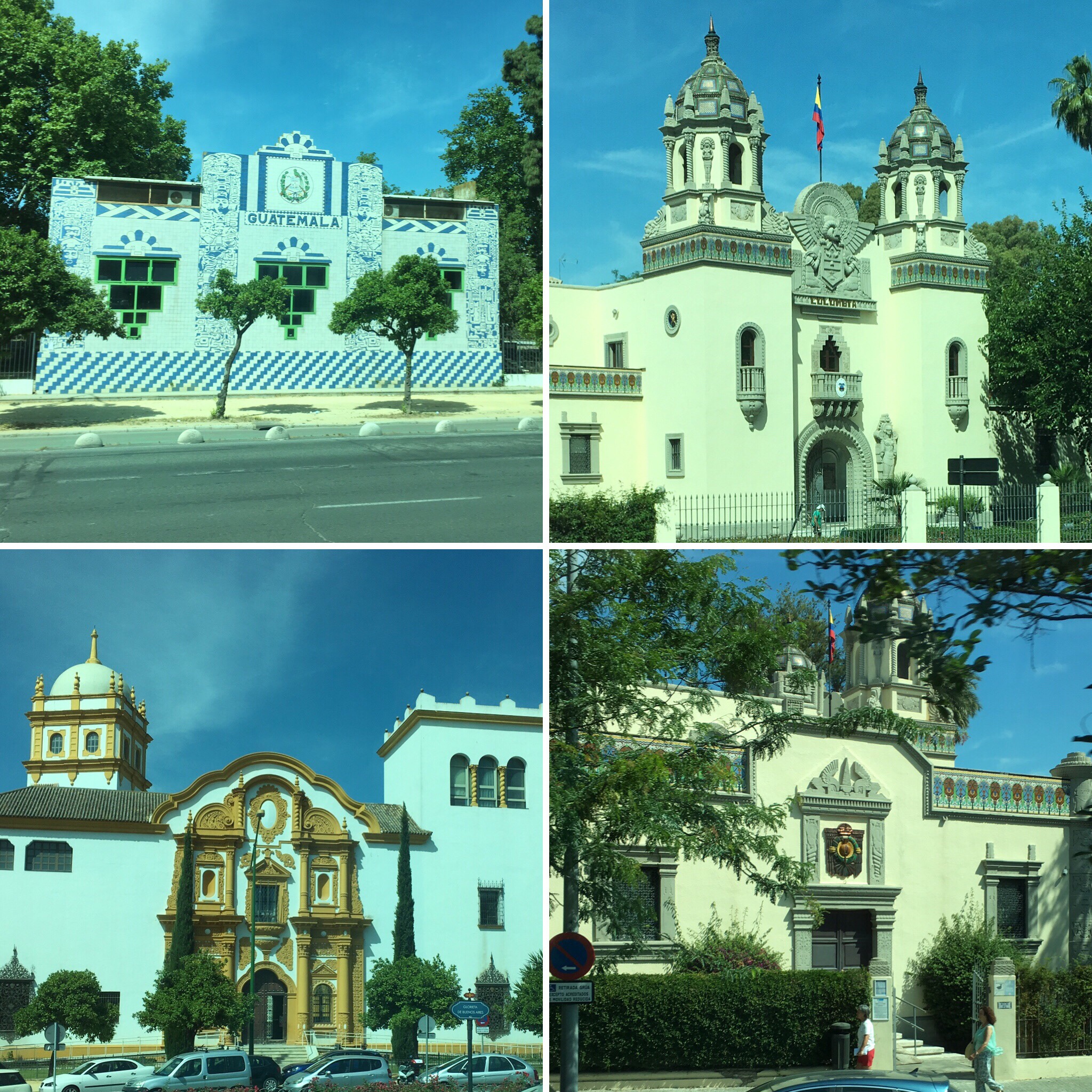
*In preparation for the Exposition of 1929, countries that participated built elaborate buildings representing themselves. Those buildings still remain, and many now are used as cultural centers for those individual countries.

*Casa de Pilatos – Pilate’s house

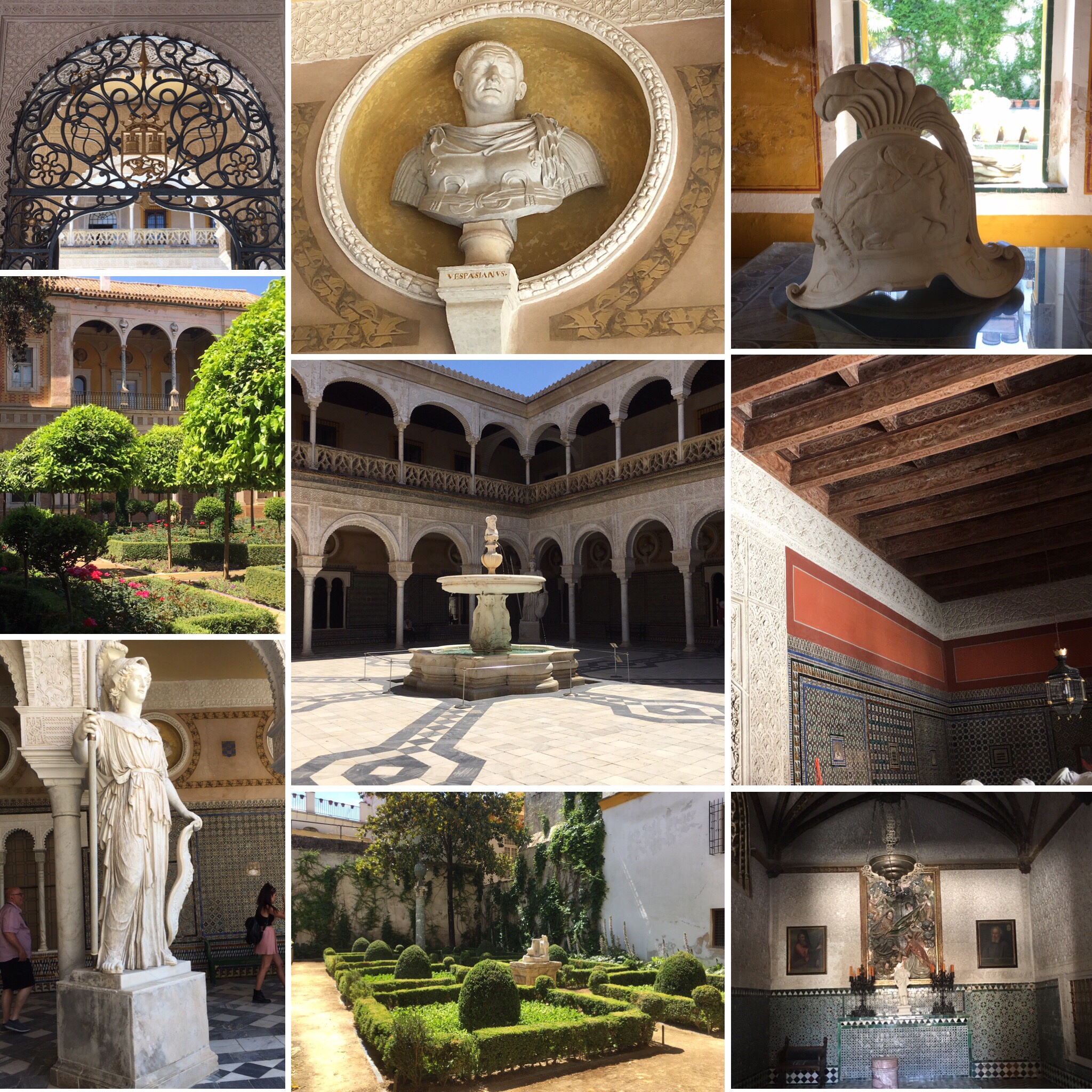
This was not actually Pilate’s house since it was built in the 15th century. Instead, the son of wealthy family visited Jerusalem and wanted to build this palace to commemorate the “stations of the Cross.” Pilate’s house (Praetorium) in Jerusalem is the first “station of the Cross,” which this palace was to represent. The architecture is similar to Arabic architecture (wood-plaster- mosaics) except instead of mosaics, ceramic tiles are used to cover the walls.

Clockwise from upper left: metalwork archway leading to courtyard (center); bust of Vespasian; Roman helmet; architecture; chapel; Spanish garden; goddess Artemis; Italian garden; courtyard.

*Cathedral de Sevilla

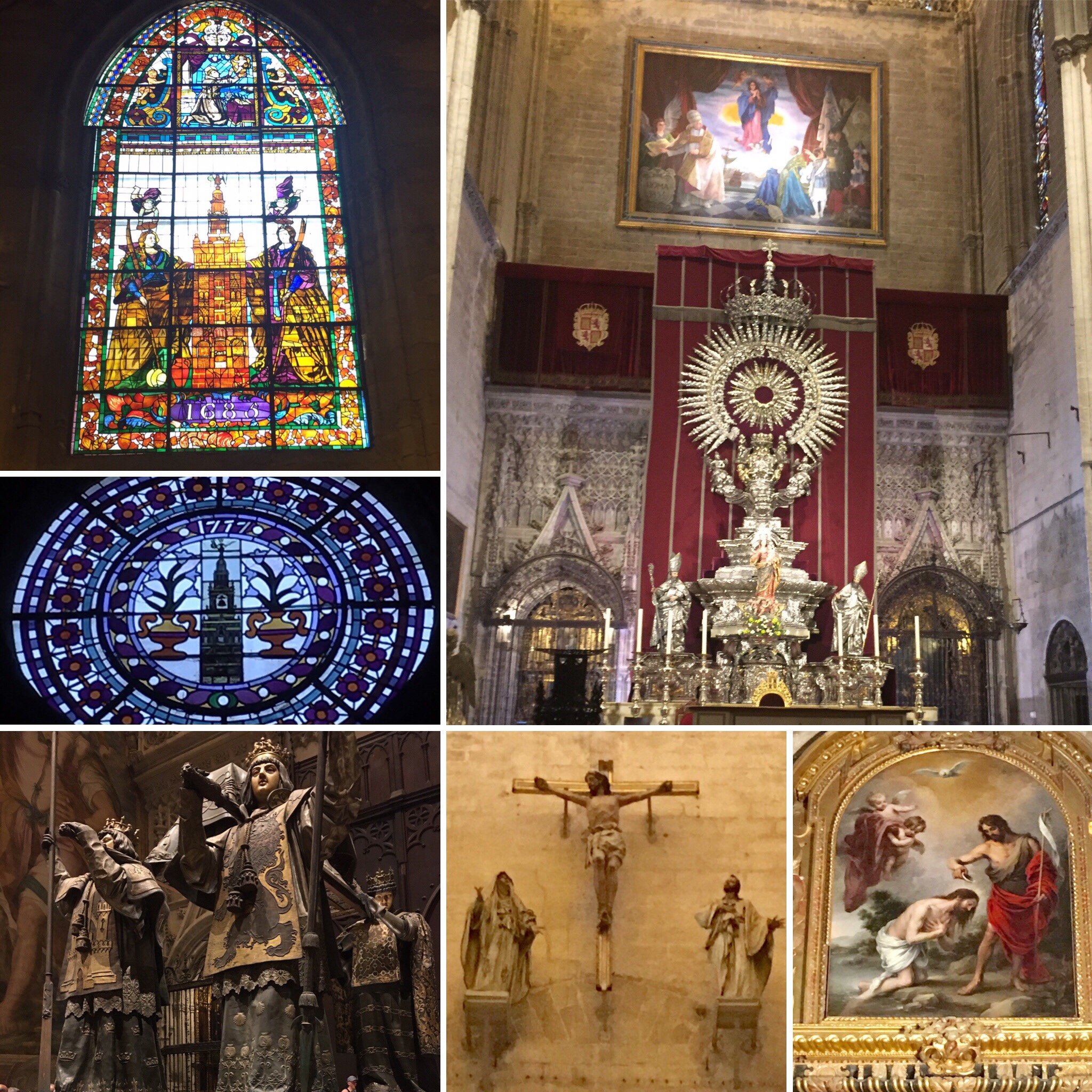
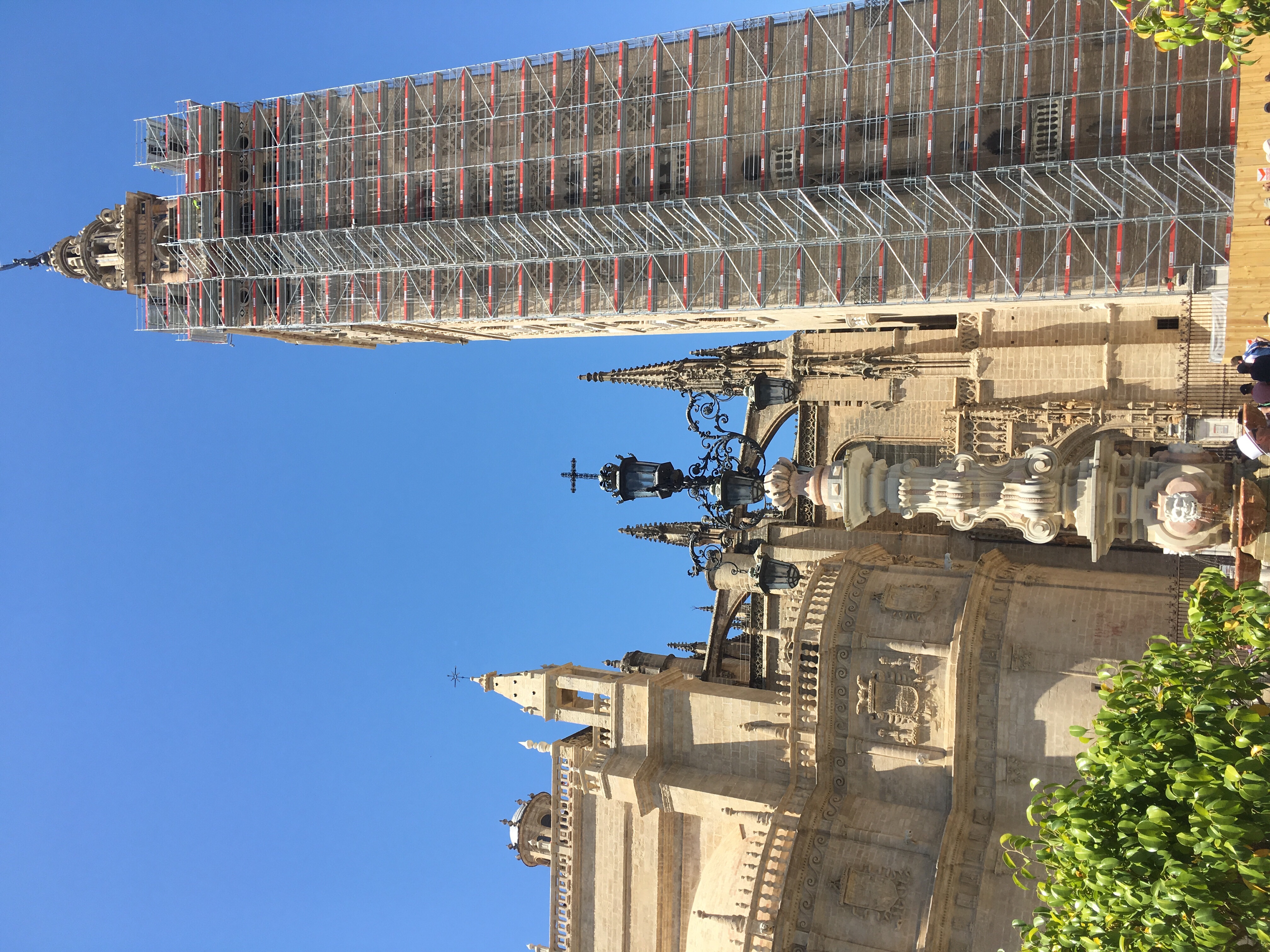
Currently being renovated, this is the world’s largest gothic cathedral, and it is here that the archbishop lives.

The bottom left photo is Christopher Columbus’ tomb. His bones are not buried in the crypt. Instead, they are being carried above it because Columbus stayed he did not want to be entombed.

*The Old Town

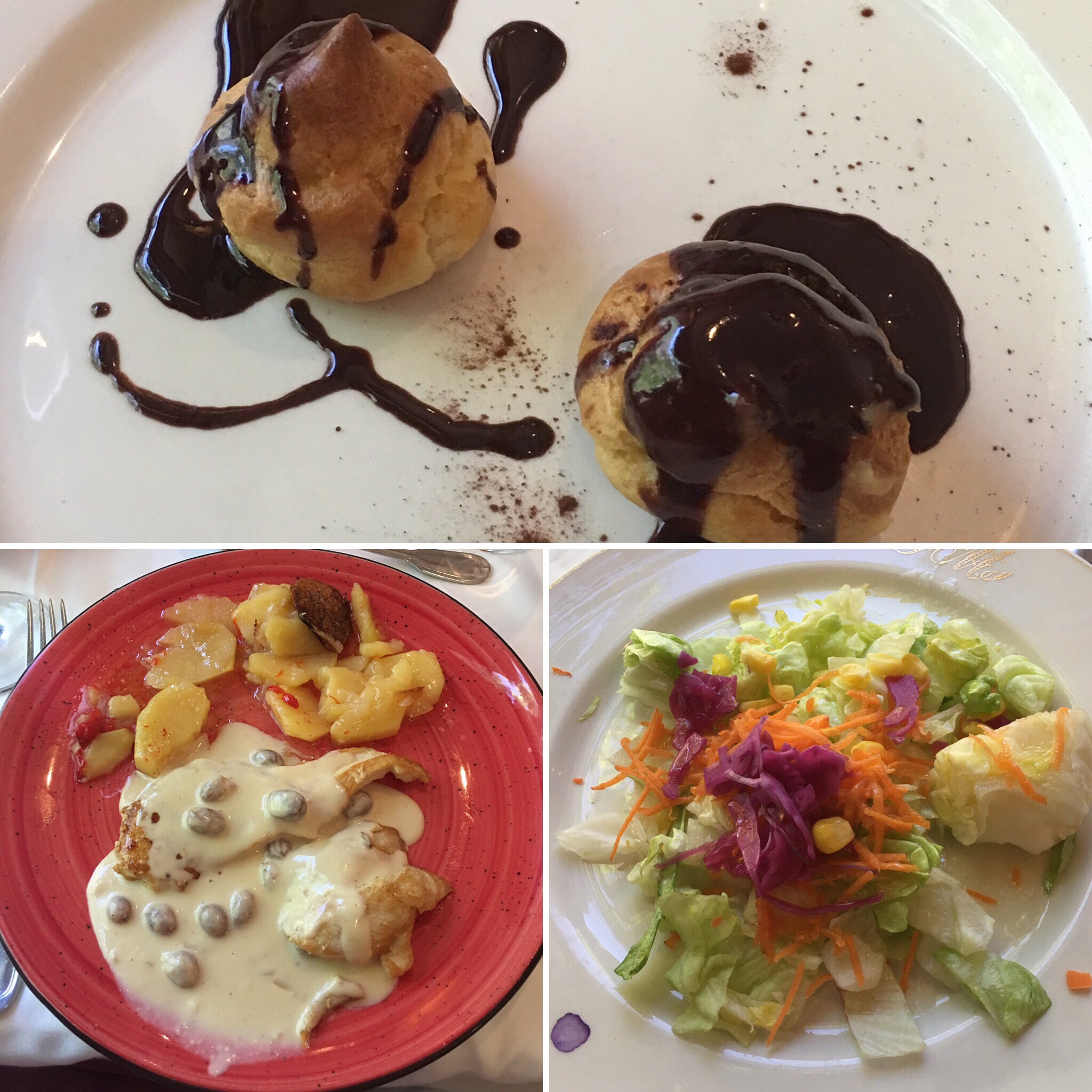
We strolled through the old section of Seville, through narrow and cobbled streets. Lots of little shops, places to eat, and town squares. We stopped for lunch at the San Marco restaurant.

Top: profiteroles with chocolate sauce

Bottom left: pork with raisin gravy and scalloped potatoes. Bottom right: salad

*Spanish Square

This was built by Spain for the Exposition of 1929. Each arch represents a state of Spain, and their names are in the ceramic tiles under their arch. The water represents the Atlantic Ocean, and the bridges connects Spain with the North American continent.

Today we walked about four miles. The weather was in the low 90’s, and it was a bit humid, but all in all, it was a very interesting and educational day.

Tomorrow: Granada, Spain

Casablanca, Morocco

“The Lord is not slack concerning his promise, as some men count slackness; but is longsuffering to us-ward, not willing that any should perish, but that all should come to repentance.” 2 Peter 3:9

I was so excited to wake up to my first glimpses of Africa! As we neared the port, I was somewhat surprised to see it looked like any other port city! (I don’t really know what I expected. Images of bedouins riding in camel caravans come to mind!) Morocco is on the northwestern coast of Africa, and at its nearest point, it is only 8 miles from Europe. It’s climate is a mild Mediterranean one with average summer temperatures hovering around the 80 degree mark. Casablanca was founded in the 10th century by the Berbers. Claimed initially by Portugal, it was also influenced by the Spanish, who helped rebuild the city after a devastating earthquake in Lisbon, Portugal in 1755 created aftershocks which extensively damaged Casablanca. It became a French protectorate in the early 20th century and grew quickly. Today it is Morocco’s largest city, with a blend of French and Moroccan influences.

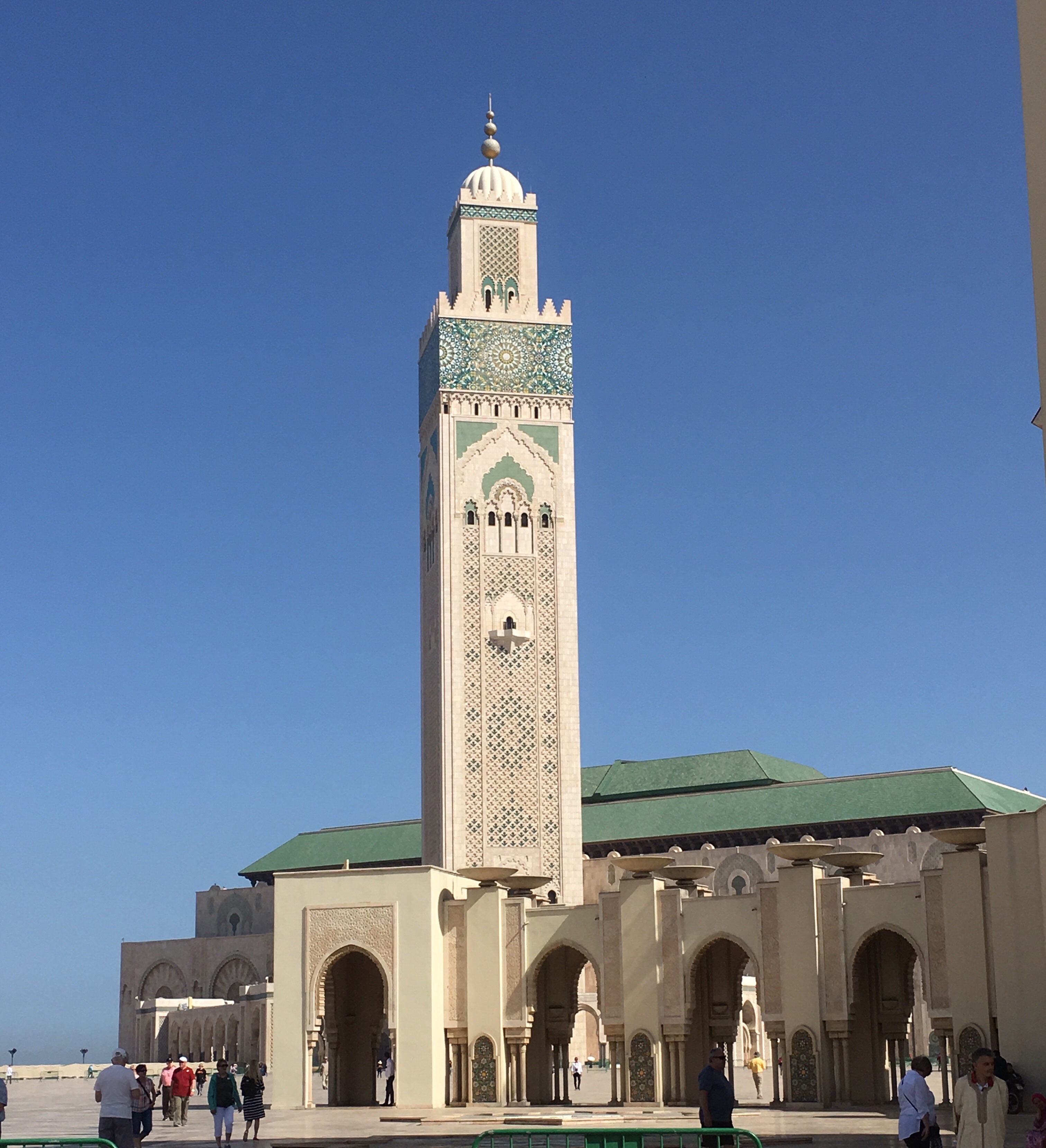
Hassan II Mosque

It was built by, and named for the father of present king of Morocco.

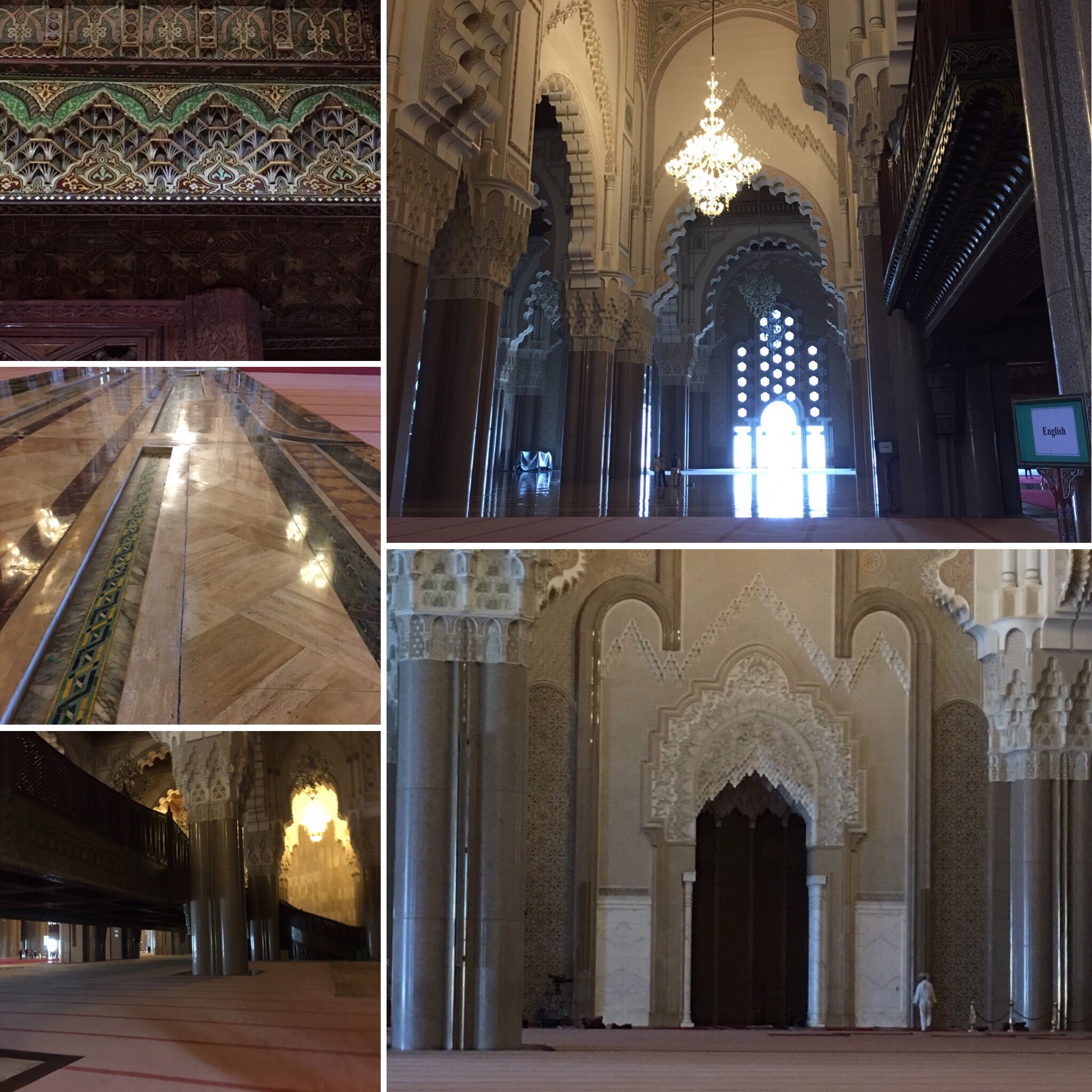
Architecture: Spanish Moorish architecture has three characteristics. 1. The cedar wood that is used is from the Atlas Mountains in northern Morocco is at the top of the walls. 2. Walls are plaster and the designs must be etched by artisans while the plaster is still wet, and that is below the cedar. 3. Mosaics are at the bottom of the walls, and there are Arabic calligraphic writings also near the wall bottoms. These writings are verses from Quran.

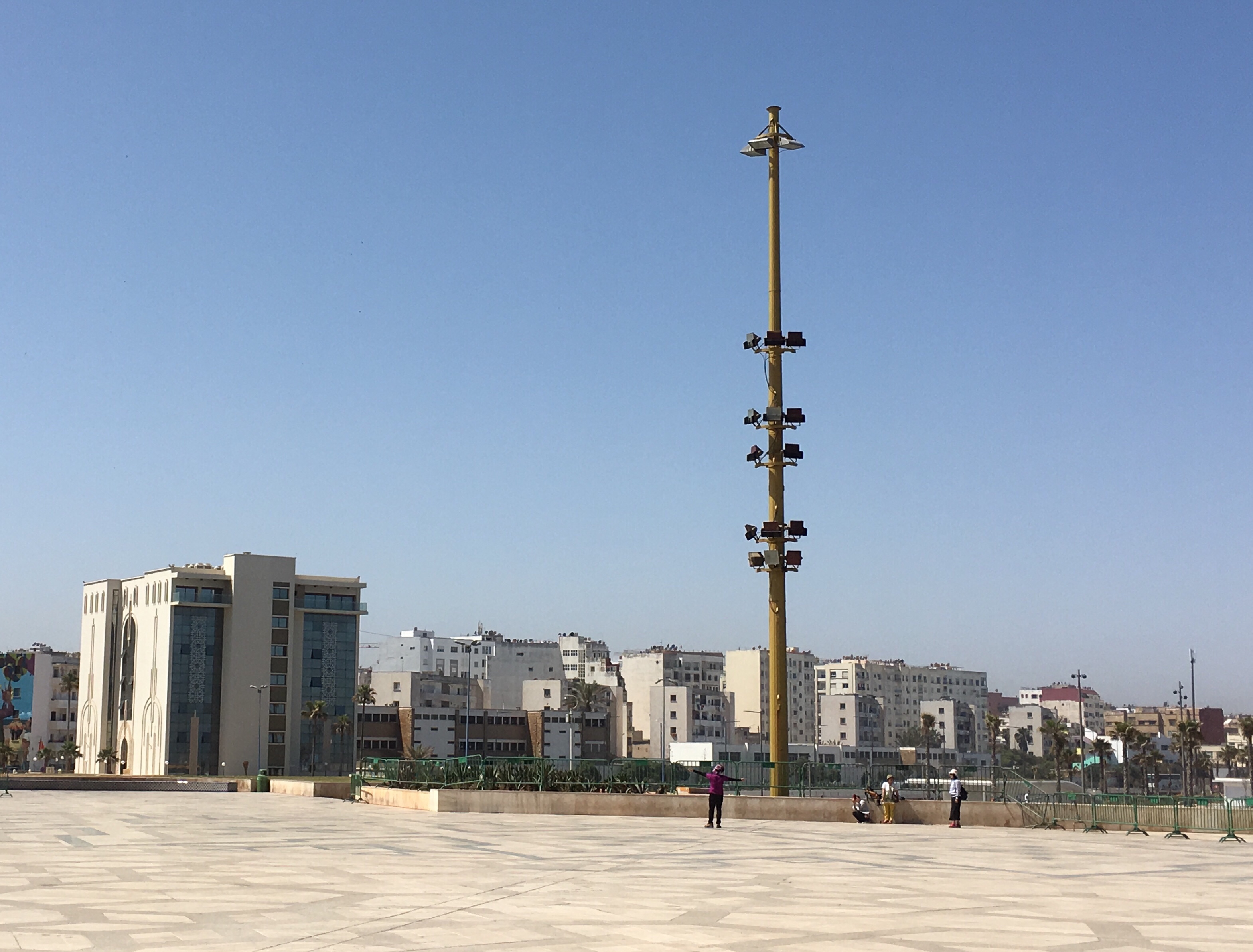
No statues or figurines are allowed in the mosque. Italian marble and chandeliers are used throughout the mosque. There is a 20,000 square meter prayer area that can accommodate 25,000 people at one time. It has an ornate retractable ceiling, and a canal through which water flows. Water is known as the “Fountain of Life.” The main cedar door is where the Iman (religious leader stands), and it is in the direction of Mecca. Prayer call is 5 times a day. You can see the speakers that announce the call to prayer in the photo below.

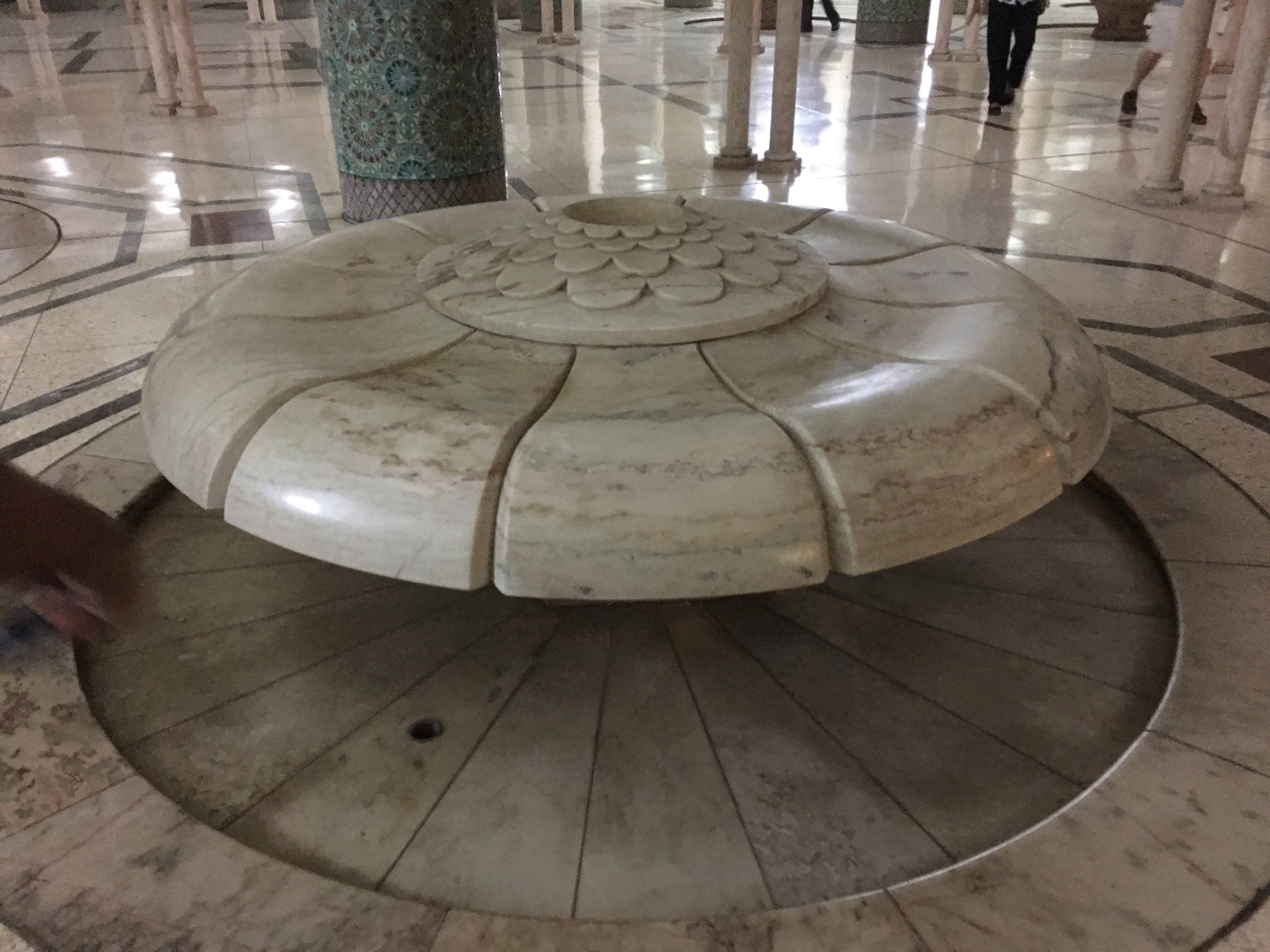
Below the prayer room are 41 fountains. Water in the lotus-shaped fountains is used to cleanse oneself before prayer. Muslims repeat the washing three times before going to prayer.

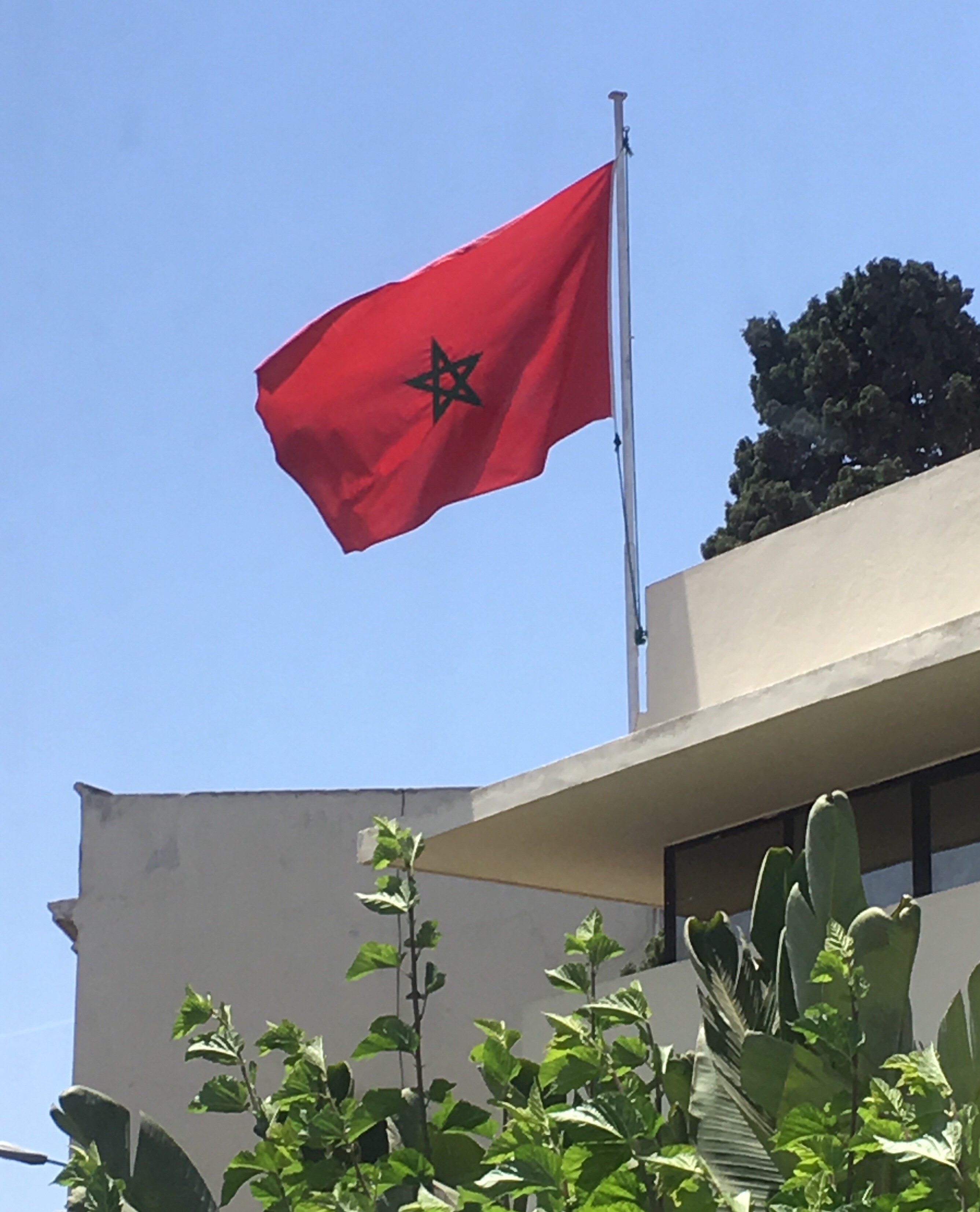
The Moroccan flag is red with a five pointed star. The points on the star present the 5 pillars of Islam and the 5 calls to prayer.

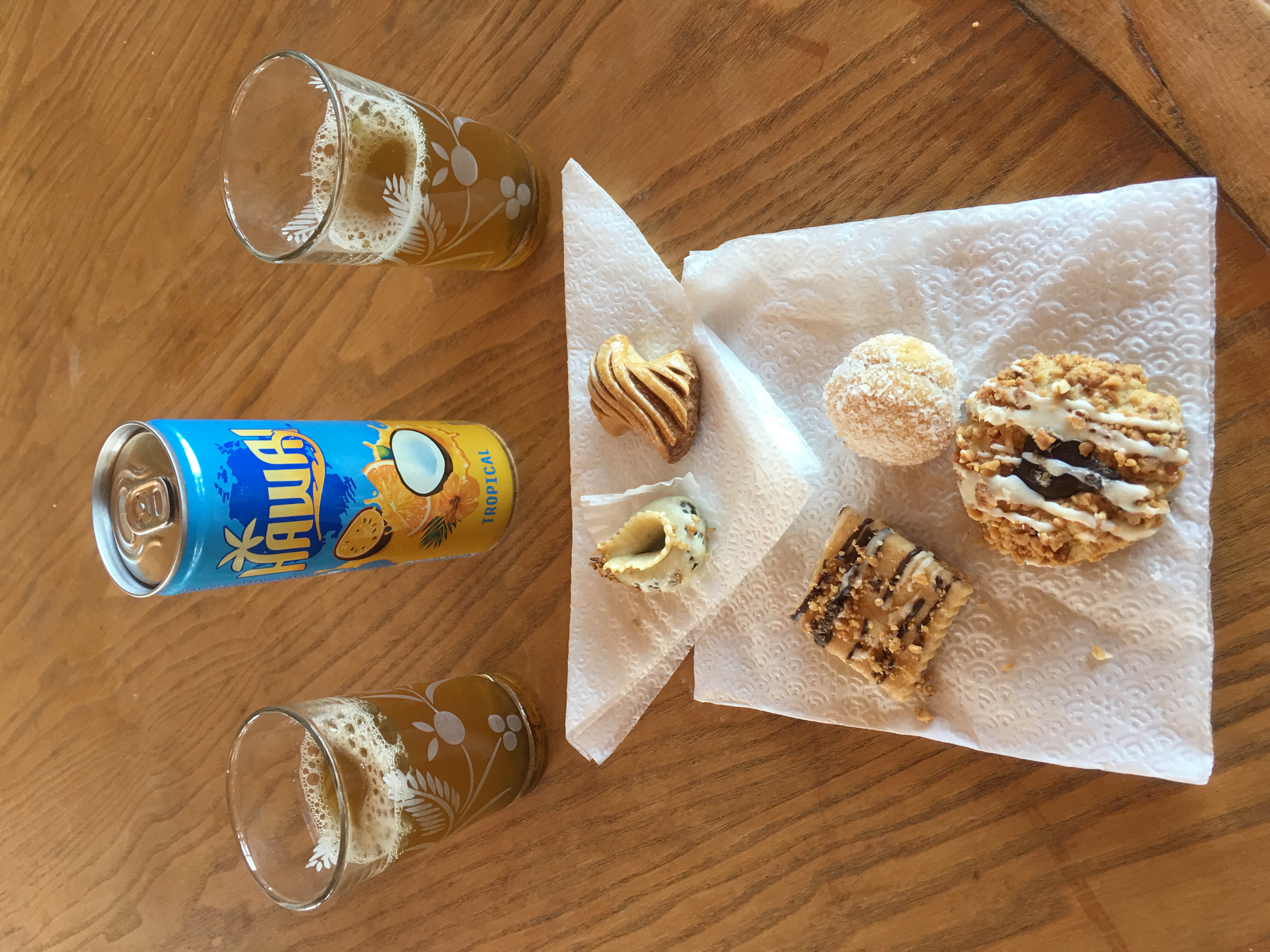
Our next stop was the Merkat, a restaurant on the Atlantic shore. Here we sampled Moroccan mint tea and cookies.

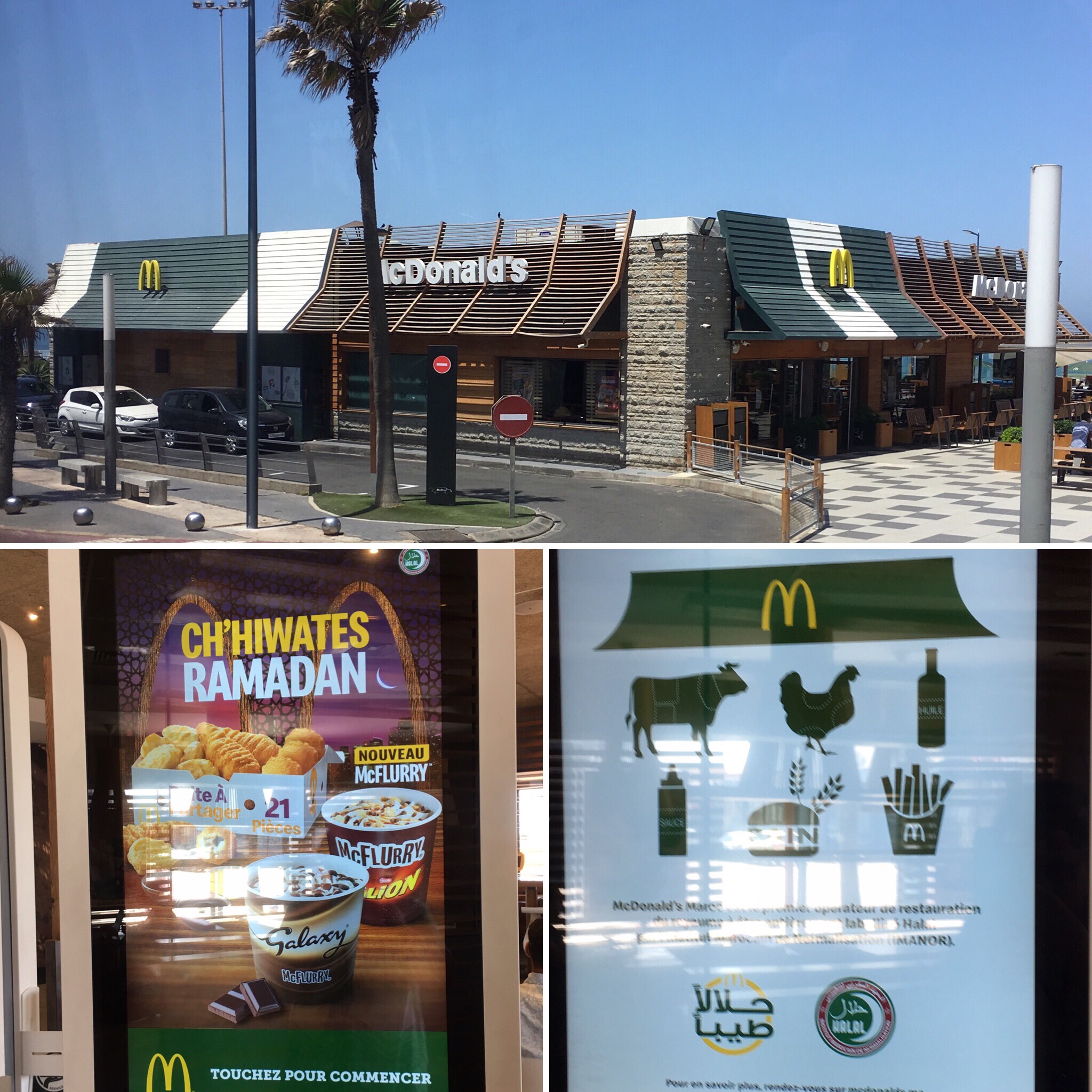
We ran across the street to visit a McDonalds and it was practically deserted! Why? This is the month of Ramadan when Muslims fast from sunrise to sunset!

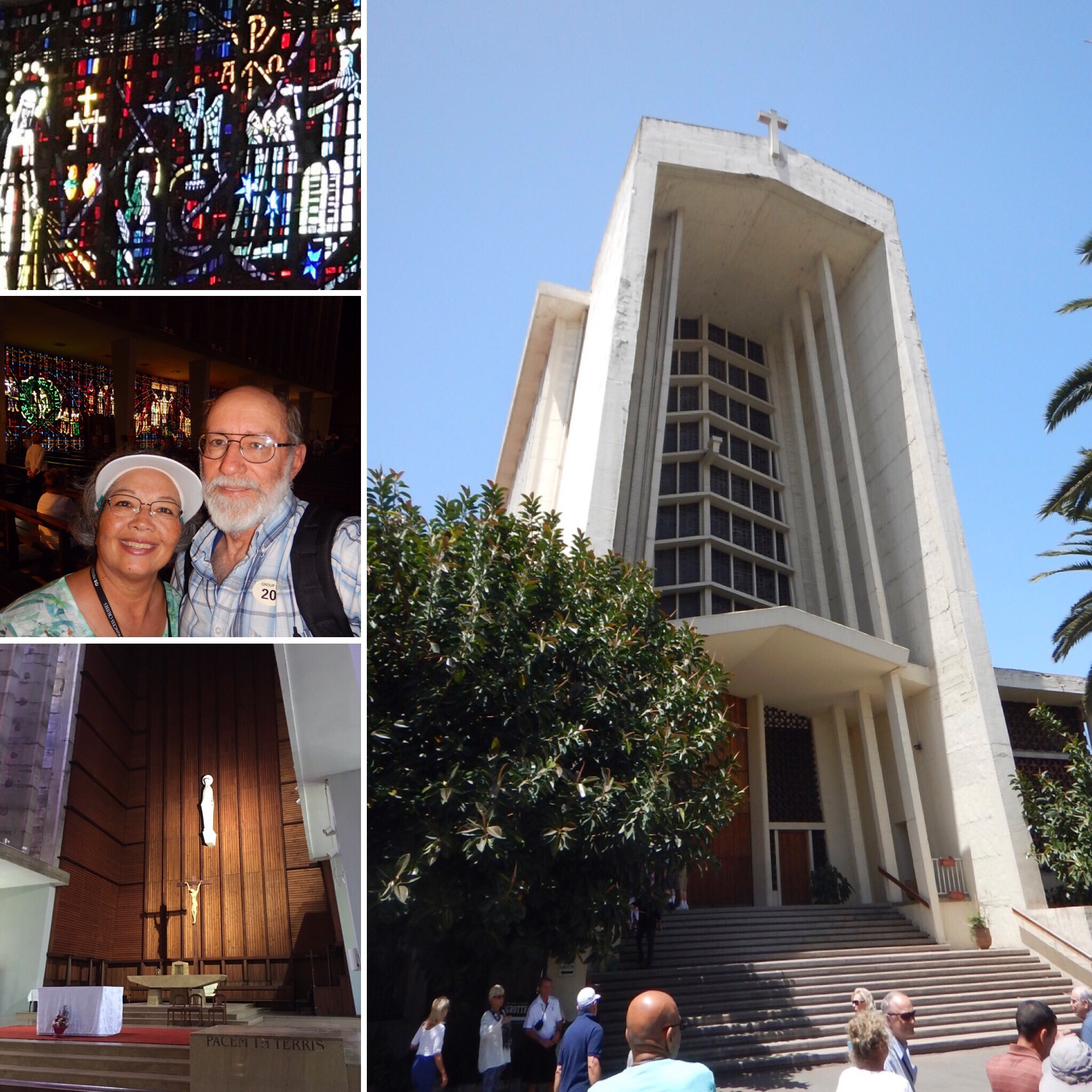
Our Lady of Lourdes Catholic Church

Religious tolerance, that is freedom of religion, is guaranteed in the Moroccan constitution. Most of the population follows Islam, while less than 1% are Christian.

Habous Quarter

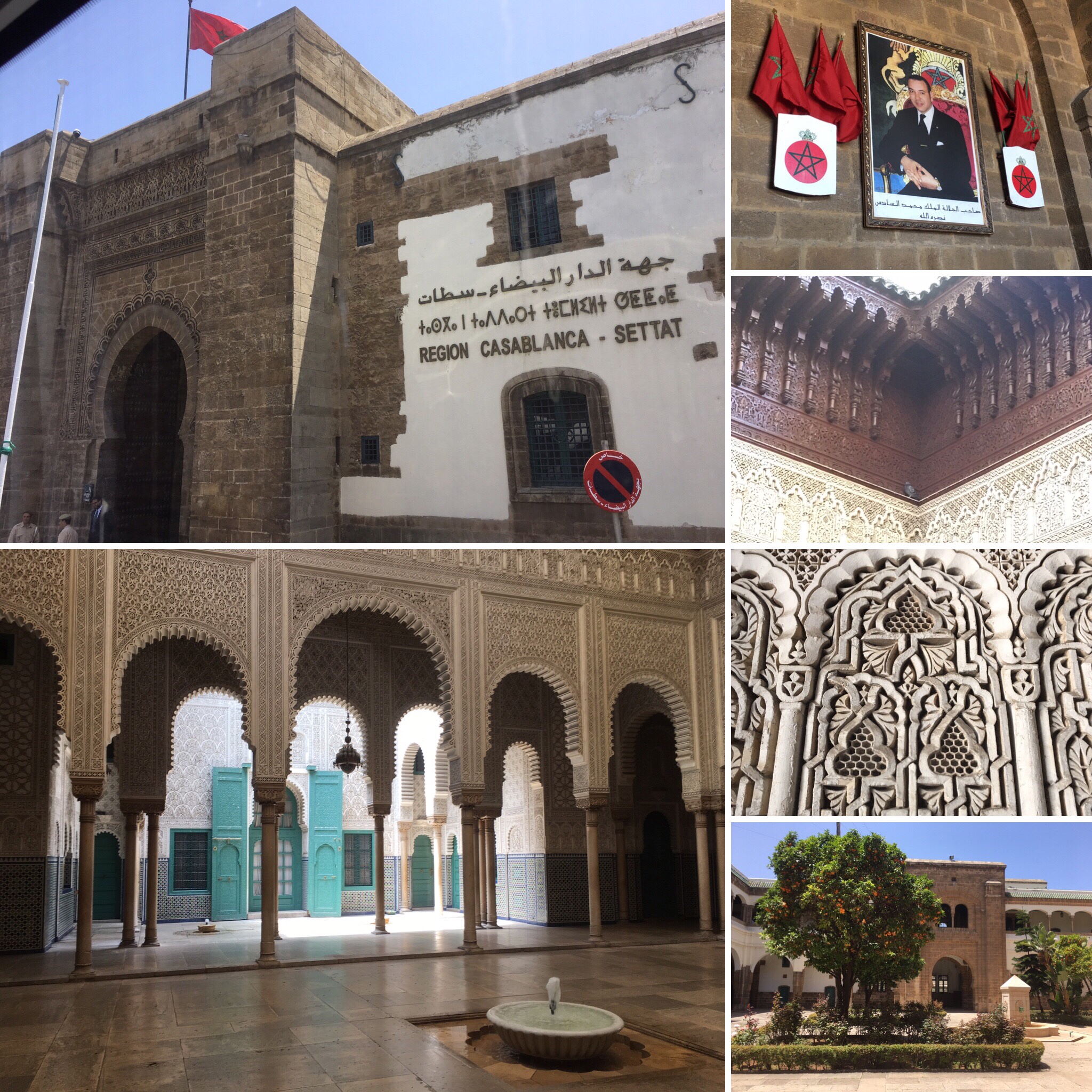
The government office building sign is written in Arabic, Berber dialect, and French. The Berber language was only oral, so the written is considered a “borrowed” language. This was a courthouse; now it is the city hall government offices. A portrait of Mohammed VI, current king of Morocco is in the entrance. The architecture is the same as the Hassan II mosque with cedar walls, carved plaster, and mosaics. There is an outer patio with a few orange trees and room to stroll.

Morocco is a constitutional monarchy. However, unlike most constitutional monarchies, the Moroccan king has real powers with the right to veto any legislation, therefore it is not a true constitutional monarchy. There is a two house parliament with members who serve for 5 or 6 years depending on whether they were elected to the upper or lower parliament, and there is a prime minister, who is chosen by king from the majority political party.

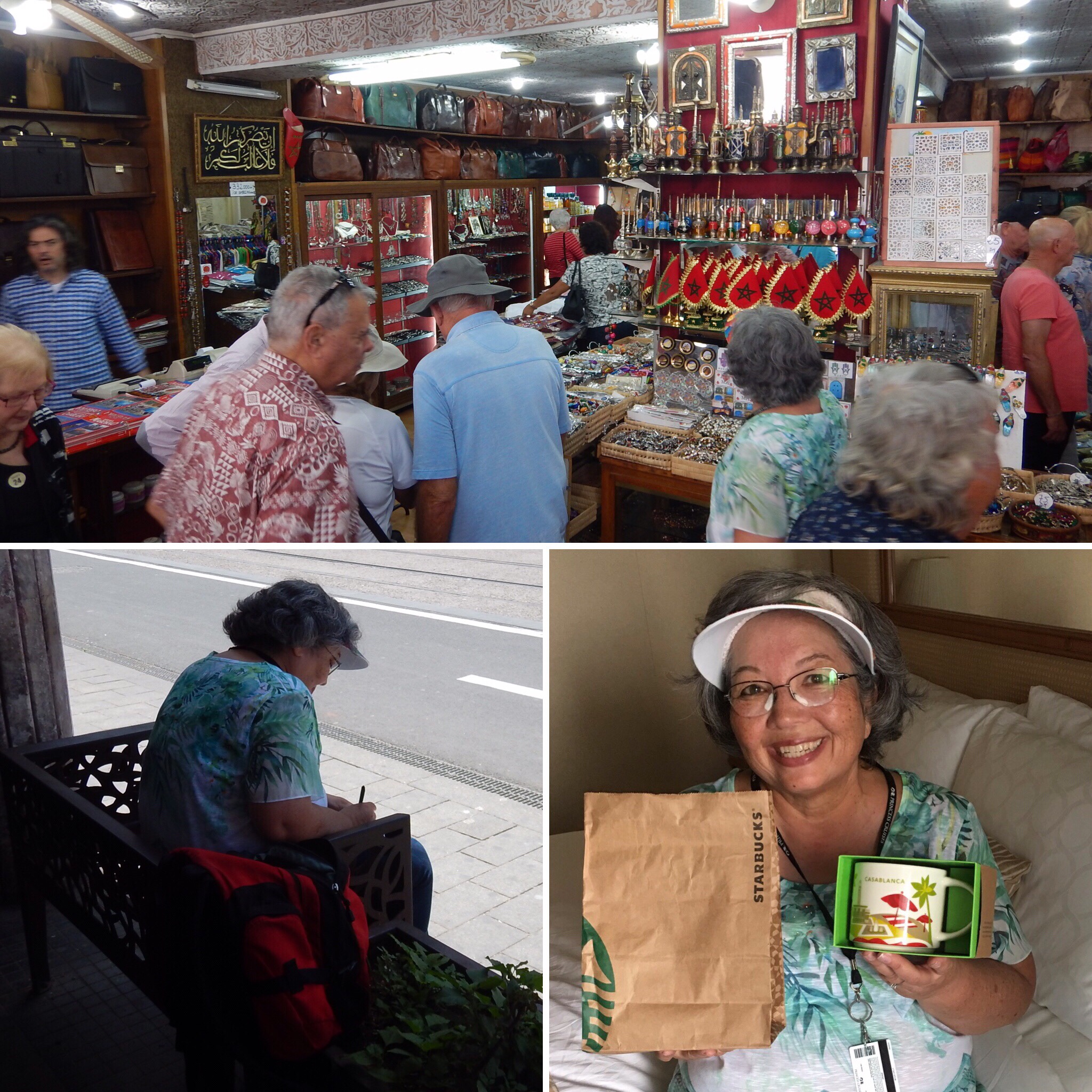
Souvenir Shopping

We finished the day buying a few souvenirs, and then our guide made a very special stop for us. He stopped at the Casablanca train station so five of us on the bus could get a Starbucks mug! That was such an unexpected blessing!

Next stop: Cadiz, Spain

Funchal, Madeira

How beautiful upon the mountains are the feet of him that bringeth good tidings, that publisheth peace; that bringeth good tidings of good, that publisheth salvation; that saith unto Zion, Thy God reigneth!” Isaiah 52:7

This is another Portuguese archipelago, of which Funchal is the capital of the island of Madeira. 256,000 people live here. 70% of population lives in the southern part of the island because it is less steep, has mild seas, and is more wooded. 20% of the island is covered with forest. Water is deliverered throughout the island via lavadas. Lavadas are man-made channels for water, which are very important for agriculture.

Camacha

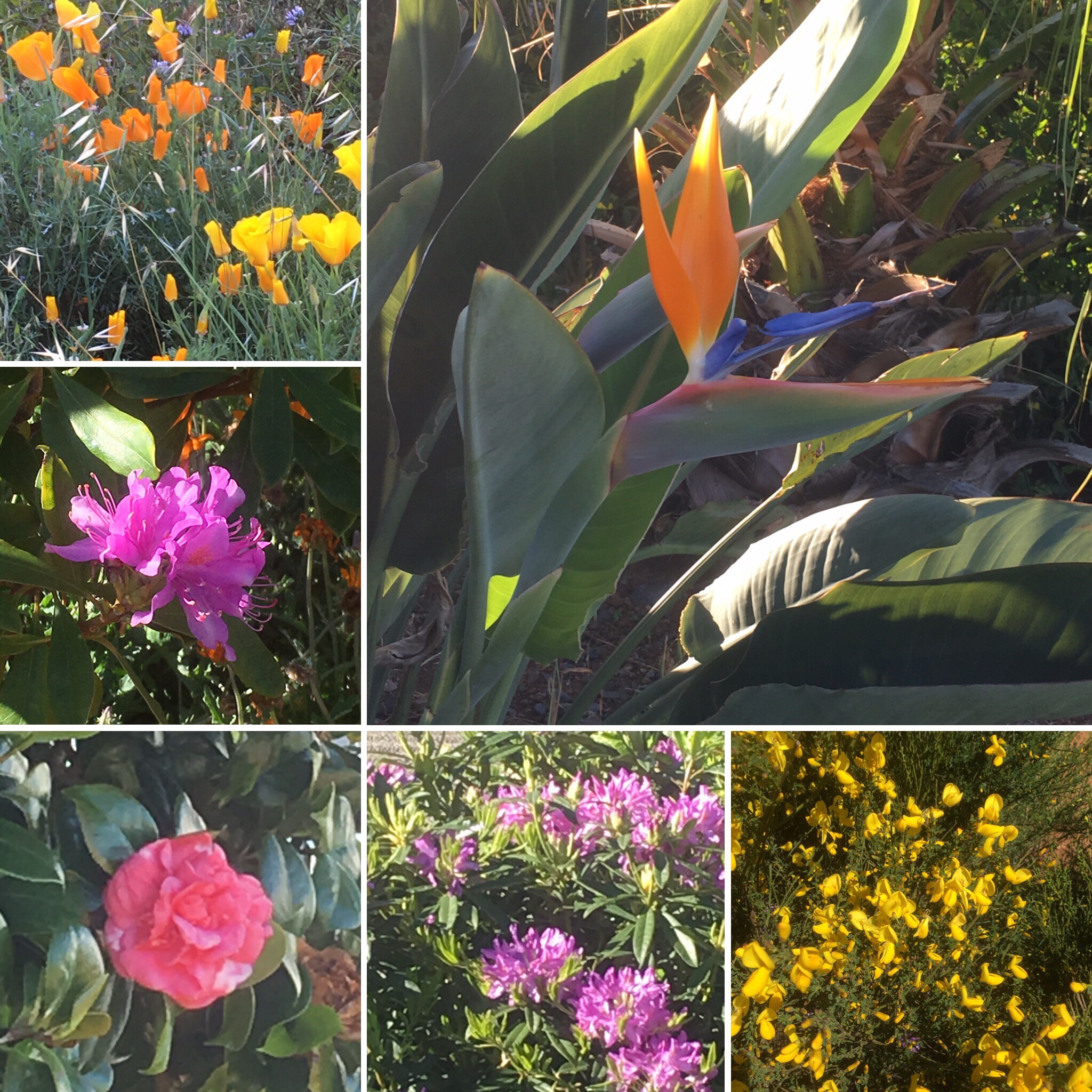
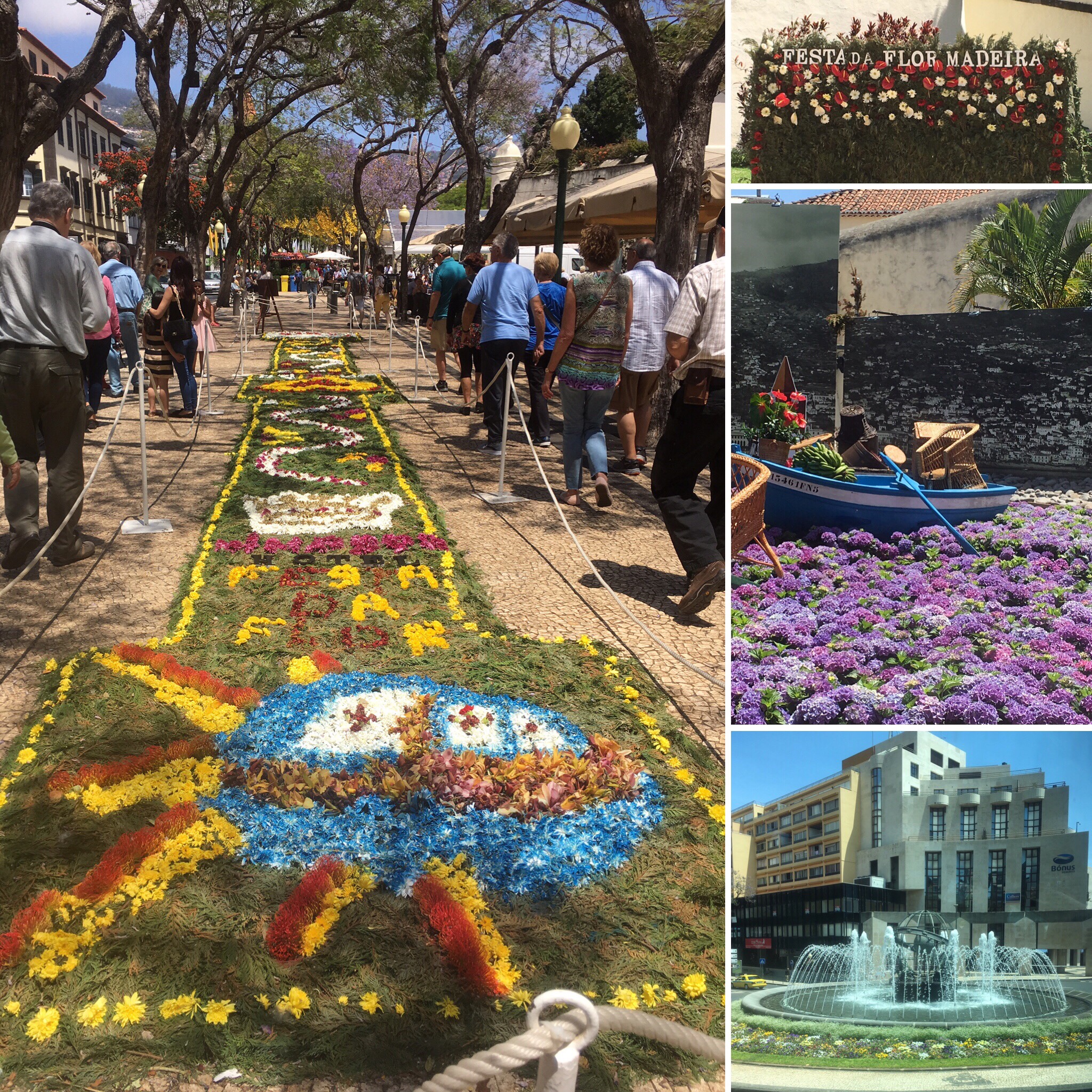
In this village, we stopped at a wicker factory and then walked around the town square which was full of beautiful flowers. More than 200 types of daisies!

Pico do Arieiro

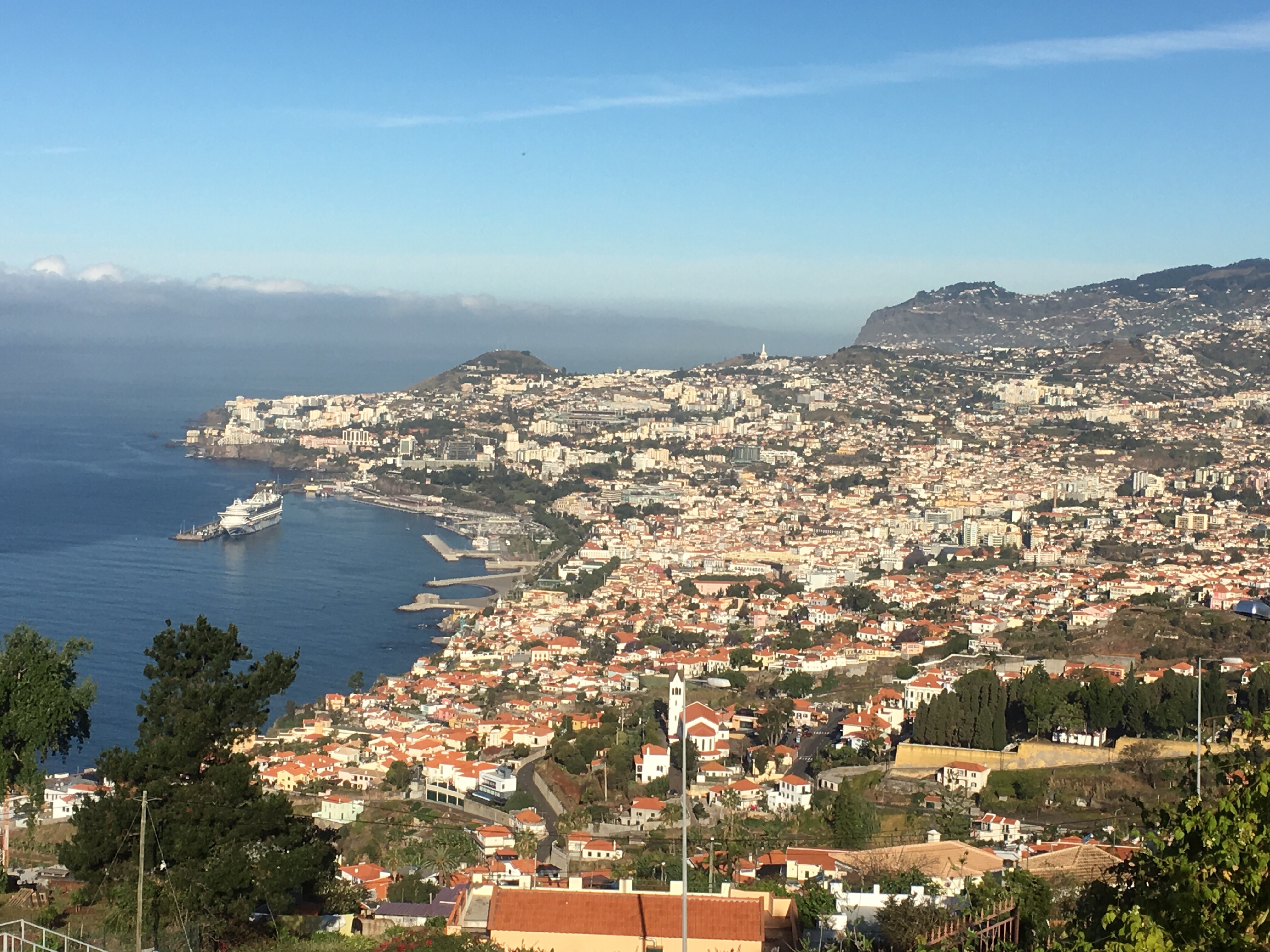
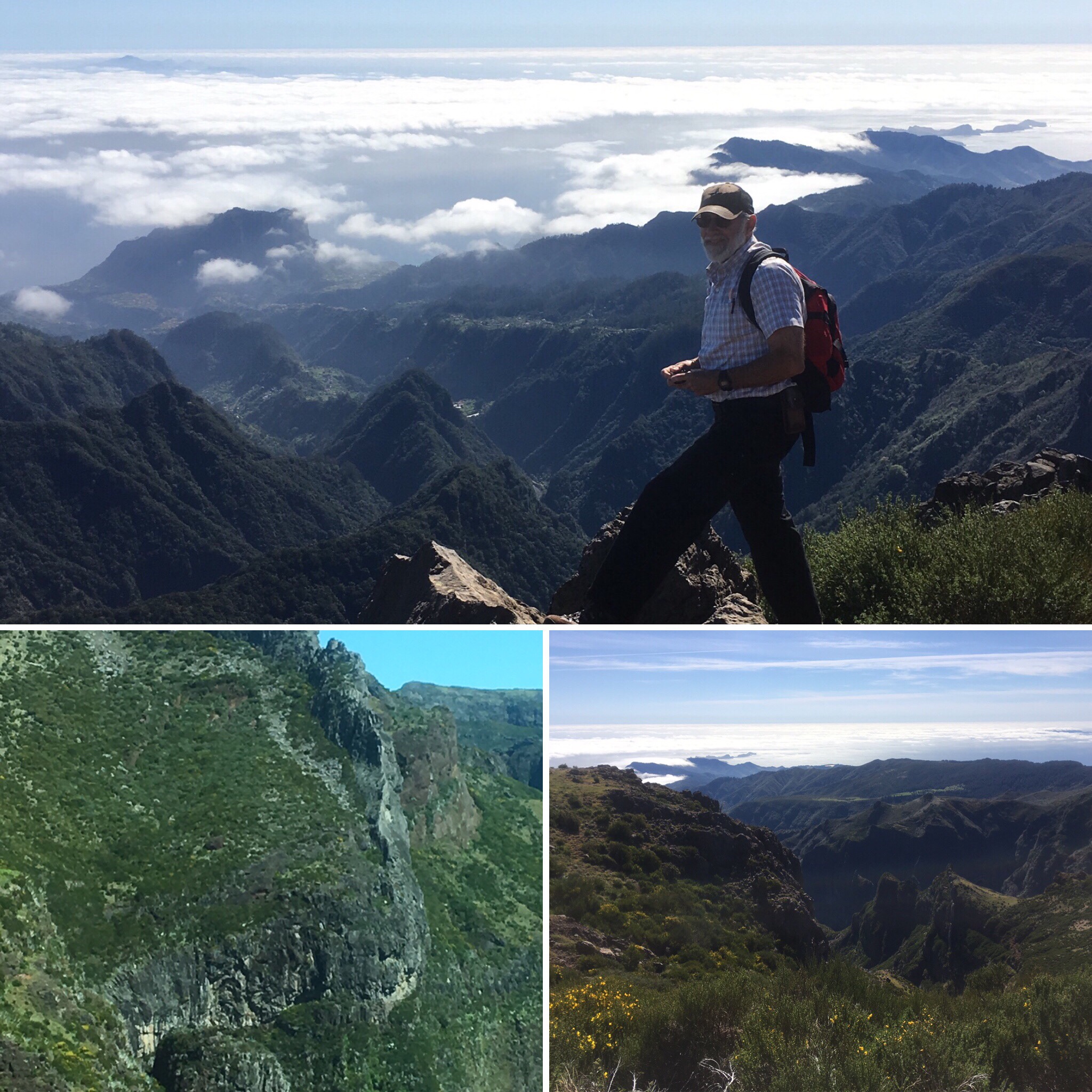
Our next stop was the highest peak on Madeira at 1,880 meters (6,000+ ft). The view was spectacular, and we could see both sides of the island. On the way up, we could see our ship docked in Funchal.

Casa de Abrigo do Poiso

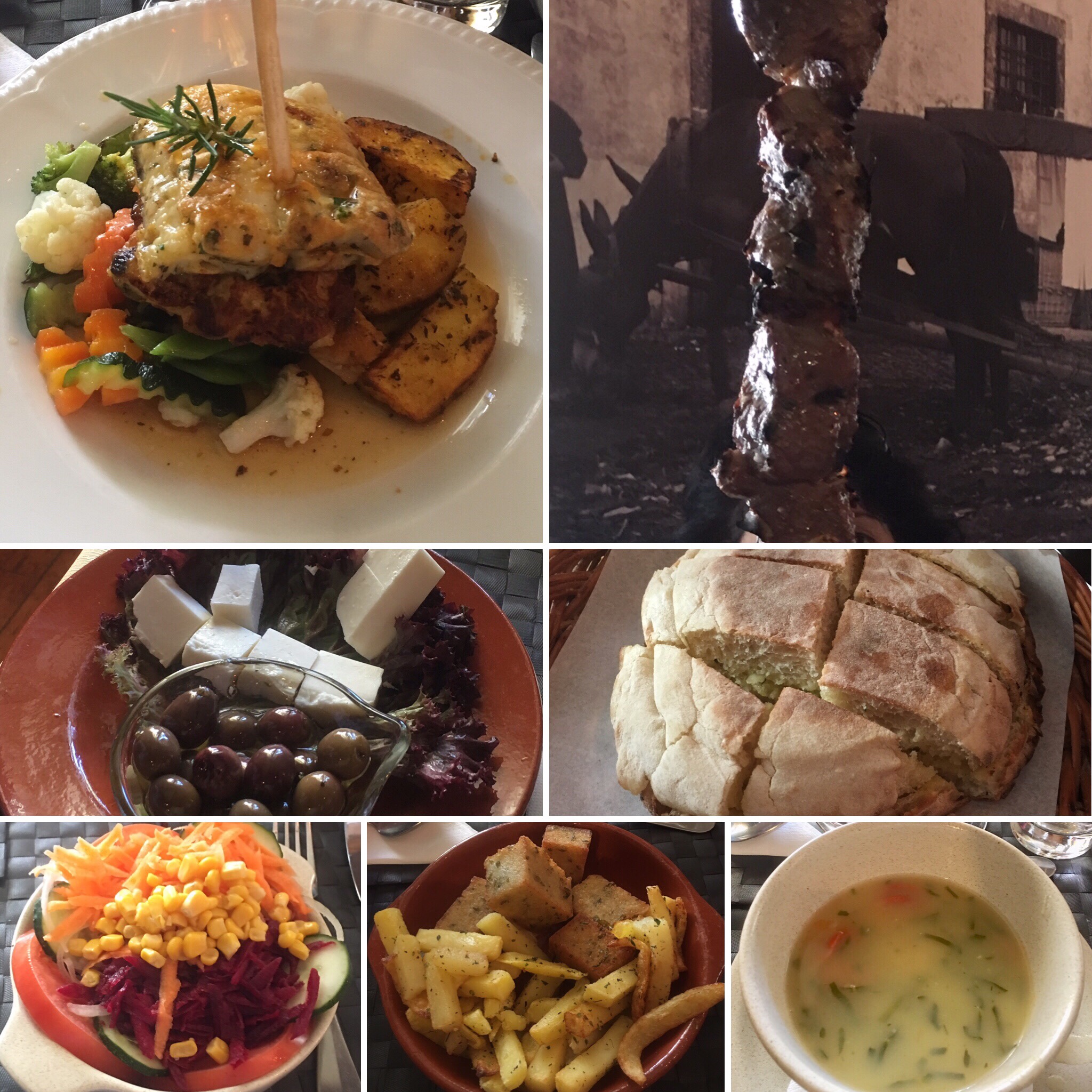
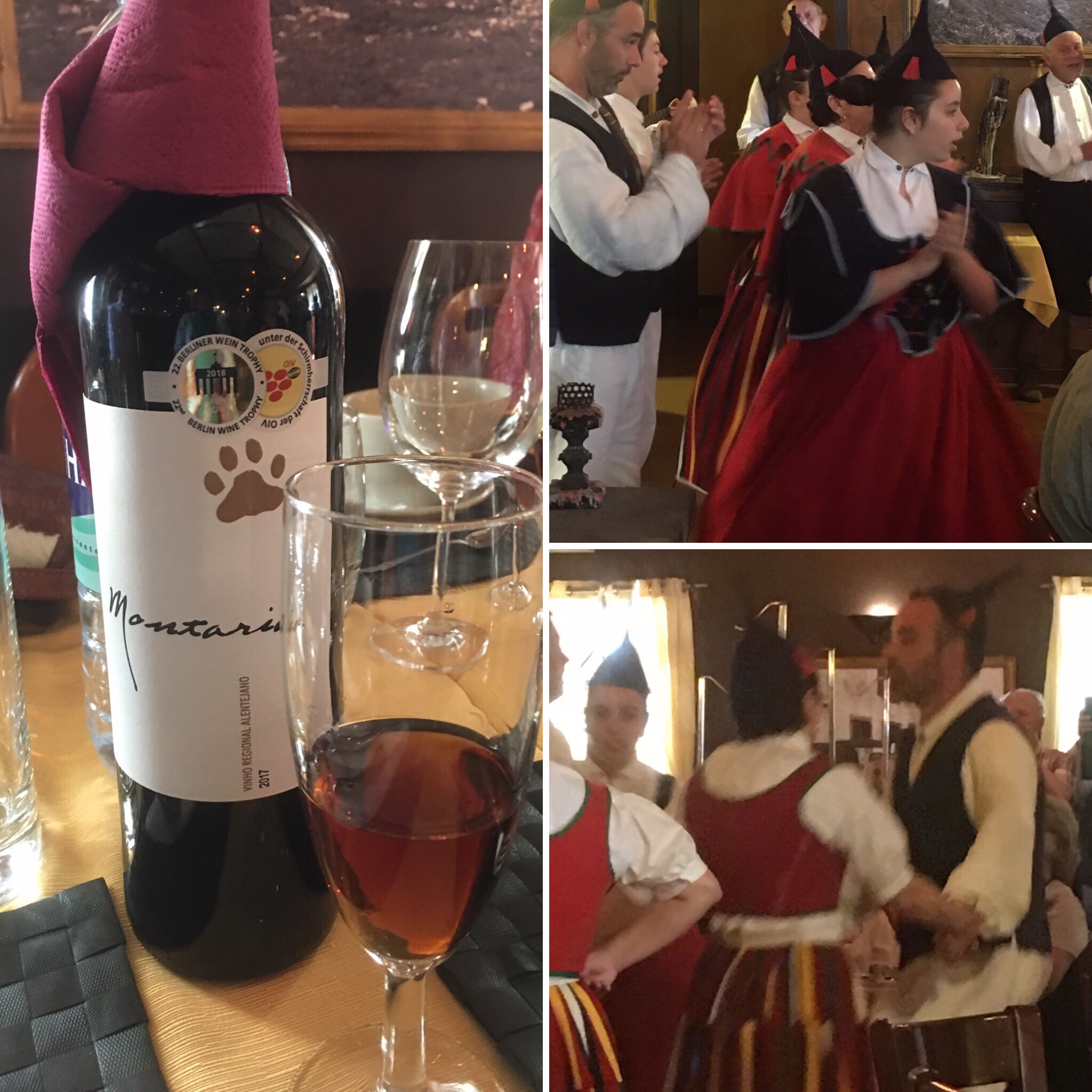
We stopped for lunch at Casa de Abrigo do Poiso, a restaurant on the mountain. Appetizer: garlic bread, olives, cheese. 1st course: green cabbage soup with sausage. Side dishes: French fries and polenta, assorted veggies. 2nd course: local fish and steak. Madeira is famous for its wine, and there was an opportunity to sample a glass if one wished to do so. (I didn’t taste the wine, but the Coke Zero was awesome!) After lunch , a Portuguese folk dancing group entertained us.

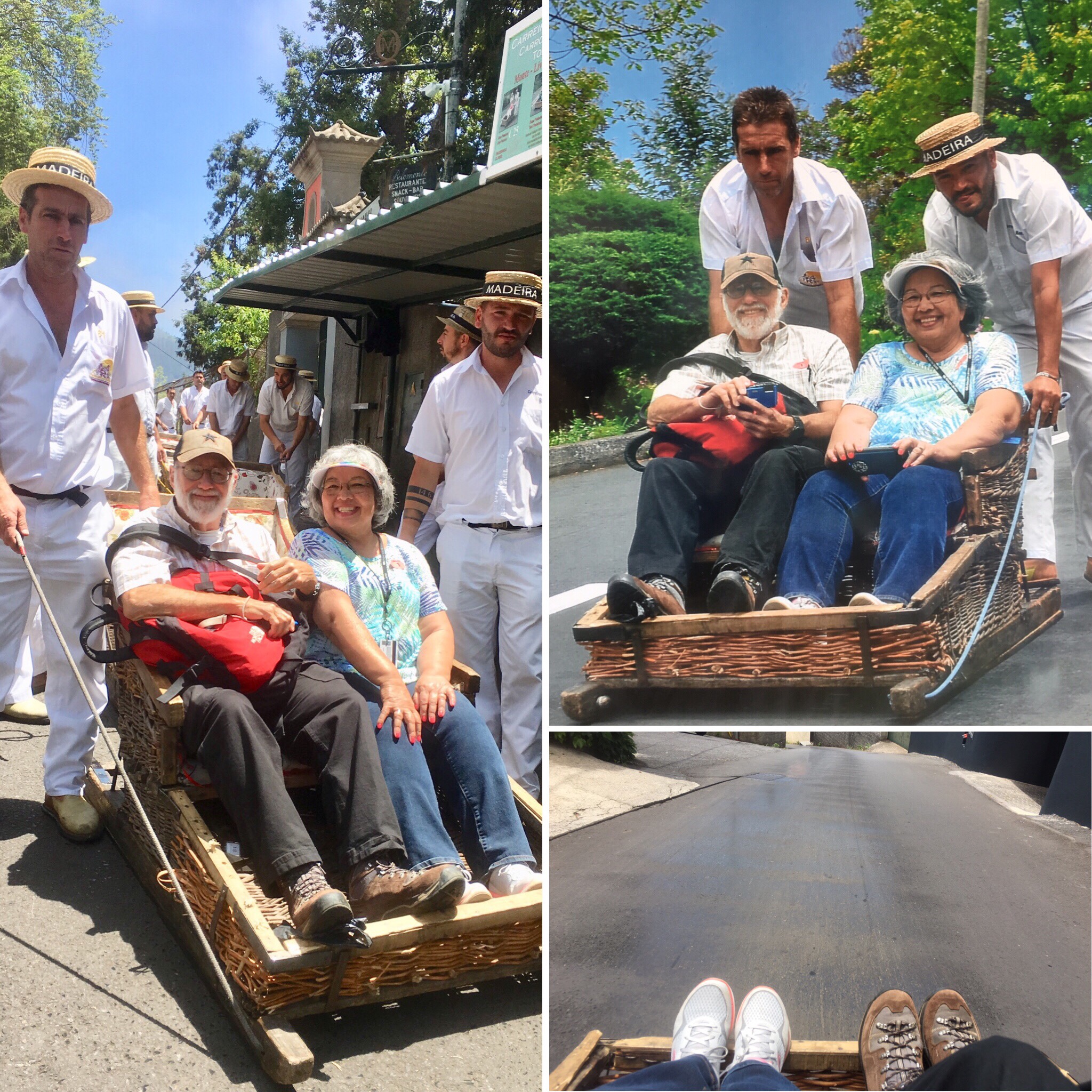
Carreiros do Monte

In 1850, the wicker basket toboggan transport began. It’s like a large wicker basket on wooden runners. Two men control the toboggan with ropes and special rubber-tired shoes.

Left: Just boarded our toboggan. Right top and bottom: On our way down 2 km of road shared by toboggans and autos! It was an exciting ride Would I do it again? Absolutely!!

Flower Festival in Funchal

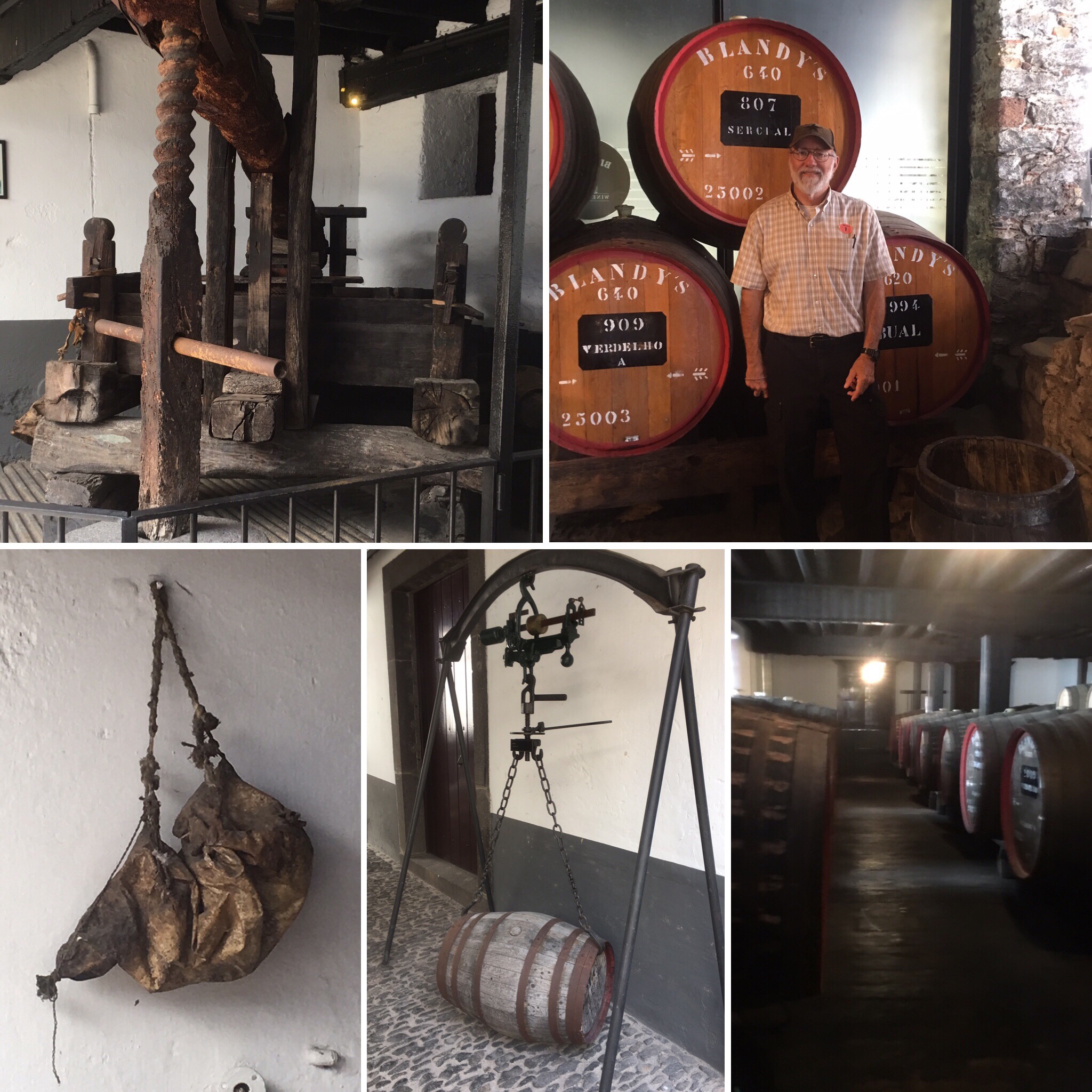
Blandy’s Madeira Wine Lodge

Our last stop was a winery. It was formally a monastery. Today, the wine lodge makes four types of wines: bual, sercial, malvasta, and verdelho. We saw a 17th century wine press that belonged to the Jesuits who came over as well as a wine bag that held 40 liters. Then we saw the “nursery” where the newest wines were stored in barrels. We also saw the huge barrels that held older wines. These wines are actually heated for a period of time before being bottled, and once bottled, they do not change their taste over time.

Our next stop is Casablanca, Morocco!

The Azores

“Let them give glory unto the LORD, and declare his praise in the islands.” Isaiah 42:12

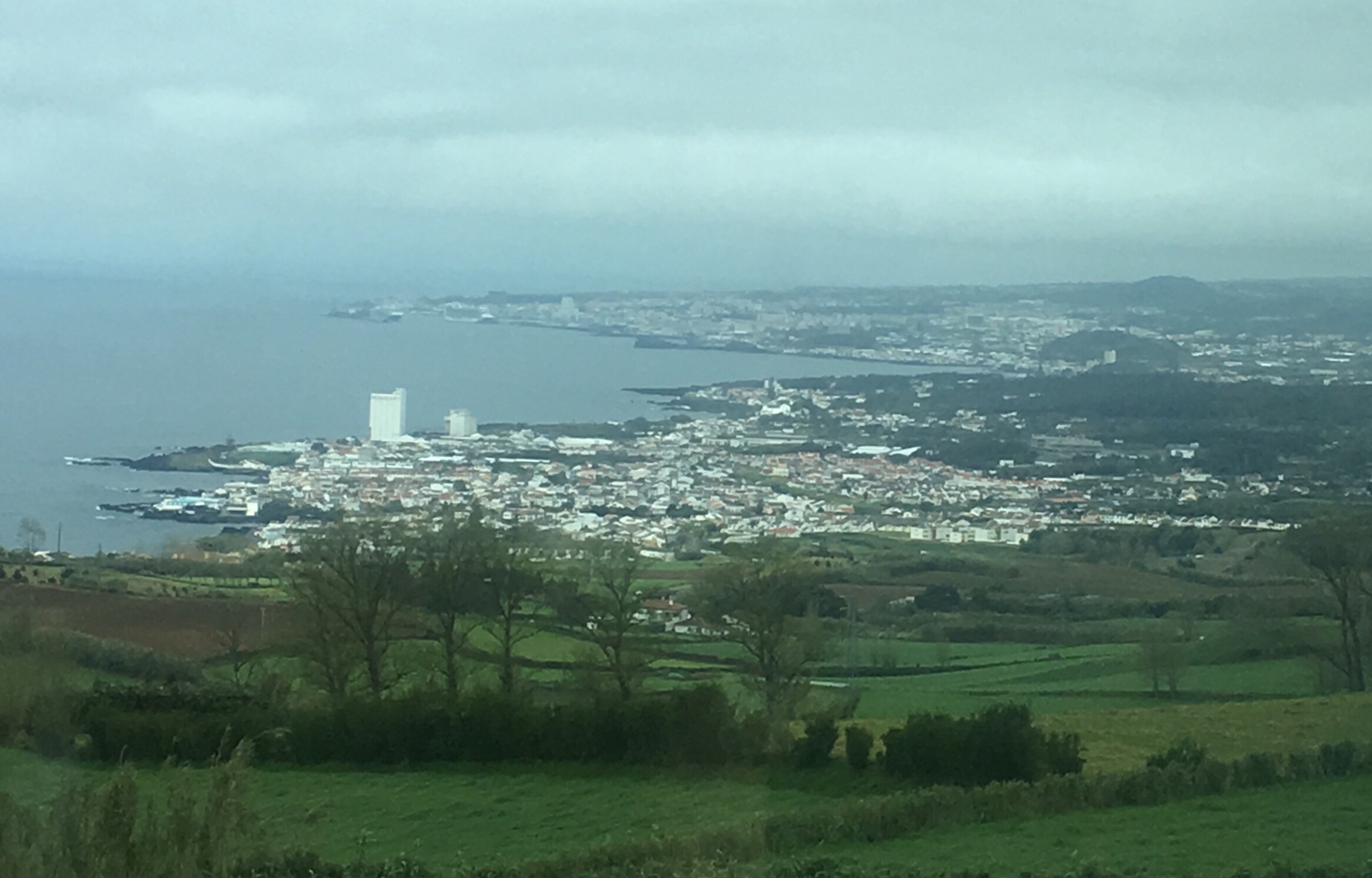
Have you ever wondered where the Azores are? The Azorean islands are an archipelago about 800 miles west of Lisbon, Portugal, and they are composed of nine different islands. Mainly volcanic rock, the soil is very fertile, and the Azores are known for growing tea and tobacco. The Azores have the only commercial tea plantation in Europe. They also cultivate pineapples in greenhouses here, and they are known for their pineapple liqueurs. Most of the coastline of these Portuguese-owned islands is composed of volcanic lava. Geothermal energy is the primary source of energy, followed by wind, water, and lastly fossil fuel. 60% of their energy is renewable.

We arrived at São Miguel, the largest island in the archipelago, in its harbor Ponta Delgado.

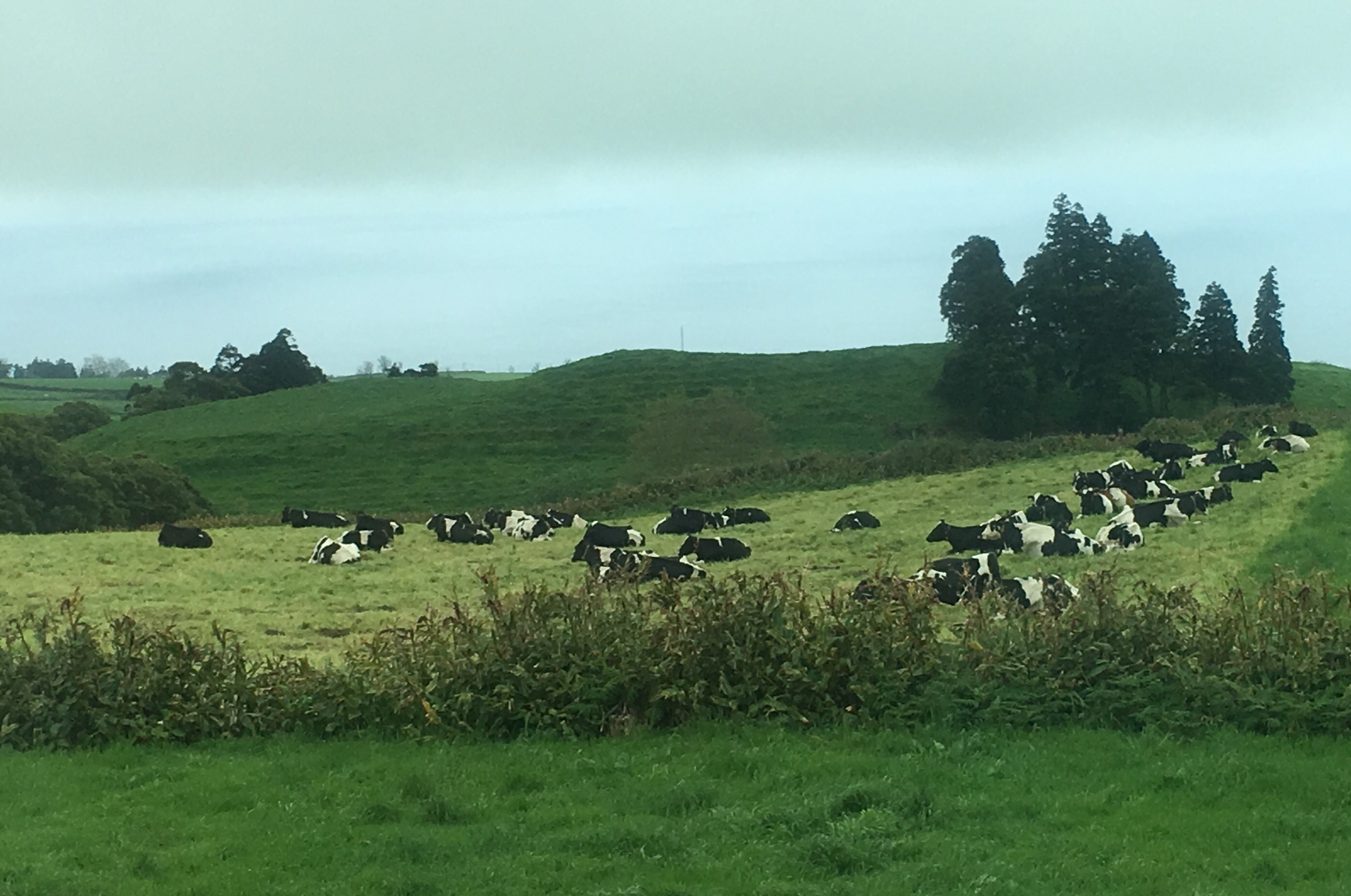
Cows are plentiful, and dairy products are the primary industry of their economy.

Faljã de Baixo

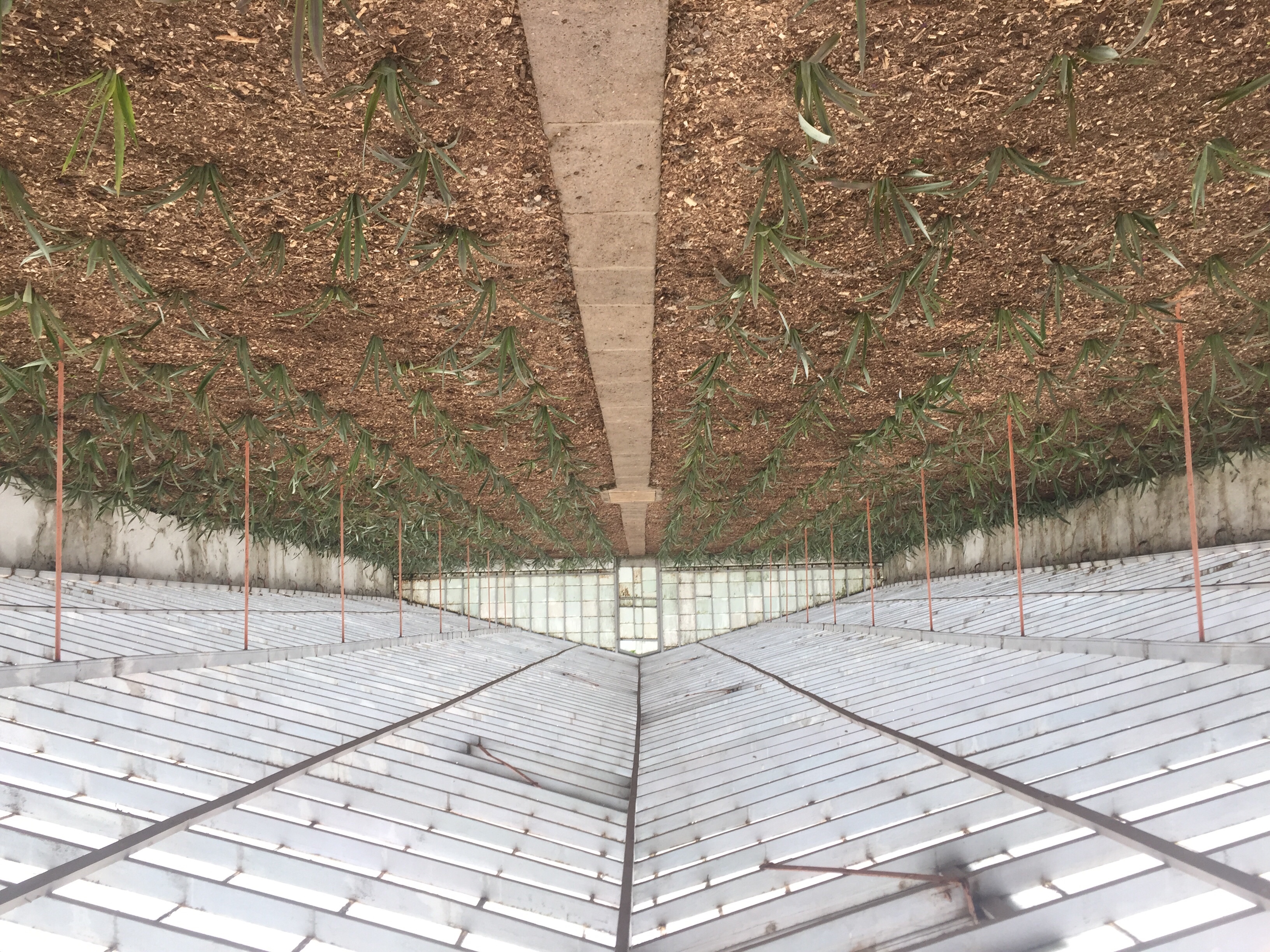
This region is the pineapple growing center. Greenhouses are throughout the city, and they are used because the Azores do not have a tropical climate, but rather a sub-tropical one, therefore it is not hot enough to grow the pineapples in fields. The pineapples grow on bushes and take about 2 years to grow to maturity. They are grown in stages in different greenhouses, including a “smoking” phase that shocks the plant into fruit production, so harvesting occurs at the same time for all of the plants.

Ribeira Grande

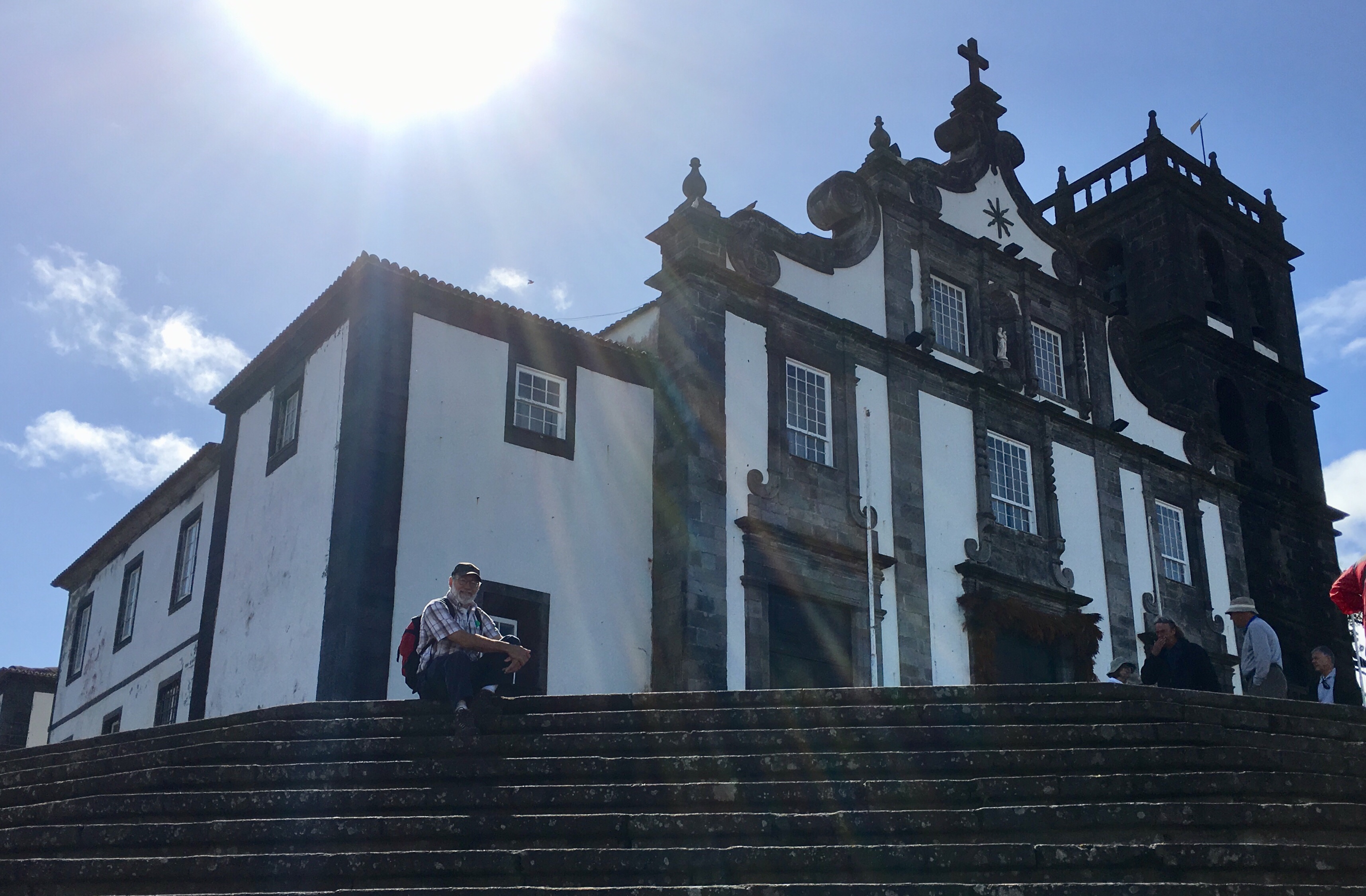
This city is located on the opposite side of the island from where we docked. This church, “Our Lady of the Star,” is the main church in Ribeira Grande. 95% of the Azoreans are Catholic.

The Azores was our first stop after crossing the Atlantic. The weather was great, and the seas were smooth throughout the crossing. Our next stop will be Madeira, another Portuguese island.