Italy’s Amalfi Coast

“Let the heaven and earth praise him, the seas, and every thing that moveth therein.” Psalm 69:34

We arrived in Salerno to a day that was quite different than the last time we were here. Today the skies were clear, and the weather was warm. We boarded our water taxi for our 30 minute ride to Amalfi without a drop of rain in sight!! The seas have been amazingly calm.

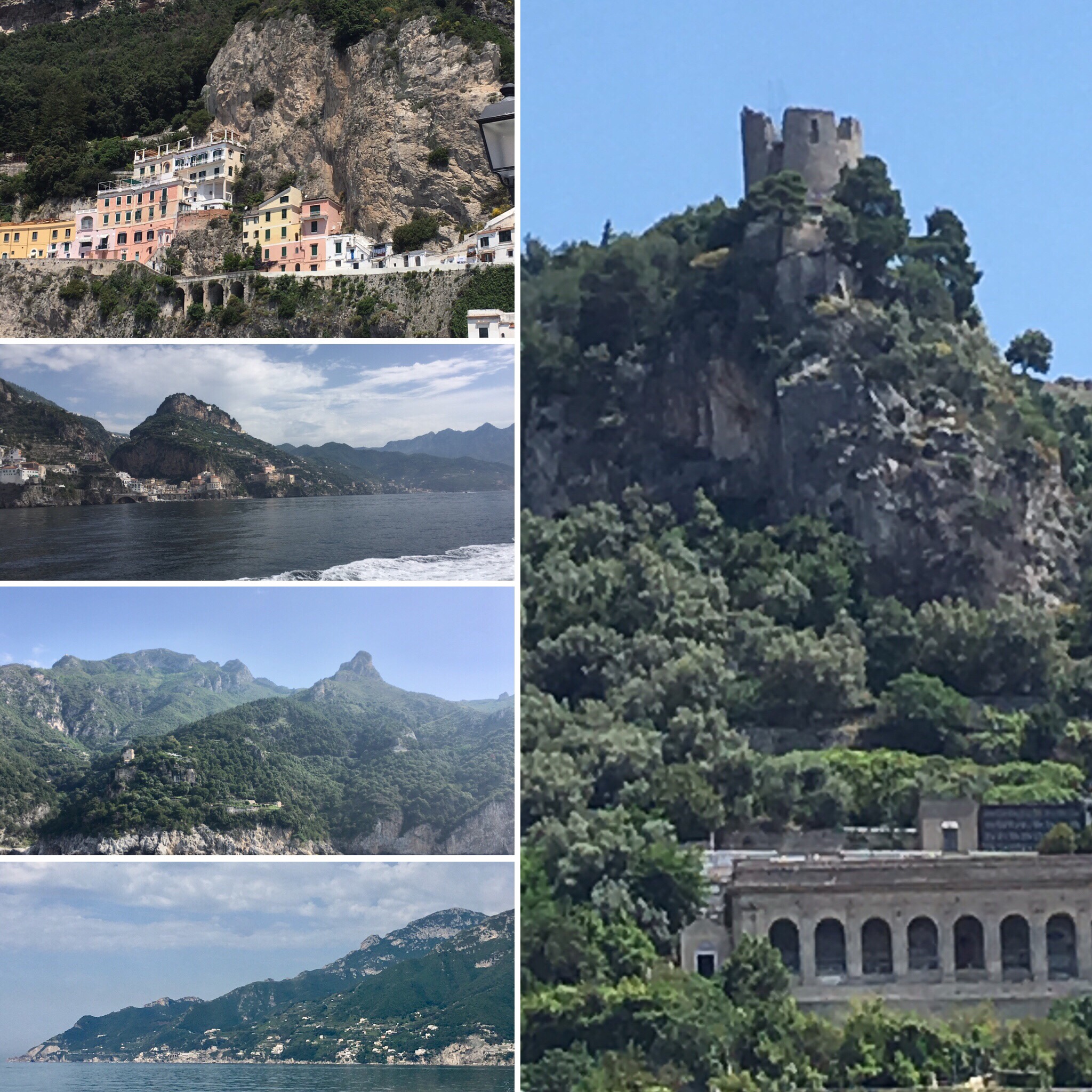
Amalfi Coast

We cruised along in a water taxi to the village of Amalfi.

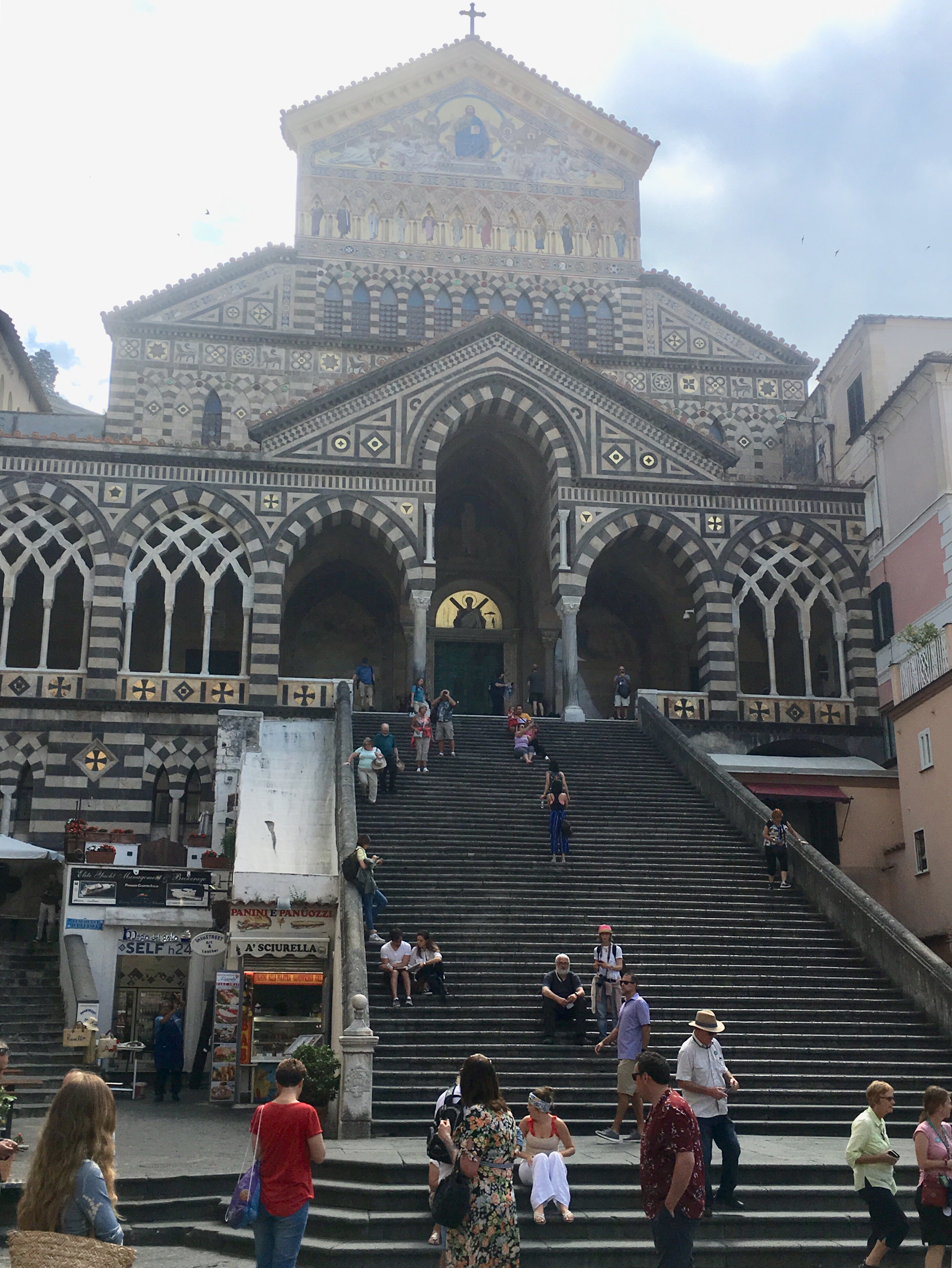
Amalfi Cathedral

The cathedral is a 13th century building, but the bell tower is from Roman times. The cathedral is dedicated to St. Andrew. It is said that the remains of Andrew, one of Jesus’ original 12 disciples, is in a crypt in this cathedral.

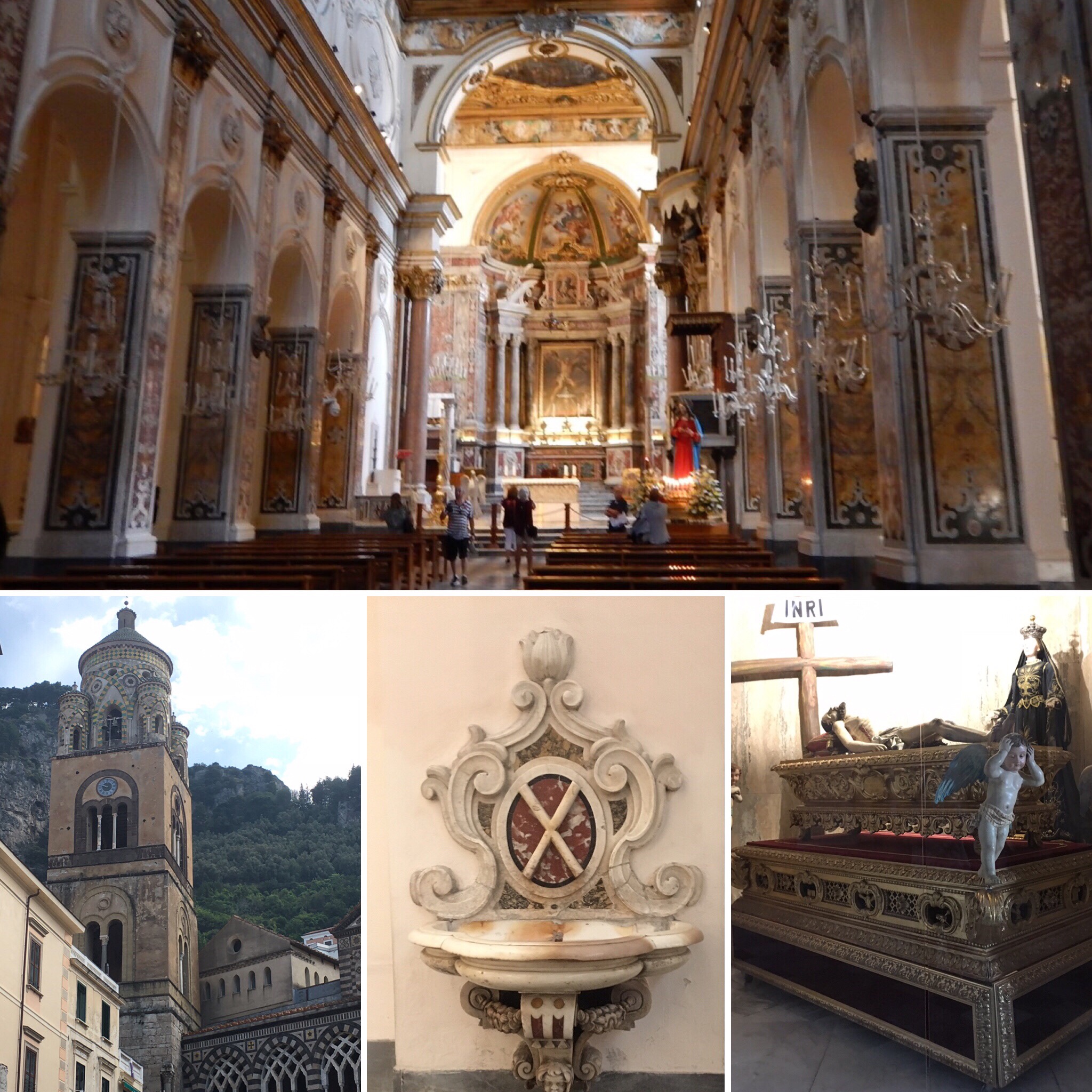
Amalfi Cathedral

Top: inside the cathedral

Bottom-left: bell tower of cathedral

Bottom-center: “holy water” basin

Bottom-right: cathedral alcove

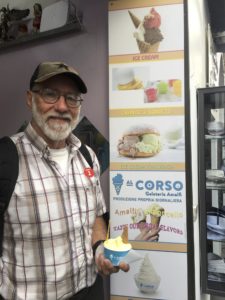
Amalfi is small, but there are lots of souvenir shops, produce, fish, and meat markets, and of course, gelaterias!

After a couple of hours here, we boarded our boat back to Salerno for a bit more sightseeing there.

Salerno

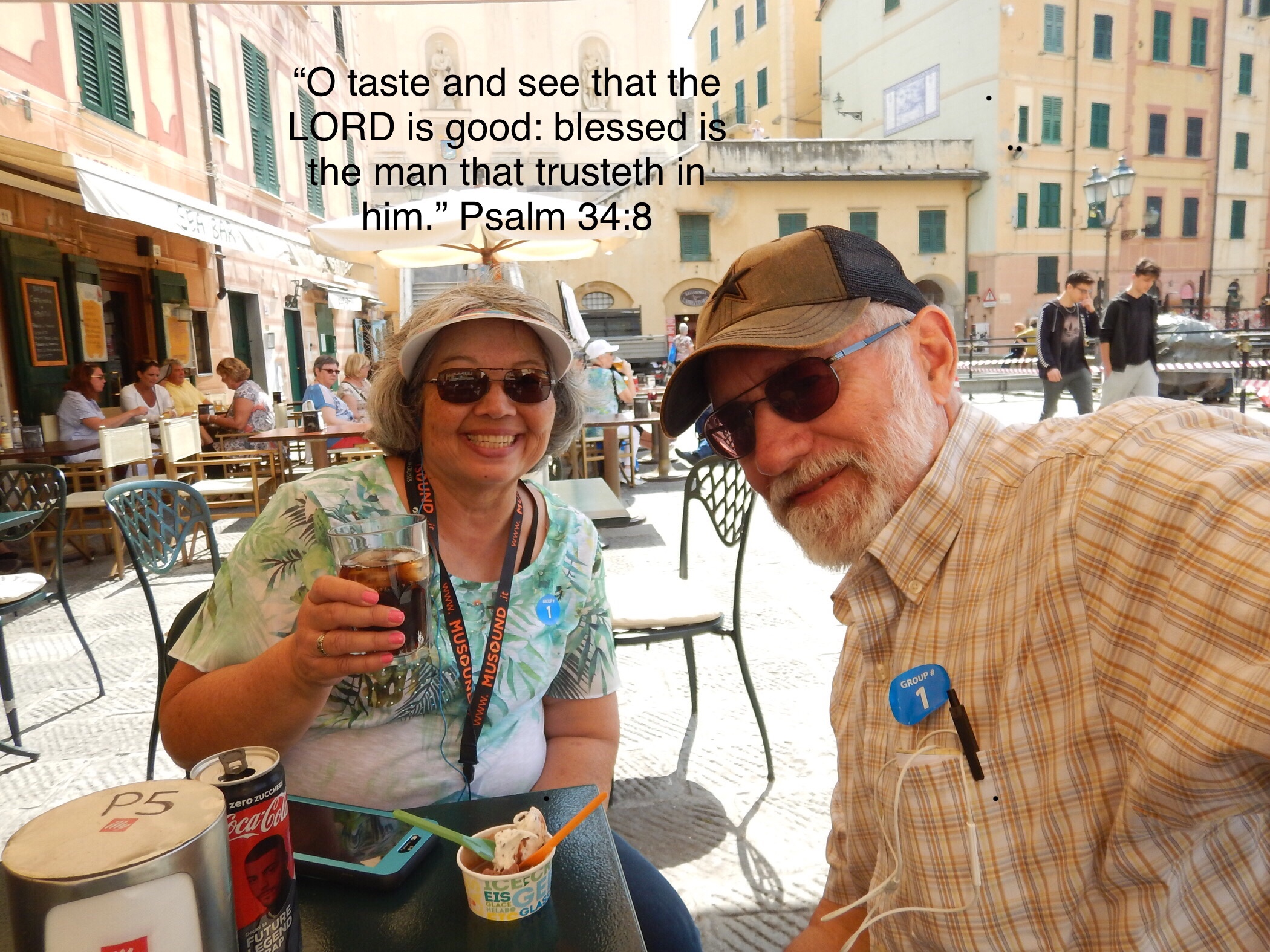
We walked around the town a bit before taking a short break. It was a perfect opportunity to relax at a sidewalk cafe, sip a Coke Zero, and chat with Samantha.

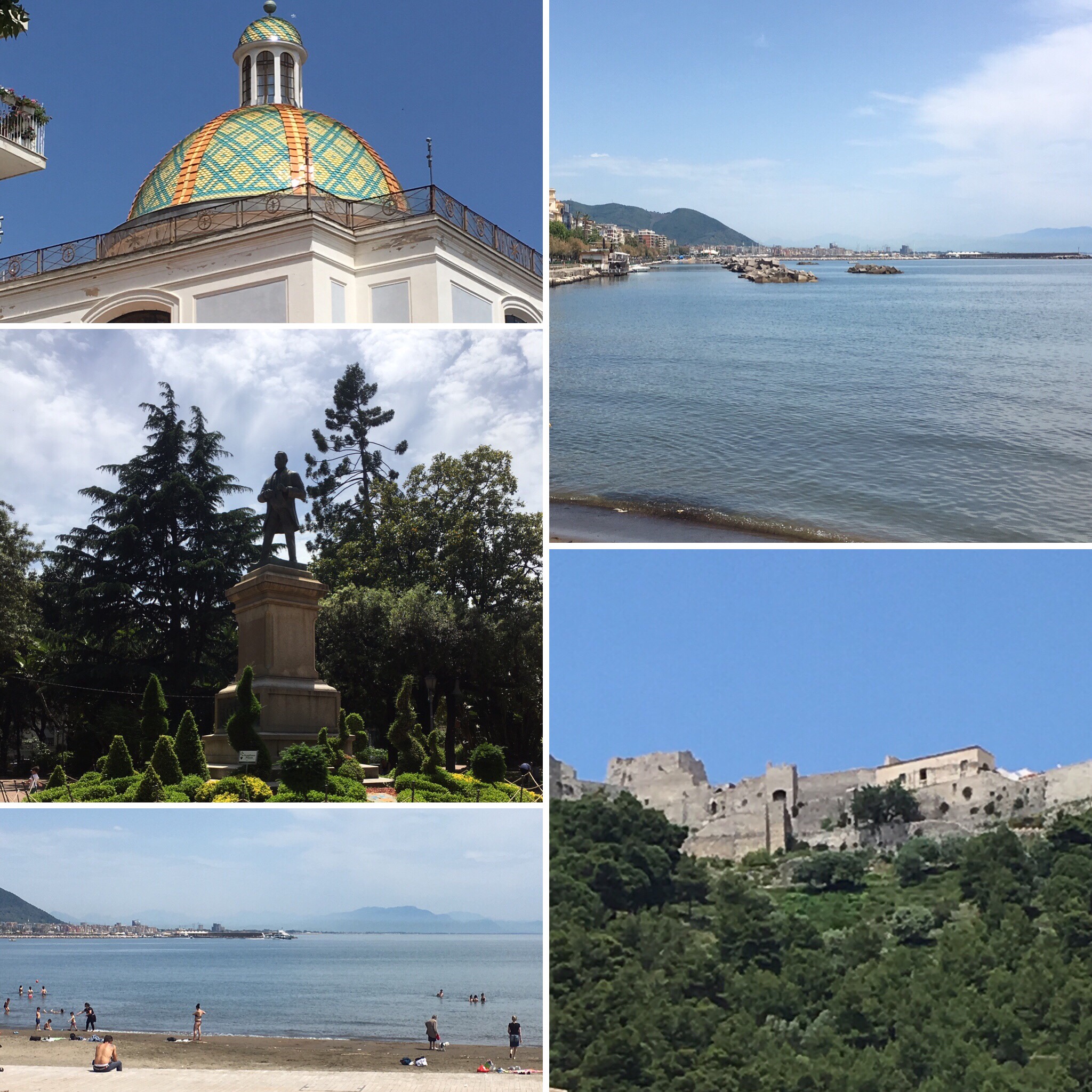
Clockwise from top-left: domed building; harbor; Arechi castle; beach; town park statue

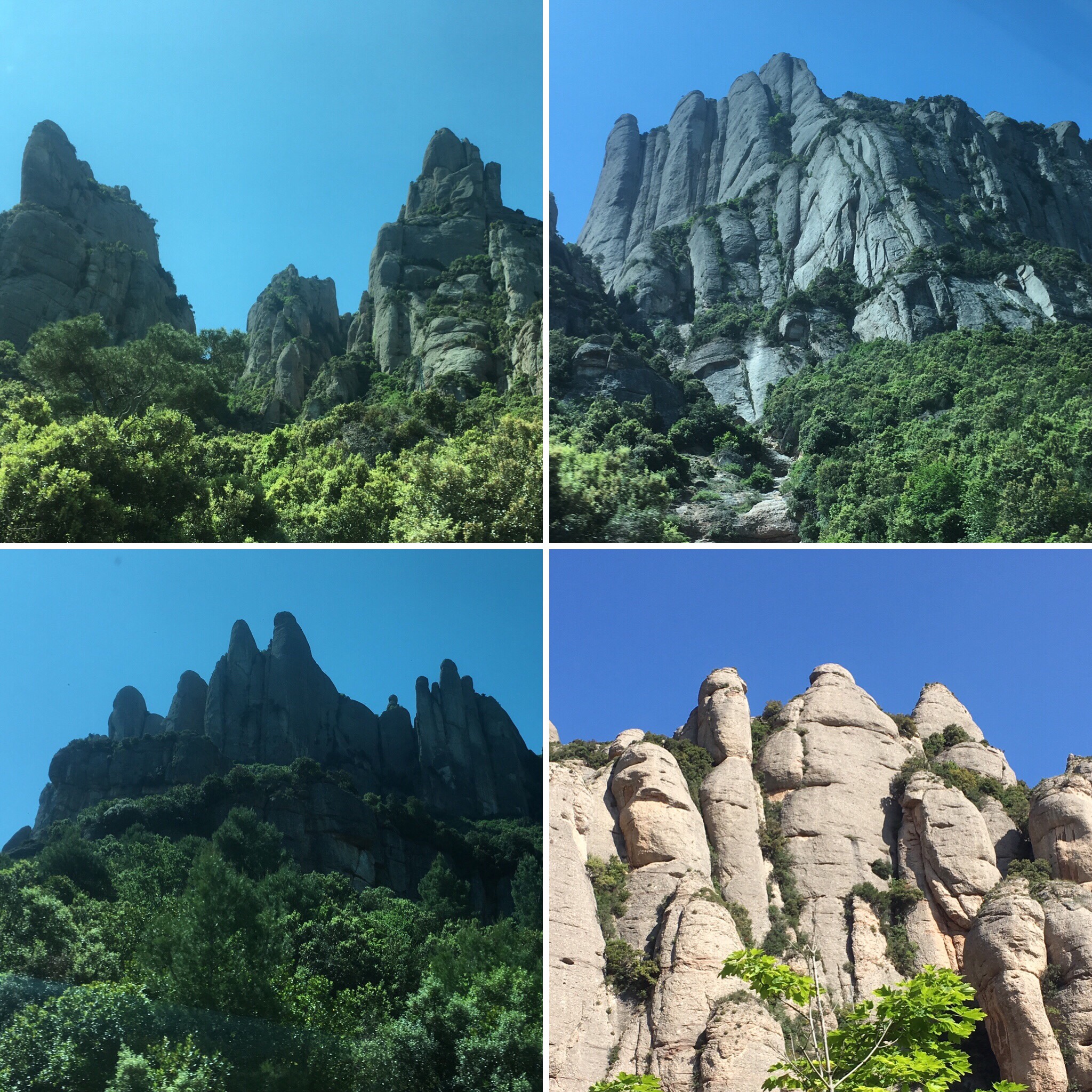
Next stop: Montserrat, Spain

Bon Appétit!

“If thou put the brethren in remembrance of these things, thou shalt be a good minister of Jesus Christ, nourished up in the words of faith and of good doctrine, whereunto thou hast attained.” 1 Timothy 6:4

One of the adventures I particularly enjoy when traveling is the opportunity to try foods from different places. No matter if savory or sweet, it is such fun to challenge my taste buds with new sensations. On this trip, I have sampled Moroccan meatballs, Greek salads with plump olives and local olive oil, French coffee (very strong!), and Italian gelato, just to name a few! Every experience has been unique in its own way and deliciously rewarding.

That’s how it is with God’s Word. There are so many wonderful morsels of Scripture that I haven’t even tasted yet! I confess I do have my favorite passages, and I enjoy rereading them over and over, but if I do not expand my spiritual menu, I will be missing out on so much more! Can you imagine only eating a peanut butter sandwich at every meal because it was your favorite food? Take time to peruse God’s Word for something new and refreshing, and spice up your spiritual life!

“And Jesus said unto them, I am the bread of life: he that cometh to me shall never hunger; and he that believeth on me shall never thirst.” John 6:35

**********

How has God’s Word nourished your soul today?

The Empty Shell

Psalm 107:9 “For He satisfieth the longing soul, and filleth the hungry soul with goodness.

Have you ever cracked open a peanut shell and found no nut? That is so disappointing! When I crack open the shell, I expect to find something in it, and when I don’t, I feel like I’ve somehow been cheated of a tasty treat. Sadly, these nutless shells have the form of a peanut, but not the substance that nourishes or satisfies.

The empty peanut shell reminds me of some of the churches we’ve visited on our trip. So many of them are amazing to behold. They have beautiful stained glass windows, altars of gold gleaming in the shafts of light that penetrate the darkness of the building. They have massive wooden doors intricately engraved and paintings that are breathtaking to behold, but something is missing. Our tour guide told us that many of the churches are no longer providing worship services. Instead, they have become tourist attractions. Quite lovely on the outside, but empty on the inside. The presence of God is missing.

There are, however, plenty of artifacts that exalt man. The garments of the priests are on full display, as are the different items used in services. Massive works of art are spread throughout the cathedrals. Gold and silver candlesticks stand on various ornate tables, but I never saw a Bible or a hymn book in any of them! In fact, on a couple of Sundays when we had excursions, we were invited to go into a cathedral to “quietly look around” since there were services being conducted. Upon entering, it was very quiet and others were milling around “quietly looking.” I can’t imagine a group of fifty to one hundred people walking into my church on a Sunday morning when my pastor was preaching just to “quietly look around.” Some of these places even required tickets to be purchased in order to go inside the church!

I write this to say how grateful I am that the Lord has put me in a church that is not missing the substance inside! Whenever I go to church, I am blessed beyond measure. There is sound Biblical doctrine being taught and preached. There is genuine Christian fellowship demonstrated by a familial love between the people gathered there. There are songs of praise being sung to the Lord Jesus Christ. There is nourishment and satisfaction for my soul.

If you ever drop by my church, I invite you not to come in and “quietly look around,” but rather, I invite you to come in and sit with us! Open a hymn book and join us in worshipful singing. Listen as my pastor shares the saving grace of Jesus through the Scriptures and be nourished with God’s Word. I promise you that when you leave, your soul will have received a divine feast that will satisfy its spiritual hunger!

I was glad when they said unto me, Let us go into the house of the Lord.” Psalm 122:1

**********

“Feed me ‘til I want no more…”

Messina, Sicily

“Before the mountains were brought forth, or ever thou hadst formed the earth and the world, even from everlasting to everlasting, thou art God.” Psalm 90:2

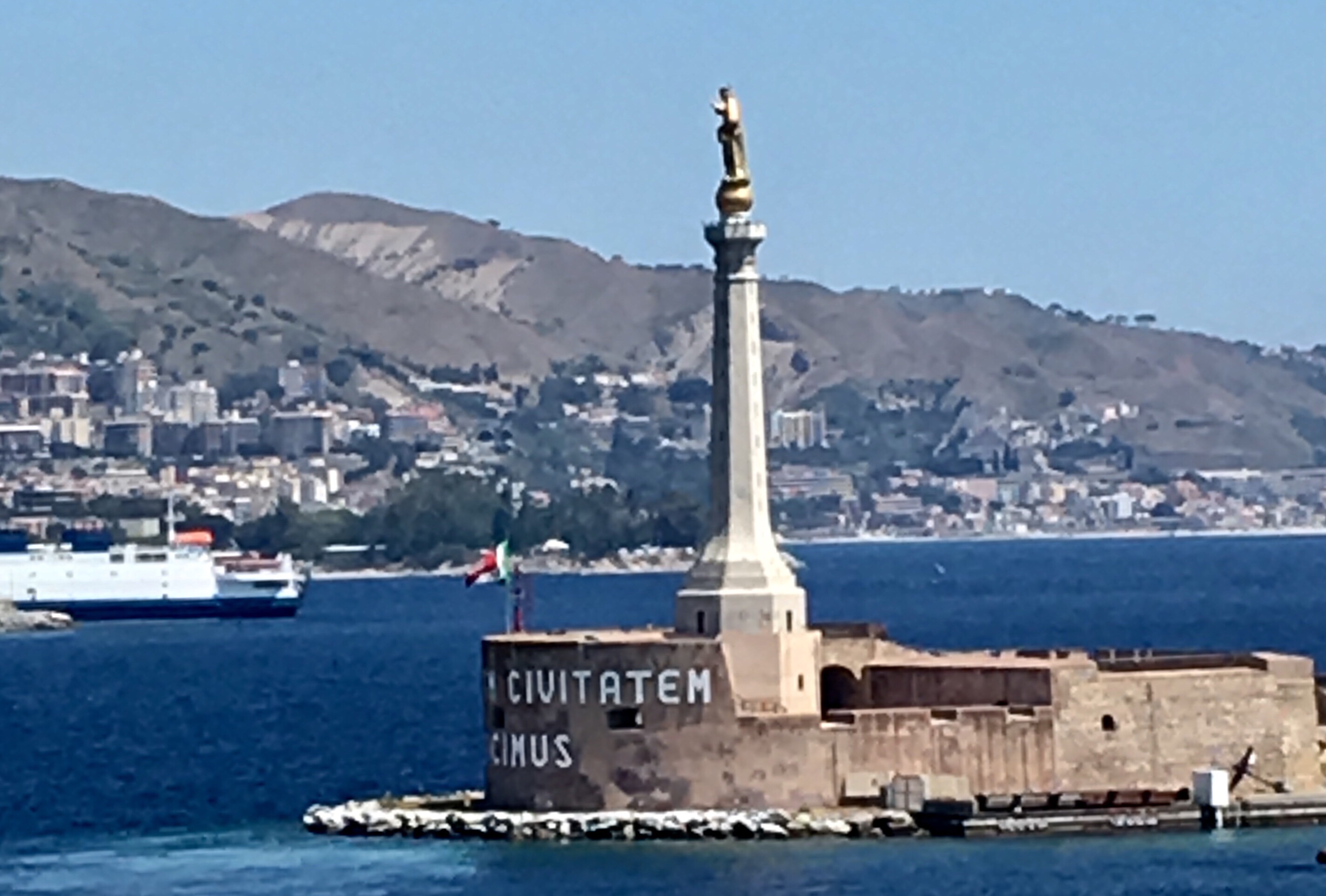
We were greeted by a golden statue in the harbor of Messina after passing through the Messina Straits, blue skies and warming weather. This statue is the patron saint of Messina, the Virgin Mary. Her right arm is up because she is supposedly blessing everyone who passes through the Messina Straits.

Messina is the closest point (3 km) on Sicily to mainland Italy. It is 2,700 years old and was founded by the Greeks. In 1908, it was destroyed by a 30-second earthquake followed by a huge tsunami. 2/3 of the population died. The city was rebuilt and now it is sometimes referred to as “modern Messina” with buildings made of cement in hopes of withstanding future earthquakes.

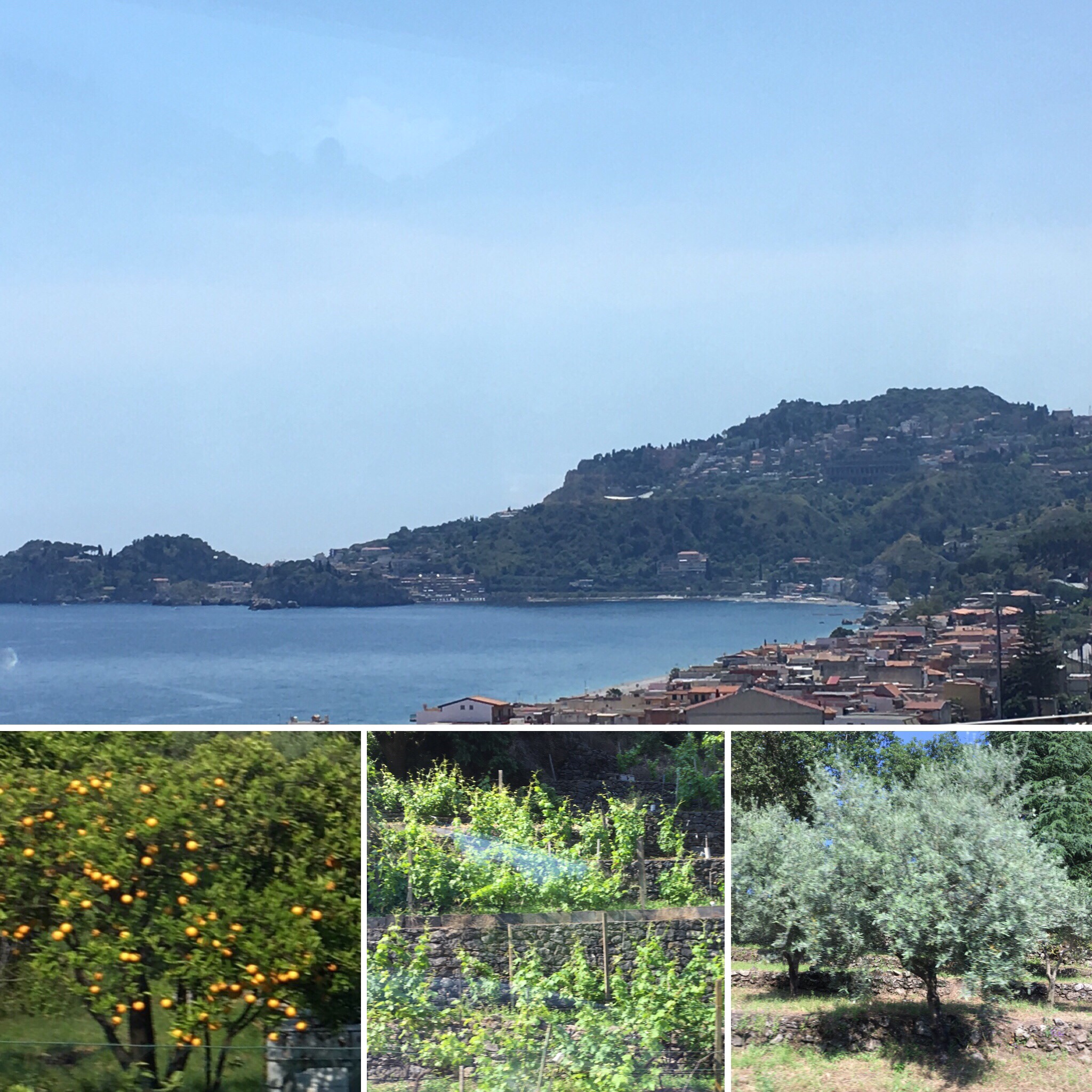
The shorelines of Sicily are mountainous, but the inner part of the island is flat. In the interior of the island wheat is raised for bread, pasta, etc. Prickly pear cactus is also grown for jams, natural medicines, and cosmetics. Other products grown are olives, grapes, and citrus fruits.

Top: Sicilian shoreline

Bottom (l-r): lemon, grape, olive

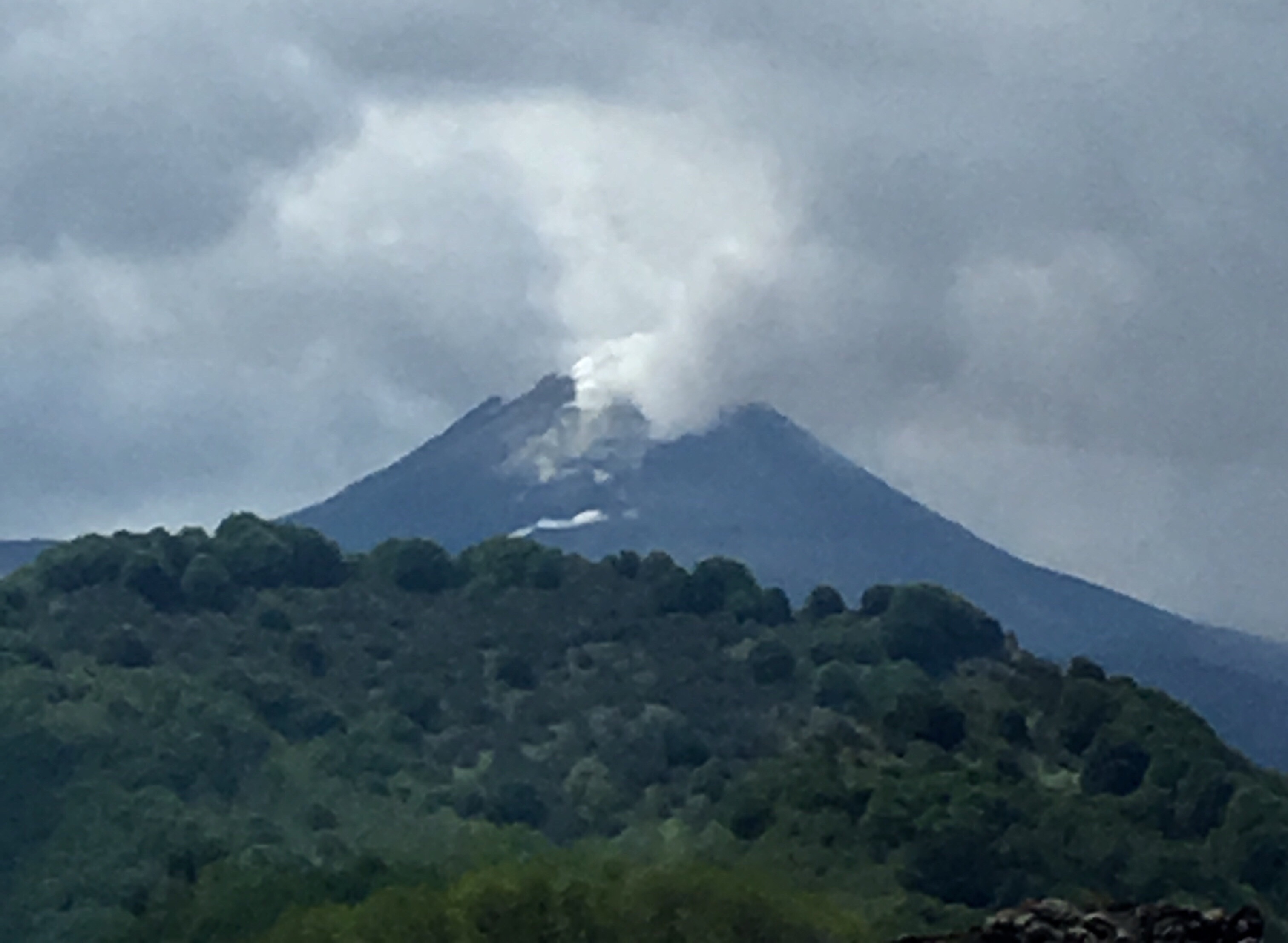
Mt. Etna

Mt. Etna is the largest active volcano in Europe. It stands 3,340 meters (11,000 ft).

There are three systems of craters at its summit. They are always active. These craters are independent of one another. Currently, an eruption is happening today. It started five days ago. Mt. Etna is a composite volcano with two types of eruptions: explosive volcanic debris or lava flows. There are over 300 craters on its flanks. Volcanologists say the current eruptive cloud is 80% vapor and 20% gas since the smoke is white. If it becomes gray, it will then have volcanic ash in it.

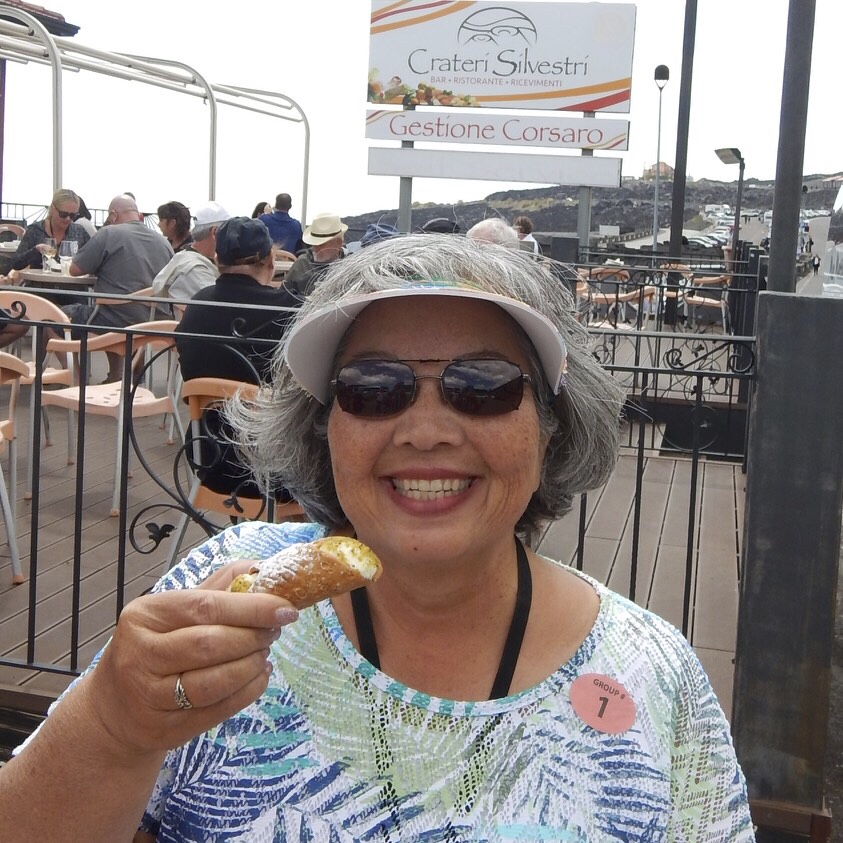
Before we headed off to explore the volcano, I had the opportunity to sample my first cannolis. It is like a tiny crispy pancake rolled and stuffed with sweetened ricotta and dusted with crushed pistachios. Delicious!

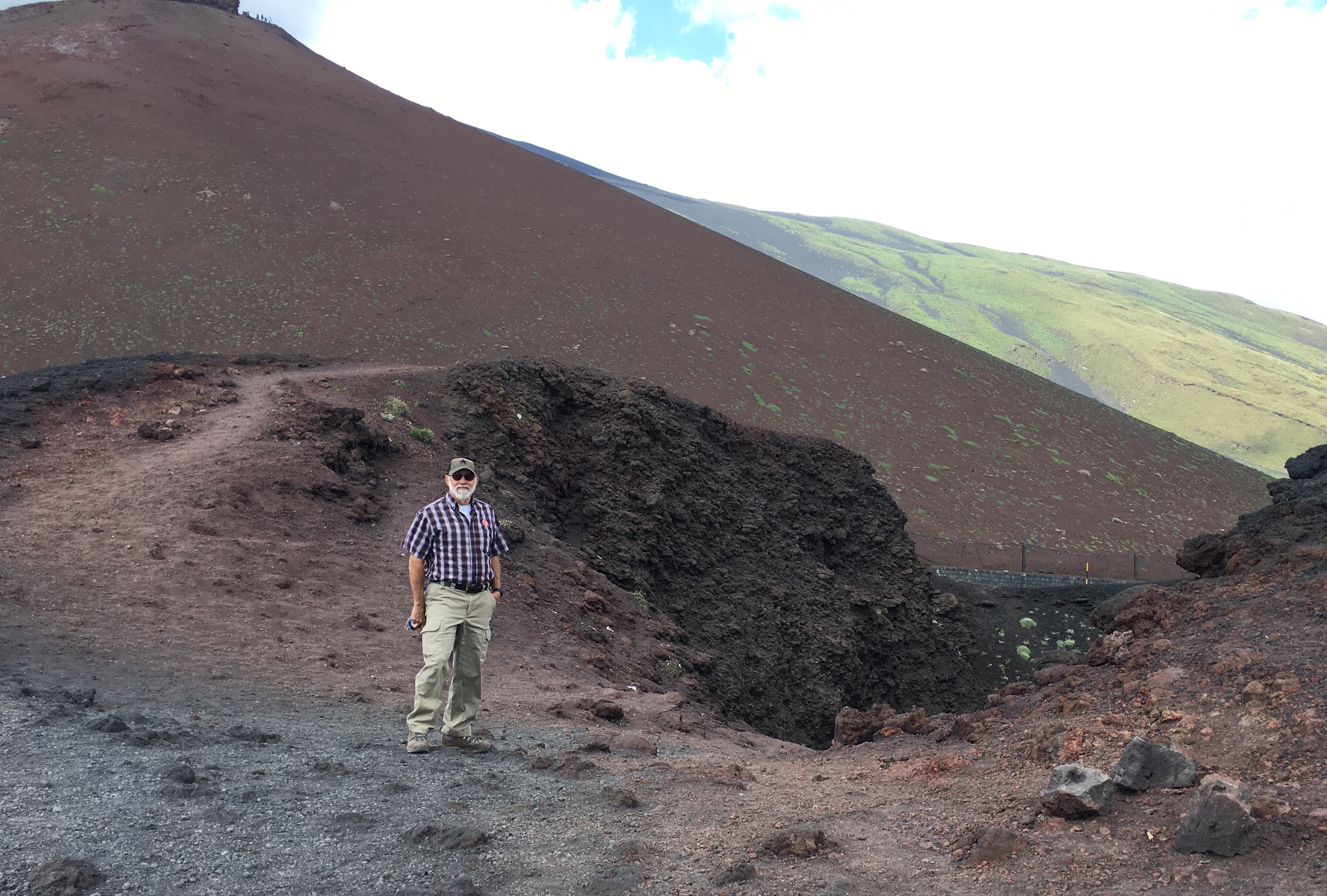
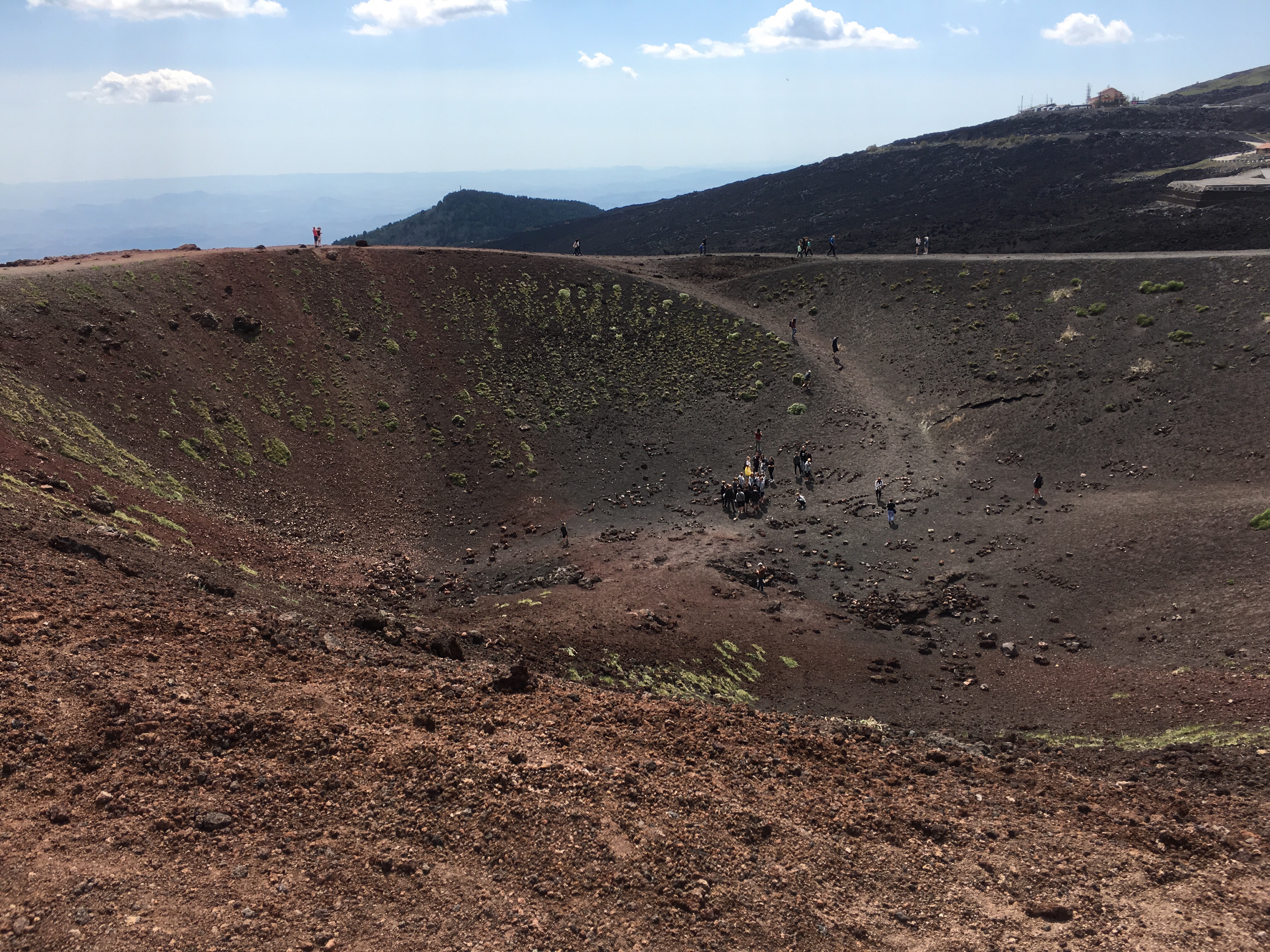
After that, John and I hiked down into this crater on the side of Mt. Etna. This is Silvestri Crater, and it was last active in 1892.

Silvestri Crater (southeastern slope)

Alcantara Gorge

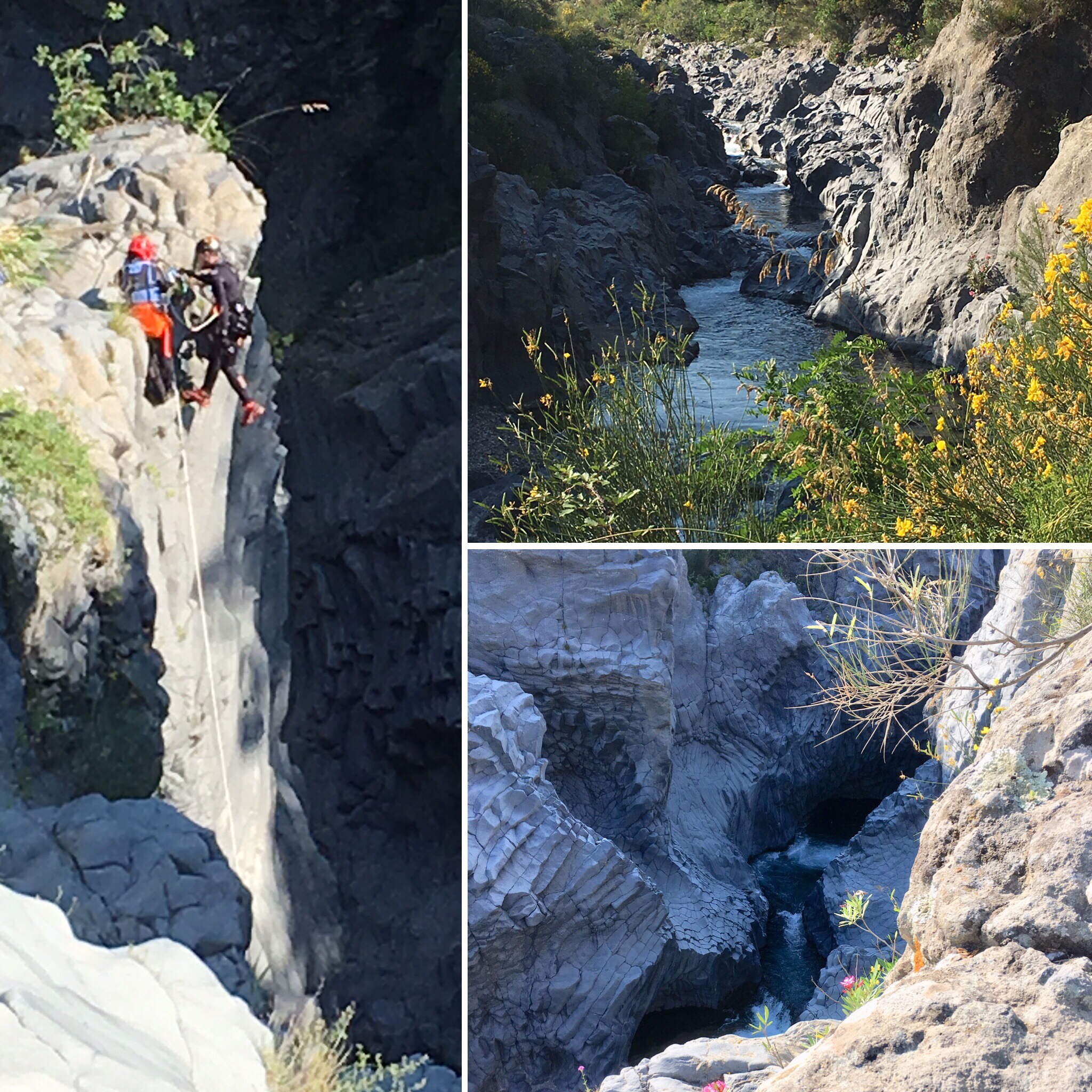
The gorge was formed by lava flows hitting the cold waters of the Alcantara River, earthquakes, and erosive properties. As we strolled through the ecological park, there were several overlooks into the gorge.

John and I decided to do a bit of rock climbing in the gorge! (Haha! In case you really think that’s us… it’s not!

Next stop: The Almari Coast in Italy

Santorini, Greece

“Testifying both to the Jews, and also to the Greeks, repentance toward God, and faith toward our Lord Jesus Christ.” Acts 20:21

Our day started with a ride in a water taxi, which is just a name for a boat that ferries people back and forth to the ship. Because it’s a water taxi and not a lifeboat wearing a different hat, it’s a lot more comfortable, having more seat and leg room. Partly cloudy skies today with temperatures in the 80s.

Santorini is built on a volcano. In 1956, there was a 7.6 earthquake which destroyed many of the buildings. Many Greeks left Santorini. In 1974, the people returned and built an economy based on wine and tourism. Unlike Italy and France, here grapes are grown on the ground because if they grow on raised trellises, the wind blows them away. Why? Their roots are shallow. They get water from the humidity since this island is so dry.

This island has about 5,000 donkeys, which are used to help harvest grapes. The wine is then stored in hillside caves because the cave temperatures keep the wine cool.

Big families here have their own private churches on their property. They are large white buildings with blue domes. On Sundays, services are held in public churches, which sometimes have red domes.

Windmills were used to grind flour, but now they are used for housing, but they were not popular. Why? Hard to fit rectangular furniture in round rooms!

Oia

Oia is a town located on the northern tip of Santorini. It has narrow cobblestone lanes, pristine whitewashed buildings, blue-domed churches, and lots of little shops. Marble is used on public walkways because it is less expensive than concrete here!

Byzantine Church of the Virgin Mary

This church was built in the 16th century on top of a Roman temple from the 5th century AD. It was thought to be a temple of Aphrodite or Dionysus. Archaeologists are prohibited from digging here because the priests didn’t want anything to be dug up that might be against their own belief system such as something that might show the Christians destroyed earlier artifacts.

The outdoor wash basin is symbolic. You wash your hands because you are going into the church to cleanse your soul.

Inside the church at the front are icons that flank the center door: Christ (right) and Mary and Child (left). Items of value to someone, like wedding rings, baptismal jewelry, etc., are given as offerings to the Virgin Mary.

These churches are not used for corporate worship. Sometimes they do celebrations in these tiny Greek Orthodox churches.

Kamari Beach

This is a black sand beach. The sand is composed of volcanic rock.

Pyrgos Restaurant

We had lunch overlooking the Aegean Sea. It was buffet style with lots of Greek foods to try. I loved the honey cake!

Clockwise from top center: rice, tomato ball, salad with oil and vinegar dressing, bread, fava dip, tzatziki dip, and pork.

They also had sweet red peppers, vine leaves, a slaw salad, and a delicious honey cake for dessert.

Mount Prophet Elijah

We stopped here for a beautiful view of Santorini. This mountain is over 2,000 meters high, and it is Santorini’s highest point. There is a monastery here, but it is closed now. There are no monks on the island.

Santo Wines Winery

This is the biggest winery in Santorini. It was founded in 1947. Wine has been made for more than 3,500 years in Santorini. The volcanic soil gives the wines special tastes due to the minerals in the volcanic rocks. There are 40 indigenous grape varieties on this island, and 500,000 bottles of wine are produced annually. Since I don’t drink, I cannot offer a comment on the wines except to say their colors were pretty.

Fira

Fira, the capital of Santorini, is perched on a sheer cliff overlooking the Aegean Sea. There are three ways down to the port below. One can walk 900+ steps down a steep, staired walkway, ride a “donkey taxi” down that same path, or take a three-minute cable car ride. We chose the cable car!

Clockwise from top-left: cable cars; view to the port from the cable car; donkey taxis; pedestrian walkway.

Next stop: Messina, Sicily

Athens, Greece

“Then Paul stood in the midst of Mars’ hill, and said, Ye men of Athens, I perceive that in all things ye are too superstitious. For as I passed by, and beheld your devotions, I found an altar with this inscription, TO THE UNKNOWN GOD. Whom therefore ye ignorantly worship, him declare I unto you.” Acts 17:22-23

The Classic Period of Greece was between 500-300 BC. During this time, there were many Greek accomplishments in art, literature, architecture, and politics. Many of these accomplishments formed the foundations upon which modern civilization was built. Democratic processes, including voting, began here in Athens.

Acropolis

The Acropolis Hill overlooks the capital city of Greece. It is composed of four main structures: the Propylaia, the temple of Athena Nike, the Parthenon, and the Erectheion. These structures were heavily damaged by the invaders of the Crusades and the Ottomans.

Propylaia

The is the palace we walked through to enter the grounds of the Acropolis. The entrances of palaces and temples are always on the east side of the structure.

Temple of Nike

This temple is dedicated to the goddess of victory. To the Greeks, victory was everything. They even celebrated the soldiers victories before they went into battles.

Erectheion

This temple uses Ionian columns. Ionic columns are slender with a plain top section known as the “capital.” The temple’s north side is dedicated to Poseidon.

The south side has the Porches of the Caryatids (maidens).

Parthenon

This white Doric marble structure is dedicated to the goddess of wisdom, Athena. Construction began in 447 BC and finished in 438 BC. Doric columns have tops (capitals) that are plain, and the columns themselves are somewhat bulky.

Above the columns there are carving dedicated to those who live “above the moon” and follow circular movements. Everything “under the moon” follows vertical movements (ex: rockets launch vertically). This was Aristotle’s theory. We live under the moon, so we are vertical. Everything to which we aspire is higher (vertical). Planets are above the moon, and they have a circular movement.

Temple of Zeus

This was completed in 456 BC. Today, there are 15 of the original 42-ft Corinthian columns remaining. Corinthian architecture has columns where the tops, or “capitals,” are highly decorated and ornate.

Olympic Stadium

Our guide made an unscheduled photo

stop for us at the Olympic Stadium. Although it has been restored, this is the original Olympic stadium from 1896.

Lunch

Lunch was at the Chocolat Royal. Appetizers: olives and vegetable and potato dip, various breads. Salad: chicken pie, stuffed pepper with feta cheese, and crouton with tomato and feta, Greek salad. Entree: chicken with sauce, potato, zucchini, peppered, eggplant. Dessert: strawberry cheesecake.

Ancient Agora

Area of meeting for both commercial and political. Stadium games were held on its main road prior to the building of the Olympic stadium.

Top: Mars Hill where the apostle Paul preached, overlooking the ancient agora. Bottom left: temple of Hephistheses, agora walkway, statues of philosophers

Next stop: Santorini, Greece

Mykonos, Greece

“All nations whom thou hast made shall come and worship before thee, O Lord; and shall glorify thy name.” Psalm 86:9

Emerald Princess docked in Mykonos

We were greeted with beautiful azure seas and whitewashed homes along the shore as we approached Mykonos. The temperature was rising quickly, and it is expected to be in the low 80s.

Windmills of Mykonos

One of Mykonos’ most famous landmarks are its windmills. These windmills are approximately 700 Years old. They were used to grind various kinds of grain for flour.

Our lunch was at a little place called the “Taverna Vergos.” We were served bread, salad with olive oil and vinegar, cheese pie (a pastry stuffed with a soft cheese) with two dips similar to hummus, rice , and a hamburger patty. Dessert was Greek yogurt with honey, strawberries, watermelon, and banana. Finally, we had a traditional Greek meal! It was delicious!

Delos

We boarded a boat for the island of Delos. In Greek mythology, this is the birthplace of Zeus’ twins, Apollo and Artemis. The entire island is a nationally protected site. The island is about 2.5 miles long and 1 mile wide.

Top: overlooking some of the Delos ruins

Clockwise from top-left: marketplace; house with fresco; lions of Apollo’s sanctuary; sacrificial bulls decorated with flowers

Panagia Tourliani Monastery

This is a Greek Orthodox Church. Inside a Greek Orthodox church, there is always an icon of the “Virgin Mary with her child” to left of “royal door.” The royal door is where the priest enters the church. To the right of the door, the icon is always Christ. The Virgin Mary icon is always given gifts to show adoration, and the most important thing a worshipper can do is kiss her icon.

Top: Virgin Mary icon, royal door, Christ icon. Bottom-left: Virgin Mary icon close-up. Bottom-right: Archbishop’s throne.

Kalafati Beach

Our last stop of the day was at Kalafati beach. We sat in an outdoor refreshment area, where John treated me to a Coke Zero and a strawberry gelato!

Next stop: Athens, Greece

Chania, Crete

“Wherefore he is able also to save them to the uttermost that come unto God by him, seeing he ever liveth to make intercession for them.” Hebrews 7:25

In 1898, the island of Crete was liberated from the control of the Ottoman Empire. In 1913, Crete was united with the mainland of Greece.

Chania

Chania is a big city on Crete, and was the site of a Minoan settlement that used to be called Kydonia. If you are familiar with Greek mythology, it is here where King Minos had his beautiful castle that housed the ferocious Minotaur in an underground labyrinth.

The Minoan civilization flourished during the Bronze Age (2000-1500 BC). Throughout its history, there were several different groups that ruled this area, including the Romans, Arabs, Byzantines, Venetians, and Turks. Chania was built around Kastelli Hill, a natural landform rising above the harbor. Around the harbor, you can see the old Venetian wall and fort.

Greek Orthodox Church

In 320 AD, this was a Dominican (Catholic) monastery. When the Ottomans were here, they converted it to a mosque. When Ottomans left (1918), the people kept the minaret and the clock tower because there were still Cretan Muslems here. After the end of the war, Muslems had to leave Crete, and Christians had to leave Turkey. This church is now a Greek Orthodox Church dedicated to St. Nikolas. This church has been the worship center for three different religions!

Tomb of Elefthérios Venizélos

Elefthérios Venizélos was a famous politician (justice minister) in Crete as was his son. He worked on the union of Crete with the mainland. In 1910, there was a revolution demanding the unification of Crete and Greece, which he led. The site of their tombs overlooks Chania Bay.

White Mountains (Lefka Ori)

It’s highest peak is Mt. Ida (8,000+ ft), and these mountains often have snow until June. There are five mountain ranges in Crete, and they are very popular with hikers.

Greek Orthodox Cathedral of Chania

The cathedral was built in the 19th century and is known as the Three Martyrs Church (Trimartyre). Inside there are three aisles. One is for Mary; one is for St. Nicholas, and one is for the Three Holy Hierarchs.

Mosque of Hassan Pasha

This is the first mosque built in Crete after the Byzantine conquest (1649).

Lighthouse and Forteza

Both were constructed by the Venetians in the 16th century.

British War Cemetery

Resting place of 1,527 Allied soldiers and Cretan resistance fighters who died in the battle for Crete in 1941 during the last ten days of May. Many were evacuated, but those who were not, stayed and fought.

Byzantine Wall

This wall was built over the remains of an earlier fortification of the Hellenistic period (larger blocks at bottom). The Venetians built on top of this, which is evidenced by the round sections. The top layer of this wall is from the Byzantine era. It is part of the wall that surrounded ancient Kydonia (Chania).

Next stop: Mykonos, Greece

Corfu, Greece

“For I am not ashamed of the gospel of Christ: for it is the power of God unto salvation to every one that believeth; to the Jew first, and also to the Greek.” Romans 1:26

Corfu is the second largest island in the Ionian Sea (634 square km), and is located at the entrance of the Ionian Sea.

With a population of approximately 110,000 people, Corfu is a popular vacation spot and has had celebrities and royalty (both past and present) here on a regular basis. Once a kingdom, it is now a presidential republic. In addition to being conquered by the Venetians, Corfu was part of the British empire between 1814-1864. In 1864, Queen Victoria gave Corfu back to Greece in 1864, and her nephew became the king of Greece.

Landscape – Olive trees are everywhere, covering the slopes of mountains and filling in valley floors. Olives are harvested every other year, producing 15,000 tons of olive oil annually. In the 8th century, Corfu exported olive oil, but now none is exported because the amount of oil produced only meets the needs of the local population. There are only 300 olive presses here, but they are no longer used. Instead, the Corfiats use a “cold press” method that does not crush the olives when extracting the oil. There are 4 million olive trees on Corfu, but only 1.8 million actually produce olives. The trees must be pruned to continue to produce olives, so many wild ones have stopped producing fruit. Cyprus trees (long, thin) are also found on the mountainsides. They are a symbol of fertility, and they grow in the wild, protruding out above the olive trees.

There are also citrus trees such as lemon, loquat and kumquat. The loquat has only two seeds and is sweet on its own, while the kumquat does not have seeds and needs to be sweetened. Almond and cherry trees can also be found here.

Paleokastritsa

We began our day by visiting a place called Paleokastritsa Bay. Here was a small town located on the shores of the NW coast of Corfu. This bay has with 6 small coves, and we stopped at one of them

Rugged rocks jutted out of the water, and one was attached to a Greek legend. Homer wrote that this was the place where Odysseus traveled and received a ship from Corfu to travel home to Ithaca. Supposedly, his ship was turned to stone by an angry Poseidon, the Greek god of the sea, and one rock formation in the bay is that ship.

Center-right is Odysseus’ petrified ship.

Greek mythology was once the religion of ancient Greece and widely accepted as truth until the Greek philosopher Socrates questioned the beliefs. Socrates was the first Greek to speak of one god, and he was sentenced to death for that because the concept was simply too radical for the people of those times. However, after 70 AD the Greek Orthodox Christian Church became the main religion when the apostle Paul sent his disciples here to share the gospel of Christ. While Greek Orthodox is the primary religion now, Catholic churches can be also found due to the past influences of the Venetians.

Bella Vista

After visiting the cove, we headed up a very serpentine road to a mountainside stop overlooking Paleokastritsa. We were able to see the place where we first stopped.

Right past this stop was the Monastery of the Virgin Mary, a Greek Orthodox monastery. There are only two nuns residing there now, but they do a lot of charity work and are currently trying to renovate the monastery.

Achillion Palace

Our third stop was the Achillion Palace. It was built in 1890-1892 by Elisabeth, an Austrian empress. She lived here after the death of her son and remained in mourning until she was assassinated in 1898. This palace was dedicated to the Greek hero, Achilles. Two of his statues are located in the garden. One depicts him as the brave warrior, while the other shows him dying with an arrow in his heel.

Clockwise from to-left: front of palace; courtyard; statue of Empress Elisabeth; palace statues; statue of Achilles

In addition to the statues of Achilles, there are statues of Apollo (god of music), the muses, Zeus and Hera, as well as others. There is a beautiful statue of the empress in the entry way, a testament to her beauty, charm, and love for this place. Hollywood trivia: The casino scene in the James Bond film, “For Your Eyes Only,” was filmed in this palace.

The Old Fortress

During the 15th century, the Venetians built a fortress on top of the remains of an old Byzantine castle. It was surrounded by an artificial moat, and it has a moveable drawbridge, which attached the fort to the mainland of the island. It has a clock tower, a lighthouse, and a large cross that is visible from the town of Corfu.

We walked around the esplanade and main square of Corfu before heading back to our ship.

Clockwise from top-left: Old Fortress; train transport; horse and carriage transport; flowers in the square; esplanade walkway built by Napoleon; park statue plays peek-a-boo with…can you see?

Next stop: Chania, Crete

Kotor, Montenegro

“Lift up your eyes on high, and behold who hath created these things…” Isaiah 40:26a

Our day started with pouring rain. We navigated through a beautiful fjord flanked by tall forest covered mountains with lots of houses at their bases, and then dropped anchor in the Bay of Boka at the end of the fjord.

Top: leaving the Adriatic Sea and going into the fjord

Bottom-left: Kotor from mountains (our ship is the tiny one in the distance)

Bottom-right: Kotor from our ship

We boarded our motor coach and headed up the 1000 m (3000+ ft) mountains. The road we traveled on was a 19th century road finished in 1876 with 25 hairpin, or serpentine, curves! It was a two-way road and some of the turns were very tight!

Montenegro was an independent democratic country (1878), but it lost its independence and became part of Yugoslavia. It regained its independence in 2006. It is not a member of the EU, but a member of NATO. The official language is Montenegrin, which has Slavic roots. It is a 13,812 sq km country with 650,000 people living here. 70% of Montenegro is mountainous with many peaks approximately 2,000 meters high. Religion: 70% Christian Orthodox; 13% Catholic; 3% Muslim and the rest are minorities. Religious tolerance is practiced here. All are considered equal and inter-religious marriages are accepted without problem.

We stopped at a little restaurant in Njegusi in the mountains for a delicious snack of fresh bread, prosciutto, cow cheese and Coke Zero!! It had a nice fireplace for warmth, and different kinds of smoked meats hanging from the ceiling! Beech wood is used to smoke the meat since that wood does not add any flavor or smell to the meat.

In Cetinje, We visited the Museum of King Nicholas (only king of Montenegro), but were not allowed to take any photographs inside the museum. It was formerly the palace of King Nicholas, so we saw the study, bedrooms, dining areas, and guest rooms of the palace. We also saw wedding gowns, uniforms of the king, weapons, military decorations, dishes, and silverware. Several portraits of the family, included the King and Queen and eleven of their twelve children, plus other European rulers, such as the Romanovs, adorned the walls.

Kotor

The city was named for the many fountains that once provided water for the people. There are nine city squares named for the items that were sold in them. Ex: Fish Square; Meat Square. Since the Venetians once ruled this area, there is a heavy Venetian influence The symbol of Venice, a lion holding a book that is closed, means Venetians ruled alone. In Kotor, there is a lion with an open book which meant the Venetians ruled, but they had help from families in the town. Kotor is a city that is walled, and it has three gates. The clock tower is in the main square, and in front of it is the “pillar of shame.” Apparently, if you were guilty of a sinful act (stealing, inappropriate behaviors, etc.), your hands would be tied around the pillar where villagers could see you and pelt you with tomatoes, apples, etc. to help encourage you to not engage in that behavior again!

Left: clock tower and “pillar of shame”

Top-right: barrow street

Center-right: in front of main city gate

Bottom-right: city walk with Venetian sign

St. Tryphon Basilica

St. Tryphon was an Asian martyr killed by Romans for preaching Christ (ca 89 AD). St. Tryphon’s body was placed in this basilica to protect the town. Every February, people of all faiths celebrate St Tryphon by parading his body through the town of Kotor. Inside the basilica, there are frescoes in this basilica which is unusual in Catholic churches.

Churches Square

St Luca is an orthodox Christian church without pews, which is common in orthodox churches. St Nicholas’ orthodox church is also in this square.

Left: St. Nikola’s church

Top-right: St. Luca’s church

Bottom-left: inside St. Luca’s

The Lady of the Helps Church

This is the little church on the mountainside. You must climb approximately 1300 steps to reach it. Continuing up the mountain will take you to St. John’s Fortress at the top of the mountain beyond the church.

The church is on the lower left, and St. John’s is at the far top-right. The city wall can be seen above the church heading up to the fortress.

Last, but certainly not least, we had to compare Montenegrin gelato to Italian gelato. While Montenegro’s gelato was certainly tasty, Italy’s gelato was much creamier!

We left Montenegro through the same fjord we entered. These were some of our last sites of Montenegro as we headed out into the Adriatic Sea.

Next stop: Corfu, Greece